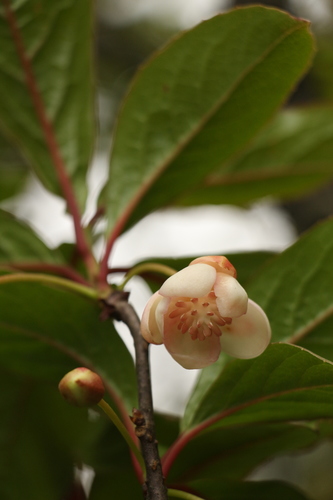
Schisandra repanda
(Siebold & Zucc.) Radlkofer
iNaturalist· cc-by
(c) りなべる, some rights reserved (CC BY), uploaded by りなべる
Summary
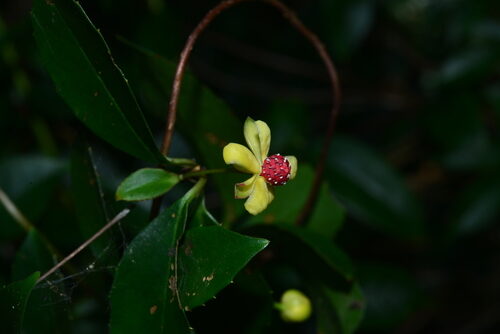
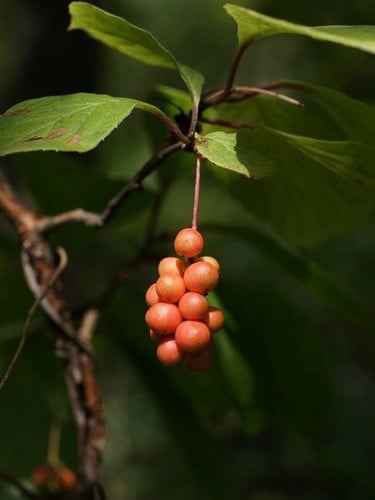
Source: WikipediaSchisandra repanda is a deciduous vine growing to 6 meters, endemic to Japan and Korea.
Description
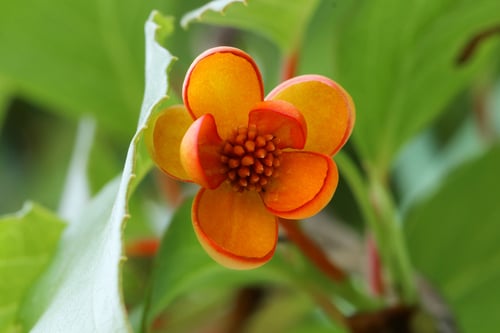
A deciduous climbing vine reaching 6 m in height. Hardy to UK zone 7 and not frost tender. Flowers April to June. Dioecious species requiring both male and female plants for seed production. Tolerates light sandy, medium loamy, and heavy clay soils with good drainage. Grows in semi-shade and prefers moist conditions across a range of soil pH levels from mildly acidic to mildly alkaline.
Edible Uses
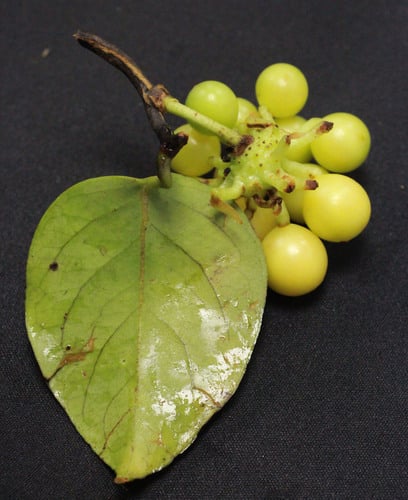
The fruit can be eaten raw or cooked, and is used in preserves or brewed into a tea.
Medicinal Uses
None known
Distribution
It is a temperate plant.
Where It Grows
Asia, Japan, Korea,
Propagation
Seed is best sown in autumn in a cold frame. Stored seed should be pre-soaked for 12 hours in warm water before sowing in a greenhouse in spring. Germination can be slow and erratic. Prick out seedlings into individual pots when large enough to handle and grow on in light shade in the greenhouse for their first two years before planting out in early summer. Cuttings of half-ripe wood, 5–8cm with a heel, taken in August and rooted in a frame give a good success rate; overwinter in the greenhouse and plant out in late spring. Long shoots can also be layered in autumn.
Other Uses
None known Special Uses
Notes
There are about 25 Schisandra species.
Synonyms
References (2)
- Chen, B. & Qiu, Z., Consumer's Attitudes towards Edible Wild Plants, Ishikawa Prefecture, Japan. p 24 www.hindawi.com/journals/ijfr/aip/872413.pdf
- Plants for a Future database, The Field, Penpol, Lostwithiel, Cornwall, PL22 0NG, UK. http://www.scs.leeds.ac.uk/pfaf/