Scabiosa columbaria
L.
Pincushion, African white scabious
iNaturalist· cc-by-sa
(c) Rebecca Ryen-Stols, some rights reserved (CC BY-SA), uploaded by Rebecca Ryen-Stols
iNaturalist· cc-by-nc
(c) Gennadiy Okatov, some rights reserved (CC BY-NC), uploaded by Gennadiy Okatov
iNaturalist· cc-by-nc
(c) helger, some rights reserved (CC BY-NC), uploaded by helger
Summary
Source: WikipediaScabiosa columbaria, called the small scabious or dwarf pincushion flower, is a widespread species of flowering plant in the genus Scabiosa, native to Europe, Africa, and western Asia, from Sweden to Angola. In the garden it is a short-lived deciduous perennial. In the wild in Europe it prefers to grow in calcareous grasslands. Growing to 1 m (3.3 ft) tall by 0.5 m (1.6 ft), it has simple branched grey-green leaves, and pale lavender or blue multi-petalled flowers from summer to autumn.
Description
A small herb. It grows 60 cm high and spreads 40 cm wide. It has a woody rootstock. The leaves are grey-green. The leaves at the base are woolly. They can have smooth edges or be deeply lobed. The upper leaves are divided into leaflets along the stalk. These are also often further divided. The flowers are in heads and are purple-blue. They are 40 mm wide. The fruit is dry. It has one seed.
Edible Uses
Leaves are edible; no further preparation details are recorded.
Medicinal Uses
None known
Distribution
It is a subtropical plant. It grows between 5-3,475 m above sea level in South Africa. In Zimbabwe it grows between 800-2,000 m above sea level. It needs well-drained soil. It grows on chalk grasslands in Europe. It can grow in arid places. It suits hardiness zones 6-10.
Where It Grows
Africa, Andorra, Asia, Australia, Botswana, Britain, East Africa, Eswatini, Ethiopia, Europe, Italy, Lesotho, Luxembourg, Malawi, Mediterranean, Mozambique, North Africa, Sicily, Slovenia, South Africa, Southern Africa, Swaziland, Tasmania, Zambia, Zimbabwe,
Cultivation
Prefers a neutral or alkaline soil and a sunny position. Succeeds in ordinary garden soil. Grows well in a dry sunny meadow. The flowers are a good nectar source for bees and lepidoptera, the plant is also a good food source for the caterpillars of many butterfly species. This species name is sometimes treated as the group name for an aggregate of species. Members of this genus are rarely if ever troubled by browsing deer.
Propagation
Sow seed in a cold frame in spring. Seedlings are prone to damping off, so water carefully and ensure good ventilation. Prick out into individual pots once large enough to handle and plant into permanent positions in summer. Divide in spring; larger divisions can go directly into permanent positions. Smaller divisions do best potted up and grown on in a lightly shaded cold frame until well established, then planted out in summer.
Other Uses
None known
Notes
There are about 75-80 Scabiosa species. Also put in the family Dipsacaceae.
Synonyms
Also Known As
Pigeon's scabious, Mamokhale, Navadni grintavec, Runhema
References (14)
- Cundall, P., (ed.), 2004, Gardening Australia: flora: the gardener's bible. ABC Books. p 1320
- Hibbert, M., 2002, The Aussie Plant Finder 2002, Florilegium. p 287
- http://www.botanic-gardens-ljubljana.com/en/plants
- Licata, M., et al, 2016, A survey of wild plant species for food use in Sicily (Italy) – results of a 3-year study in four Regional Parks. Journal of Ethnobiology and Ethnomedicine 12:12
- Marker & Sheape,
Show all 14 references Hide references
- Peters, C. R., O'Brien, E. M., and Drummond, R.B., 1992, Edible Wild plants of Sub-saharan Africa. Kew. p 104
- Plants for a Future database, The Field, Penpol, Lostwithiel, Cornwall, PL22 0NG, UK. http://www.scs.leeds.ac.uk/pfaf/
- Royal Botanic Gardens, Kew (1999). Survey of Economic Plants for Arid and Semi-Arid Lands (SEPASAL) database. Published on the Internet; http://www.rbgkew.org.uk/ceb/sepasal/internet [Accessed 16th April 2011]
- Ruiters-Welcome, A. K., 2019, Food plants of southern Africa. Ph.D. thesis. Univ. of Johannesburg p 52
- Sp. pl. 1:99. 1753
- Swaziland's Flora Database http://www.sntc.org.sz/flora
- Welcome, A. K. & Van Wyk, B.-E., 2019, An inventory and analysis of the food plants of southern Africa. South African Journal of Botany 122 (2019) 136–179
- World Checklist of Useful Plant Species 2020. Royal Botanic Gardens, Kew
- www.zimbabweflora.co.zw 2011
More from Caprifoliaceae
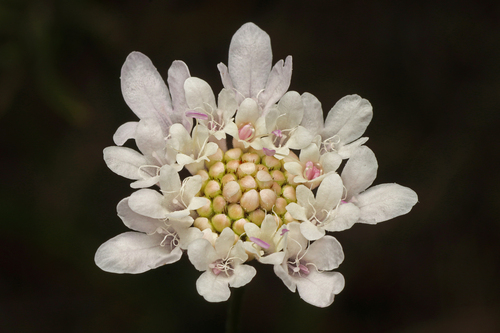
Sixalix atropurpurea
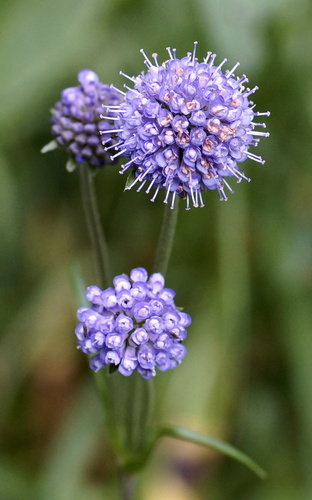
Succisa pratensis
Devil's bit scabious
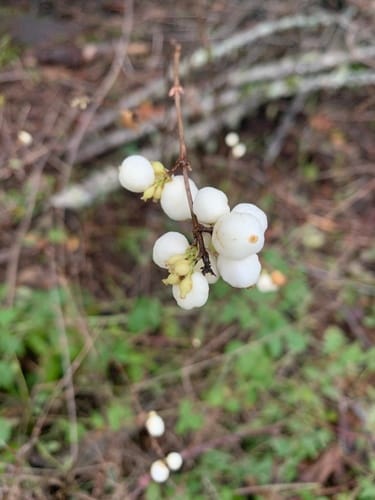
Symphoricarpos albus
Snowberry
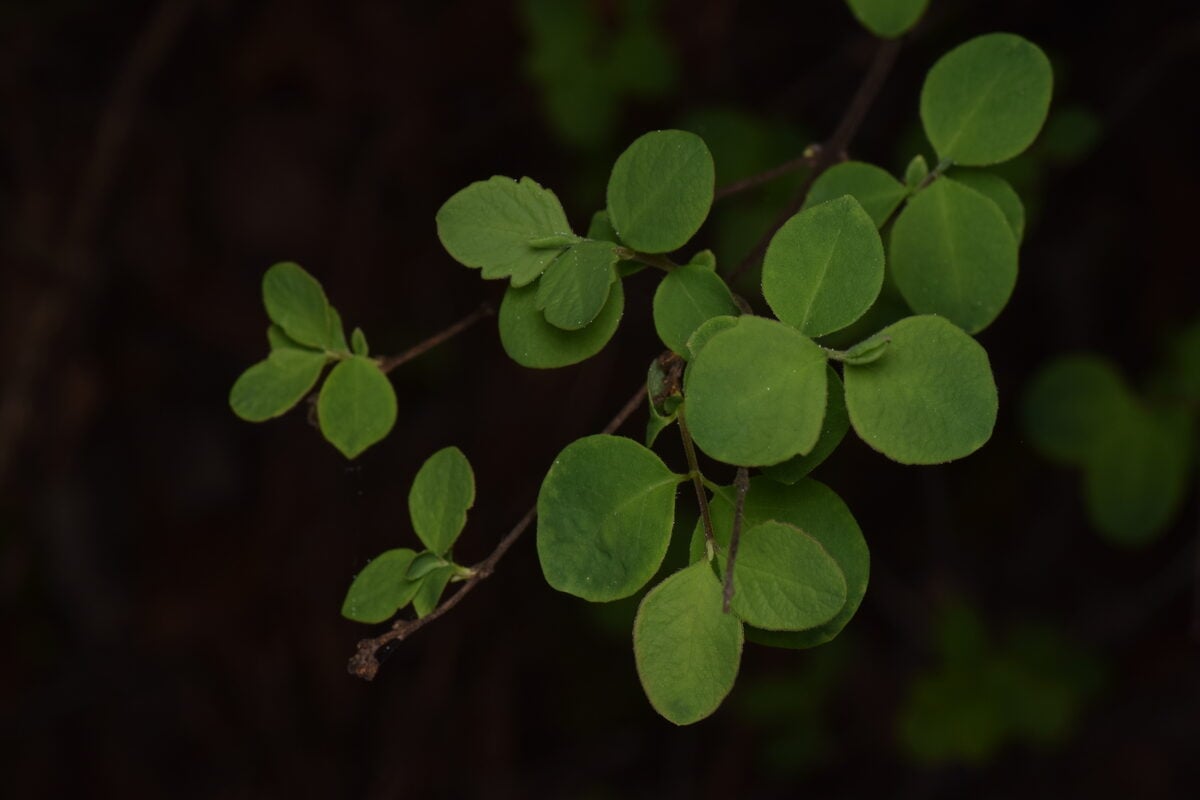
Symphoricarpos albus laevigatus - (Fernald.)S.F.Blake.
Snowberry
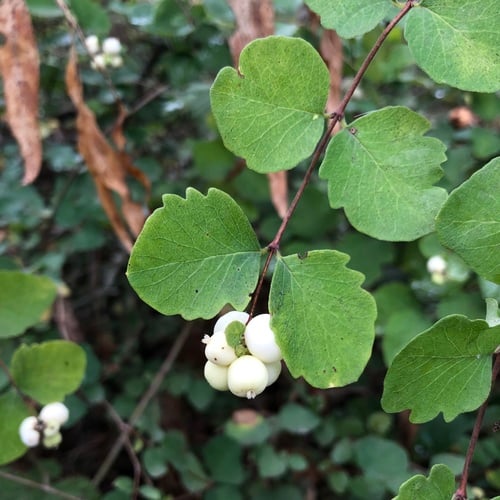
Symphoricarpos albus var. laevigatus
Common Snowberry, Coral-berry, Indian Currant
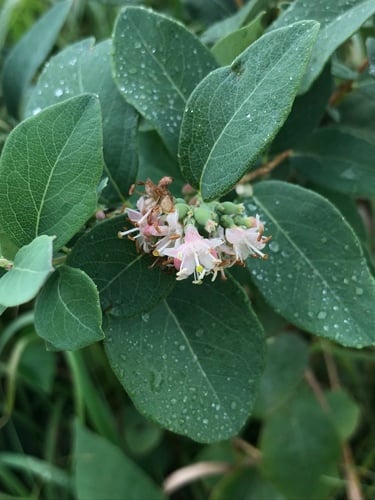
Symphoricarpos occidentalis
Western Snowberry, Wolfberry, Buckbush