Satureja montana
L.
Winter savoury, Mountain savory
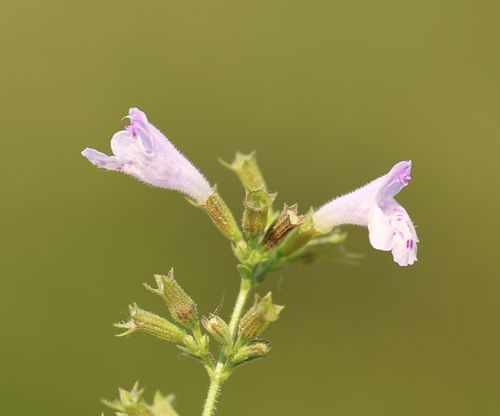
iNaturalist· cc-by-nc-nd
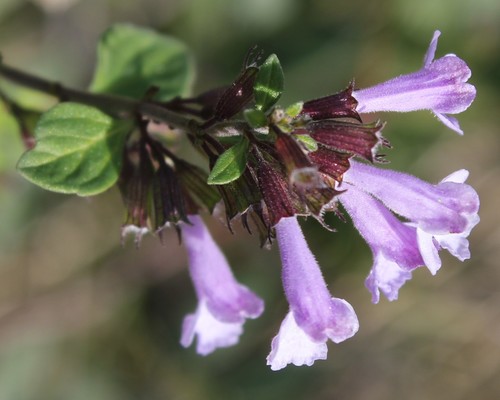
(c) Manuel Martín Vicente, some rights reserved (CC BY-NC-ND)
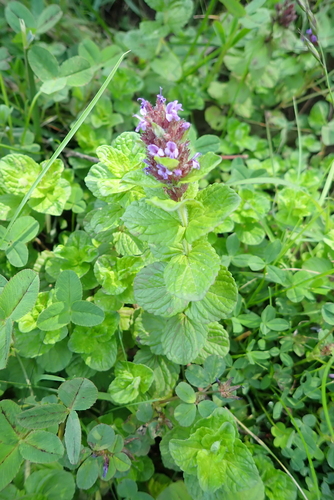
iNaturalist· cc-by-nc
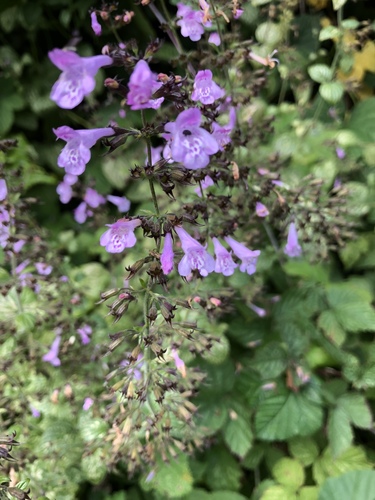
(c) josefwirth, some rights reserved (CC BY-NC)
Summary
Source: WikipediaWinter savory is a compact evergreen shrub reaching 40cm tall and 30cm wide at a medium growth rate. Hardy to UK zone 6 and not frost tender, it remains in leaf year-round with flowers from July to October and seeds ripening August through October. The plant thrives in light sandy and medium loamy, well-drained soils across a wide pH range from mildly acidic to very alkaline, though it cannot tolerate shade. It tolerates both drought and variable moisture levels. Self-fertile and insect-pollinated, it attracts wildlife including bees and butterflies.
Description
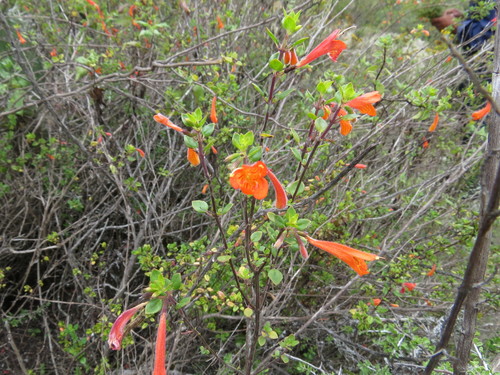
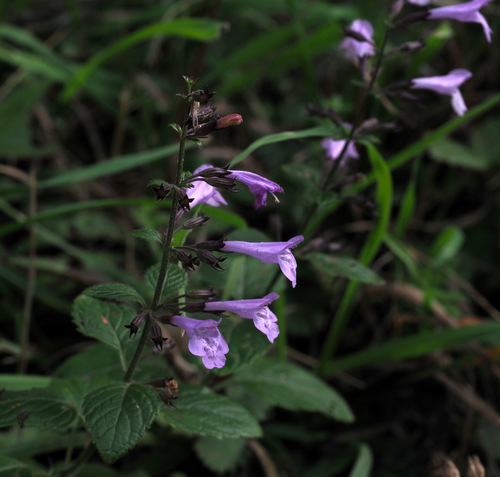
A herb. Two kinds occur, one which is upright and the other lies over. Both kinds keep growing from year to year. They grow about 30 cm high. The leaves are dark green and shiny. The leaves are 2.5 cm long. They are sword shaped and grow from woody stems. The flowers are blue and occur in groups at the end of stalks. There are several named cultivated varieties.
Edible Uses
Leaves are used raw or cooked. They have a peppery flavour — stronger and sharper than summer savory (S. hortensis) — and are used mainly to flavour cooked foods, especially beans, as well as a garnish for salads. The leaves can be used fresh or dried. A herb tea with a tangy, marjoram-like flavour is made from the fresh or dried leaves, harvested just before the plant comes into flower.
Medicinal Uses
Winter savory is most commonly used as a culinary herb, but also has marked medicinal benefits, particularly for the digestive system. Its action is stronger than that of the closely related summer savory, S. hortensis. The whole herb, especially the flowering shoots, is mildly antiseptic, aromatic, carminative, digestive, mildly expectorant, and stomachic. Internally it is regarded as a sovereign remedy for colic and flatulence, and is also used to treat gastro-enteritis, cystitis, nausea, diarrhoea, bronchial congestion, sore throat, and menstrual disorders. It should not be prescribed for pregnant women. Rubbing a sprig onto bee or wasp stings brings instant relief. The plant is harvested in summer when in flower and may be used fresh or dried. The essential oil is an ingredient in scalp lotions for cases of incipient baldness, and an ointment made from the plant is applied externally to relieve arthritic joints.
Distribution
They are Mediterranean plants. It can stand colder conditions than summer savoury. They do not suit the tropics. They do best in full sunlight. They suit well drained alkaline soils. It can grow on less rich sandy soils. In Hobart Botanical gardens. It suits hardiness zones 4-8.
Where It Grows
Africa, Albania, Andorra, Australia, Austria, Balkans, Bosnia, Britain, Canada, Caucasus, Croatia, Europe, France, Germany, Greece, India, Italy, Lebanon, Macedonia, Mediterranean, Montenegro, North Africa, North America, Portugal, Serbia, Slovenia, South Africa, Southern Africa, Spain, Switzerland, Syria, Tasmania, Turkey, Türkiye, USA, Yugoslavia,
Cultivation
An easily grown plant when given suitable conditions, it prefers a well-drained poor stony soil and succeeds in a hot dry sunny position. It prefers an alkaline soil though it is not too fussy. It is very intolerant of soils that remain damp, especially in the winter, and dislikes shade. Plants are less hardy when they are grown in rich soils and also in wet conditions. Winter savory is often grown in the garden as a culinary herb, there are some named varieties. The flavour is said to be more coarse than that of the annual savory (S. hortensis). The plants live for several years, but as they grow older they do not make so much new growth and so are best replaced every two years. Winter savory is typically harvested in late spring to early summer, just before flowering for the best flavor. It usually flowers in summer, typically from June to August (Northern Hemisphere). Winter savory is considered a slow grower, often taking about 1 to 2 years to establish and reach full size. Winter savory is self-fertile.
Propagation
Surface sow seed in April in a greenhouse, keeping the compost moist. Germination can be slow and erratic but usually occurs within a month. Prick seedlings into individual pots as soon as large enough to handle. Plants can usually be set out in their permanent positions during summer; if not sufficiently developed, or in areas with cold winters, overwinter in a cold frame and plant out in late spring or early summer the following year. Half-ripe wood cuttings of 5–8 cm taken at a node in July/August can be rooted in a frame, potted up in autumn, overwintered in a frame, and planted out in late spring or early summer the following year — a high percentage usually succeed. Cuttings of young wood, preferably with a heel, taken in April/May in a frame can be planted out in summer if growth is strong, or overwintered in a cold frame and planted out the following late spring or early summer. Division in early spring as growth begins works best when soil has been mounded up into the bottom 20 cm of the plant in the previous summer. Pot up divisions and grow on in a cold frame until established before planting out in summer.
Other Uses
The growing plant repels insects, and its aromatic leaves give it value as a garden companion plant, growing especially well with onions and beans and helping to deter insect pests. An essential oil is obtained from the leaves. The plant is said to inhibit the germination of certain seeds — winter savory seeds in particular can prevent the germination of nearby seeds. Plants spaced about 45 cm apart each way make a good groundcover. It is also a good bee plant, with flowers rich in nectar and pollen that attract bees, butterflies, and other pollinators. Members of this genus are rarely if ever troubled by browsing deer.
Other Information
It is cultivated.
Synonyms
Also Known As
Hisop, Konjski vrjesak, Sajolida, Timo, Trumza, Vrijesak bijeli
References (32)
- Abbet, C., et al, 2014, Ethnobotanical survey on wild alpine food plants in Lower and Central Valais (Switzerland). Journal of Ethnopharmacology 151 (2014) 624–634
- Ambasta S.P. (Ed.), 2000, The Useful Plants of India. CSIR India. p 552
- Blamey, M and Grey-Wilson, C., 2005, Wild flowers of the Mediterranean. A & C Black London. p 396
- Bodkin, F., 1991, Encyclopedia Botanica. Cornstalk publishing, p 911
- Bonet, M. A. & Valles, J., 2002, Use of non-crop food vascular plants in Montseny biosphere reserve (Catalonia, Iberian Peninsula). International Journal of Food Sciences and Nutrition (2002) 53, 225–248
Show all 32 references Hide references
- Bremness, L., 1994, Herbs. Collins Eyewitness Handbooks. Harper Collins. p 124
- Brickell, C. (Ed.), 1999, The Royal Horticultural Society A-Z Encyclopedia of Garden Plants. Convent Garden Books. p 936
- Burnie, G & Fenton-Smith, J., 1999, A Grower's Guide to Herbs. Murdoch Books. p 64
- Cerne, M., 1992, Wild Plants from Slovenia used as Vegetables. Acta Horticulturae 318
- Cheifetz, A., (ed), 1999, 500 popular vegetables, herbs, fruits and nuts for Australian Gardeners. Random House p 158
- Cundall, P., (ed.), 2004, Gardening Australia: flora: the gardener's bible. ABC Books. p 1316
- Dolina, K. & Luczaj, L., 2014, Wild food plants used on the Dubrovnik coast (south-eastern Croatia) Acta Soc Bot Pol 83(3):175–181
- Facciola, S., 1998, Cornucopia 2: a Source Book of Edible Plants. Kampong Publications, p 136
- Hedrick, U.P., 1919, (Ed.), Sturtevant's edible plants of the world. p 595
- Hibbert, M., 2002, The Aussie Plant Finder 2002, Florilegium. p 287
- Kermath, B. M., et al, 2014, Food Plants in the Americas: A survey of the domesticated, cultivated and wild plants used for Human food in North, Central and South America and the Caribbean. On line draft. p 786
- Kew Plants of the World Online
- Kiple, K.F. & Ornelas, K.C., (eds), 2000, The Cambridge World History of Food. CUP p 1849
- Lawton, B.P., 2002, Mints. A Family of Herbs and Ornamentals. Timber Press, Portland, Oregon. p 194
- Mattalia, G., et al, 2012, Traditional uses of wild food and medicinal plants among Brigasc, Kye ́, and Provenc ̧al communities on the Western Italian Alps. Genet Resour Crop Evol. Springer
- Michael, P., 2007, Edible Wild Plants and Herbs. Grub Street. London. p 205
- Peter, K. V. (Ed.), 2004, Handbook of Herbs and Spices Vol. 2 Woodhead Publishing and CRC Press.
- Pieroni, A., 1999, Gathered wild food plants in the Upper Valley of the Serchio River (Garfagnana), Central Italy. Economic Botany 53(3) pp 327-341
- Plants for a Future database, The Field, Penpol, Lostwithiel, Cornwall, PL22 0NG, UK. http://www.scs.leeds.ac.uk/pfaf/
- Redzic, S. J., 2006, Wild Edible Plants and their Traditional Use in the Human Nutrition in Bosnia-Herzegovina. Ecology of Food and Nutrition, 45:189-232
- Rigat, M et al, 2009, Ethnobotany of Food Plants in the High River Ter Valley (Pyrenees, catalonia, Iberian Peninsula): Non-Crop Food Vascular Plants and Crop Food Plants with medicinal Properties. Ecology of Food and Nutrition, 48:303-327
- Sp. pl. 2:568. 1753
- Tardio, J., et al, Ethnobotanical review of wild edible plants in Spain. Botanical J. Linnean Soc. 152 (2006), 27-71
- van Wyk, B., 2005, Food Plants of the World. An illustrated guide. Timber press. p 338
- Wiersema, J. H. & Leon, B., 2013, World Economic Plants. A Standard Reference CRC Press. 2nd Ed. p 616
- World Checklist of Useful Plant Species 2020. Royal Botanic Gardens, Kew
- Zeven, A. C. & de West, J. M. J., 1982, Dictionary of cultivated plants and their regions of diversity. Wageningen. p 113