Clinopodium menthifolium subsp. ascendens
(Jord.) Govaerts
Common calamint
iNaturalist· cc-by-nc
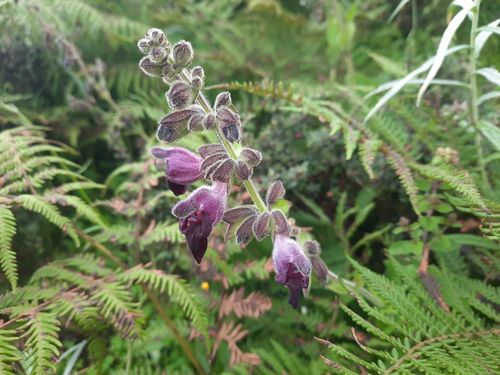
(c) chimonanthus, some rights reserved (CC BY-NC)
iNaturalist· cc-by-nc
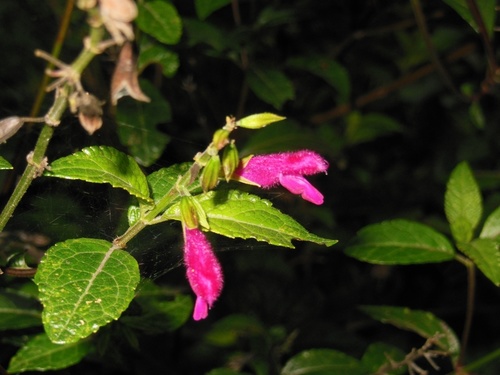
(c) chimonanthus, some rights reserved (CC BY-NC)
iNaturalist· cc-by-nc
(c) chimonanthus, some rights reserved (CC BY-NC)
Summary
Source: WikipediaClinopodium menthifolium, commonly known as the wood calamint or woodland calamint, is a species of flowering plant in the mint family, Lamiaceae. It is found throughout southern and central Europe from the United Kingdom and east as far as temperate parts of Asia, and as south as North Africa. It grows up to 1,700 m (5,600 ft) in elevation. The three subspecies of C. menthifolium have been previously considered separate species, including C. m. subsp. ascendens (syn. C. ascendens), the common calamint or ascending wild basil, and C. m. subsp. hirtum (C. hirtum).
Description
A small herb. It grows about 30 cm high. It has one main stem and several long branches. The leaves are greyish-green. The leaves are 4 cm long and oval with blunt tips. It has mint-scented leaves. The flowers are in rings that spread out along the top third of the plant. The flowers are pink or purple.
Edible Uses
The herb and leaves are used for flavouring.
Medicinal Uses
The leaves of wood calamint can be infused to make an aromatic herb tea. They can also be added to cooked foods, imparting a pungent, aromatic flavour that has been described as being a combination of the flavours imparted by marjoram and mint. The plant is also used as an ornamental for garden cultivation, and will attract butterflies and bees. The plant has also been used medicinally, as a diaphoretic and an expectorant, and to settle the stomach. It can be added to cough medicine, often in combination with yarrow (Achillea millefolium) and thyme (Thymus vulgaris). It is also used to treat fever, insomnia and depression.
Distribution
It is a temperate plant. It grows in dry, grassy areas and is usually on alkaline soils. It suits hardiness zones 7-10. In Hobart Botanical gardens.
Where It Grows
Australia, Britain, Europe, Ireland, Tasmania, Turkey, Türkiye,
Notes
There are 6 or 7 Calamintha species. It is also used medicinally.
Synonyms
Also Known As
Leylak feslegeni
References (4)
- Ertug, F, Yenen Bitkiler. Resimli Türkiye Florası -I- Flora of Turkey - Ethnobotany supplement
- Hibbert, M., 2002, The Aussie Plant Finder 2002, Florilegium. p 48
- Irving, M., 2009, The Forager Handbook, A Guide to the Edible Plants of Britain. Ebury Press p 209 (As Clinopodium ascendens)
- Mabey, R., 1973, Food for Free. A Guide to the edible wild plants of Britain, Collins. p 134