Arbutus unedo
L.
Irish Strawberry tree, Strawberry tree
iNaturalist· cc-by-nc
(c) Jacques HALLOT, some rights reserved (CC BY-NC), uploaded by Jacques HALLOT
iNaturalist· cc-by-nc
(c) Σάββας Ζαφειρίου (Savvas Zafeiriou), some rights reserved (CC BY-NC), uploaded by Σάββας Ζαφειρίου (Savvas Zafeiriou)
iNaturalist· cc-by
(c) Duarte Frade, some rights reserved (CC BY), uploaded by Duarte Frade
Summary
Source: WikipediaArbutus unedo, commonly known as strawberry tree, also called madrone, is an evergreen shrub or small tree in the family Ericaceae, native to the Mediterranean Basin and Western Europe. The tree is well known for its fruits, the arbutus berry, which bear some resemblance to the strawberry, hence the common name strawberry tree. However, it is not closely related to true strawberries of the genus Fragaria. Its presence in Ireland also lends it the name Irish strawberry tree, or cain, or cane apple (from the Irish name for the tree, caithne), or sometimes Killarney strawberry tree. The strawberry tree is the national tree of Italy because of its green leaves, its white flowers and its red berries, colors that recall the Italian flag. The flower of the strawberry tree is the national flower of Italy.
Description
A small tree. It can be 9 m high. The bark is dark grey-brown. It is rather fibrous and scaly. The trunk is short and the branches twisted. The smaller branches and twigs are reddish. The leaves are alternate and evergreen. The are narrowly oval and taper to the tip and narrow to the base. There are teeth around the edge. The leaves are dark green. The flowers are small and bell-shaped. They are white or pink. They occur in clusters. The fruits are strawberry-like. They are 2.5 cm across. They contain many seeds.
Edible Uses
Edible Parts: Fruit Edible Uses: Fruit - raw or cooked. Sweet but insipid. The Latin name 'unedo' means 'I eat one (only)' and suggests that the fruit is not very palatable, though another report says that the fruit is so delicious that a person only needs to eat one. It does have a somewhat gritty skin, but the fruit itself has the texture of a lush tropical fruit and has a delicate pleasant flavour. For those people with sensitive taste buds, this is a fruit that can be enjoyed when eaten in moderate quantities. The fruit contains about 20% sugars and can be used to make delicious and nourishing jams and preserves. It is ripe in November/December and is about 15mm in diameter. When fully ripe it falls from the tree and so it is advisable to grow the plant in short grass in order to cushion the fall of the fruit.
Traditional Uses
The fruit are usually not eaten raw because they have little taste. They are used for drinks, sweets and other dishes. They can be used for jam.
This uses section is brief — help expand it
Medicinal Uses
Antiseptic Astringent Diuretic Dysentery Urinary The strawberry tree is little used in herbalism, though it does deserve modern investigation. All parts of the plant contain ethyl gallate, a substance that possesses strong antibiotic activity against the Mycobacterium bacteria. The leaves, bark and root are astringent and diuretic. They are also a renal antiseptic and so are of use in the treatment of affections of the urinary system such as cystitis and urethritis. Their astringent action makes them of use in the treatment of diarrhoea and dysentery and, like many other astringent plants, a gargle can be made for treating sore and irritated throats. The leaves are gathered in the summer and dried for later use. The flowers are weakly diaphoretic.
Distribution
It is a temperate plant. It is native to Ireland. They need full sun and fertile well-drained soil. It can tolerate reasonable frosts. It can tolerate salt laden winds but not very cold winds. They do not do well on alkaline soils. It suits hardiness zones 7-10. Tasmania Herbarium. Arboretum Tasmania.
Where It Grows
Africa, Albania, Algeria, Asia, Australia, Balkans, Bosnia, Britain, Canada, Colombia, Croatia, Europe, France, Greece, Indochina, Ireland, Italy, Libya, Mediterranean*, Morocco, North Africa, North America, Portugal, San Marino, SE Asia, Sicily, Slovenia, Spain, Tasmania, Tunisia, Turkey, Türkiye, Yugoslavia, Vietnam,
Cultivation
Requires a nutrient-rich well-drained moisture-retentive soil in sun or semi-shade and shelter from cold drying winds, especially when young. Grows well in heavy clay soils and in dry soils. Most species in this genus require a lime-free soil but this species is fairly lime tolerant. Succeeds in fairly exposed maritime positions. A tree in a very exposed position at Rosewarne in N. Cornwall was looking rather tattered in April 1987 but it was 4.5 metres tall and carrying a very good crop of immature fruit. Tolerates industrial pollution. Plants have withstood temperatures down to -16°c without injury at Kew. They grow very well in S.W. England, fruiting well in Cornwall. Plants resent root disturbance and are best placed in their final positions whilst young. Give them some protection in their first winter. The strawberry tree flowers in November and December, the fruit takes 12 months to ripen and so the tree carries both mature fruit and flowers at the same time and is incredibly beautiful at this time. The flowers have a soft honey scent. There are a number of named varieties developed for their ornamental value. 'Elfin King', 'Croomei' and 'Rubra' are all small forms that fruit well when small. The variety 'Rubra' was 1.2 metres tall at Kew in late 1990 and was laden down with fruits and flowers. 'Elfin King' only reaches a height of 1 metre, comes into bearing when young and fruits well. It is ideal for container culture. 'Croomei' is said to be a more reliable fruiting form. In garden design, as well as the above-ground architecture of a plant, root structure considerations help in choosing plants that work together for their optimal soil requirements including nutrients and water.
Propagation
Seed - best surface sown in a cold frame as soon as it is ripe. Stored seed should be soaked for 5 - 6 days in warm water and then surface sown in a shady position in a greenhouse. Do not allow the compost to become dry. 6 weeks cold stratification helps. The seed usually germinates well in 2 - 3 months at 20°c. Seedlings are prone to damp off, they are best transplanted to individual pots as soon as they are large enough to handle and should be kept well ventilated. Grow them on in a greenhouse for their first winter and then plant out in late spring after the last expected frosts. Basal cuttings in late winter. Cuttings of mature wood of the current season's growth, November/December in a frame. Poor percentage. Layering of young wood - can take 2 years.
Other Uses
Tannin Wood Tannin is obtained from the leaves, bark and fruit. The bark contains 45% tannin. Wood - used for turning, Greek flutes etc. It makes a good charcoal. Special Uses Espalier Food Forest Scented Plants
Production
It grows slowly. Fruit take 12 months to ripen.
Other Information
It is cultivated.
Notes
There are 14 Arbutus species. Fruit are rich in niacin, vitamin C and beta-carotene.
Nutrition
| Part | Moisture | kJ | kcal | Protein | Vit A | Vit C | Iron | Zinc |
|---|---|---|---|---|---|---|---|---|
| Fruit | 68 | — | 790 | 2.2 | — | — | — | — |
Synonyms
Also Known As
Albatro, Albornial, Arboc, Ayicilegi, Bakhanou, Caithne, Cilek, Dag cilegi, Davulga, Erbedo, Gan'l, Kaucuk davulgasi, Killarney strawberry, Kocakari yemisi, Kocay emis, Kumari-yes, Madrono, Maginja, Magunja, Navadna jagodičnica, Planika, Prva, Sasnou, Yabani cilek
References (63)
- Balut, G., 2016, Medicinal and wild food plants of Marmara Island (Balikesir - Turkey). Acta Societatis Botanicorum Poloniae 85 (2): 3501
- Bianchini, F., Corbetta, F., and Pistoia, M., 1975, Fruits of the Earth. Cassell. p 158
- Bircher, A. G. & Bircher, W. H., 2000, Encyclopedia of Fruit Trees and Edible Flowering Plants in Egypt and the Subtropics. AUC Press. p 37
- Blamey, M and Grey-Wilson, C., 2005, Wild flowers of the Mediterranean. A & C Black London. p 165
- Blanco-Salas, J., et al, 2019, Wild Plants Potentially Used in Human Food in the Protected Area “Sierra Grande de Hornachos” of Extremadura (Spain). Sustainability 2019, 11, 456
Show all 63 references Hide references
- Bodkin, F., 1991, Encyclopedia Botanica. Cornstalk publishing, p 95
- Bonet, M. A. & Valles, J., 2002, Use of non-crop food vascular plants in Montseny biosphere reserve (Catalonia, Iberian Peninsula). International Journal of Food Sciences and Nutrition (2002) 53, 225–248
- Bremness, L., 1994, Herbs. Collins Eyewitness Handbooks. Harper Collins. p 37
- Brickell, C. (Ed.), 1999, The Royal Horticultural Society A-Z Encyclopedia of Garden Plants. Convent Garden Books. p 131
- Coombes, A.J., 2000, Trees. Dorling Kindersley Handbooks. p 143
- Cundall, P., (ed.), 2004, Gardening Australia: flora: the gardener's bible. ABC Books. p 173
- Dogan, Y., et al, 2004, The Use of Wild Edible Plants in Western and Central Anatolia (Turkey). Economic Botany 58(4) pp. 684-690
- Dogan, Y. et al, 2013, Wild Edible Plants sold in the Local Markets of Izmir, Turkey Pak. J. Bot. 45(S1): 177-184
- Dolina, K. & Luczaj, L., 2014, Wild food plants used on the Dubrovnik coast (south-eastern Croatia) Acta Soc Bot Pol 83(3):175–181
- Ertug, F, Yenen Bitkiler. Resimli Türkiye Florası -I- Flora of Turkey - Ethnobotany supplement
- Etherington, K., & Imwold, D., (Eds), 2001, Botanica's Trees & Shrubs. The illustrated A-Z of over 8500 trees and shrubs. Random House, Australia. p 100
- Ertug, F., 2004, Wild Edible Plants of the Bodrum Area. (Mugla, Turkey). Turk. J. Bot. 28 (2004): 161-174
- Facciola, S., 1998, Cornucopia 2: a Source Book of Edible Plants. Kampong Publications, p 95
- Flowerdew, B., 2000, Complete Fruit Book. Kyle Cathie Ltd., London. p 171
- Ghanimi, R., et al, 2022, Ethnobotanical study on wild edible plants traditionally used by Messiwa people, Morocco. Journal of Ethnobiology and Ethnomedicine. 18:16
- Gonzalez, J. A., et al, 2011, The consumption of wild and semi-domesticated edible plants in the Arribes del Duero (Salamanca-Zamora, Spain): an analysis of traditional knowledge. Genetic. Resour Crop Evolution 58:991-1006
- Gurdal, B. & Kultur, S., 2014, The edible and miscellaneous useful plants in Marmaris (Southwest Turkey). İstanbul Ecz. Fak. Derg. / J. Fac. Pharm. Istanbul 44(1) 2014 pp.69-78
- Hadjichambis, A. C., et al, 2007, Wild and semi-domesticated food plant consumption in seven circum-Mediterranean areas. International Journal of Food Sciences and Nutrition. 2007, 1-32.
- Hancer, C. K., et al, 2020, Traditional Knowledge of Wild Edible Plants of Biga (Çanakkale), Turkey. Acta Societatis Botanicorum Poloniae / 2020 / Volume 89 / Issue 1 / Article 8914
- Harris, E & J., 1983, Field Guide to the Trees and Shrubs of Britain. Reader's Digest. p 59
- Hedrick, U.P., 1919, (Ed.), Sturtevant's edible plants of the world. p 67
- Hegazy, A. K., et al, 2013, Nutritive value and antioxidant activity of some edible wild fruit in the Middle East. Journal of Medicinal Plant Research. 7(15): 938-946 (As Arbutus pavarii)
- Hibbert, M., 2002, The Aussie Plant Finder 2002, Florilegium. p 31
- Irving, M., 2009, The Forager Handbook, A Guide to the Edible Plants of Britain. Ebury Press p 197
- Jardin, C., 1970, List of Foods Used In Africa, FAO Nutrition Information Document Series No 2.p 121
- Joyce, D., 1998, The Garden Plant Selector. Ryland, Peters and Small. p 107
- Kayabasi, N. P., et al, 2018, Wild edible plants and their traditional use in the human nutrition in Manyas (Turkey). Indian Journal of Traditional Knowledge. Vol. 17(2), April 2018, pp 299-306
- Kiple, K.F. & Ornelas, K.C., (eds), 2000, The Cambridge World History of Food. CUP p 1859
- Kizilarslan, C. & Ozhatay, N., 2012, An ethnobotanical study of the useful and edible plants of İzmit. Marmara Pharmaceutical Journal 16: 134-140, 2012.
- Lamberton, K (Ed.), 2004, The Australian gardening encyclodepia. Murdoch Books, NSW Australia. p 173
- Lazarides, M. & Hince, B., 1993, Handbook of Economic Plants of Australia, CSIRO. p 23
- Lord, E.E., & Willis, J.H., 1999, Shrubs and Trees for Australian gardens. Lothian. p 47
- Luczaj, L. et al, 2013, Wild food plants used in the villages of the Lake Vrana Nature Park (northern Dalmatia, Croatia). Acta Societatis Botanicorum Poloniae, 82(4): 275-281
- Luczaj, L. et al, 2014, Wild Food Plants of Dalmatia (Croatia). in A. Pieroni, C. L. Quave (eds.), Ethnobotany and Biocultural Diversities in the Balkans, p 138
- Lyle, S., 2006, Discovering fruit and nuts. Land Links. p 75
- Mabey, R., 1973, Food for Free. A Guide to the edible wild plants of Britain, Collins. p 181
- Mahklouf, M. H., 2019, Ethnobotanical Study of Edible Wild Plants in Libya. European Journal of Ecology. 5(2): 30-40 (As Arbutus pavarii)
- Nassif, F., & Tanji, A., 2013, Gathered food plants in Morocco: The long forgotten species in Ethnobotanical Research. Life Science Leaflets 3:17-54
- Pardo-de-Santayana, M., et al, 2007, Traditional knowledge of wild edible plants used in the northwest of the Iberian Peninsula (Spain and Portugal): a comparative study. Journal of Ethnobiology and Ethnomedicine 2007, 3:27
- Pasta, S., et al, 2020, An Updated Checklist of the Sicilian Native Edible Plants: Preserving the Traditional Ecological Knowledge of Century-Old Agro-Pastoral Landscapes. Frontiers in Plant Science. Volume 11|Article 388
- Pham-Hoang Ho, 1999, An Illustrated Flora of Vietnam. Nha Xuat Ban Tre. p 623
- Pieroni, A., 1999, Gathered wild food plants in the Upper Valley of the Serchio River (Garfagnana), Central Italy. Economic Botany 53(3) pp 327-341
- Pieroni, A., et al, 2005, Food for two seasons: Culinary uses of non-cultivated local vegetables and mushrooms in a south Italian village. International Journal of Food Sciences and Nutrition, 56(4): 245-272
- Plants for a Future database, The Field, Penpol, Lostwithiel, Cornwall, PL22 0NG, UK. http://www.scs.leeds.ac.uk/pfaf/
- Redzic, S. J., 2006, Wild Edible Plants and their Traditional Use in the Human Nutrition in Bosnia-Herzegovina. Ecology of Food and Nutrition, 45:189-232
- Roa, J. A. G. & Boada, D. S. G., 2018, Fundación para el Fortalecimiento de la Fruticultura y Plantas Alimenticias no Convencionales en Colombia.
- Sansanelli, S., et al, 2017, Ethnobotanical survey of wild food plants traditionally collected and consumed in the Middle Agri Valley (Basilicata region, southern Italy). Journal of Ethnobiology and Ethnomedicine (2017) 13:50
- Schuler, S., (Ed.), 1977, Simon & Schuster's Guide to Trees. Simon & Schuster. No. 184
- Sfikas, G., 1984, Trees and shrubs of Greece. Efstathiadis Group. Athens. p 170
- Sp. pl. 1:395. 1753
- Tardio, J., et al, 2006, Ethnobotanical review of wild edible plants in Spain. Botanical J. Linnean Soc. 152, 27-71
- USDA, ARS, National Genetic Resources Program. Germplasm Resources Information Network - (GRIN). [Online Database] National Germplasm Resources Laboratory, Beltsville, Maryland. Available: www.ars-grin.gov/cgi-bin/npgs/html/econ.pl (10 April 2000)
- van Wyk, B., 2005, Food Plants of the World. An illustrated guide. Timber press. p 67
- Wiersema, J. H. & Leon, B., 2013, World Economic Plants. A Standard Reference CRC Press. 2nd Ed. p 64
- World Checklist of Useful Plant Species 2020. Royal Botanic Gardens, Kew
- www.worldagroforestrycentre.org/treedb/
- Young, J., (Ed.), 2001, Botanica's Pocket Trees and Shrubs. Random House. p 100
- Zeven, A. C. & de West, J. M. J., 1982, Dictionary of cultivated plants and their regions of diversity. Wageningen. p 108
More from Ericaceae
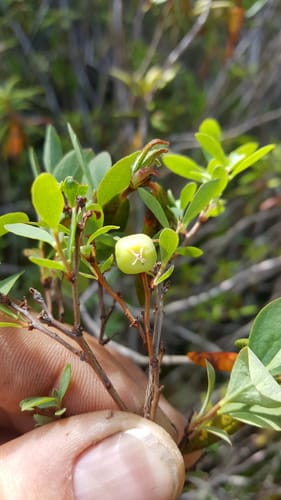
Vaccinium uliginosum var. salicinum
Alpine Blueberry
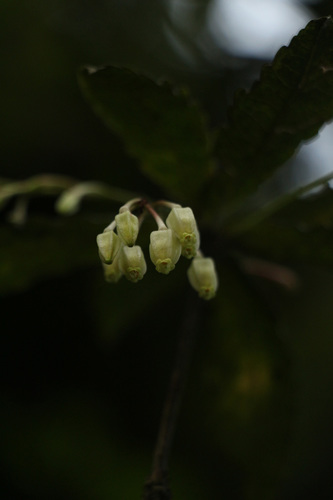
Vaccinium vacciniaceum
Tibetan blueberry
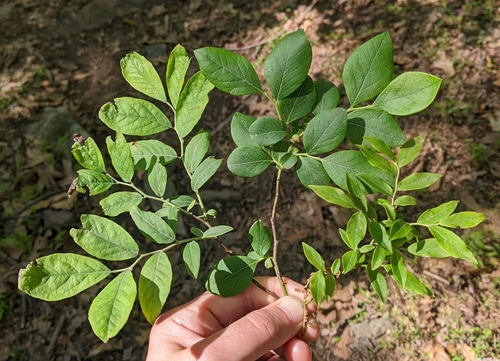
Vaccinium vacillans
Dryland blueberry, Low Blueberry, Late low blueberry
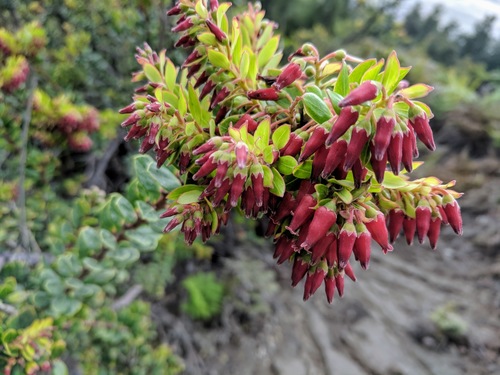
Vaccinium varingiifolium
Javan blueberry
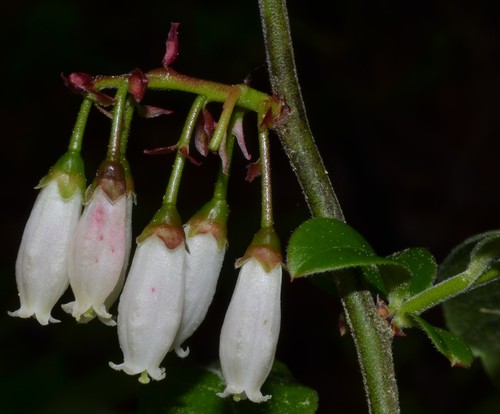
Vaccinium virgatum
Rabbit-eye blueberry, Southern black blueberry
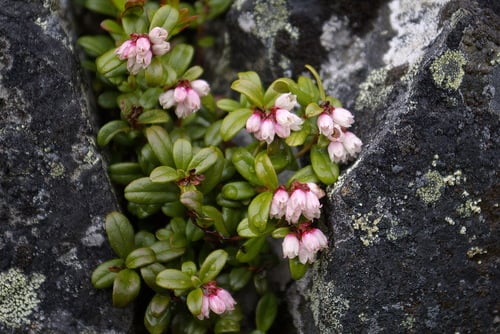
Vaccinium vitis-idaea
Lingonberry