Sphyrospermum cordifolium
Benth.
Salapa
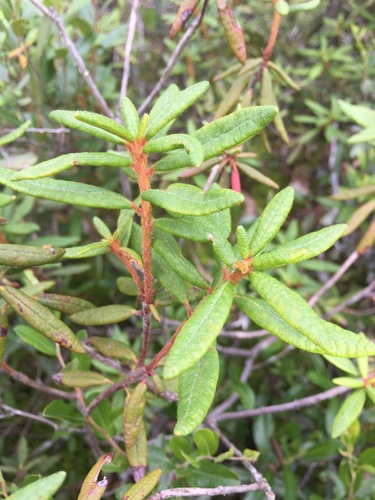
iNaturalist· cc-by
(c) Guillaume Delaitre, some rights reserved (CC BY)
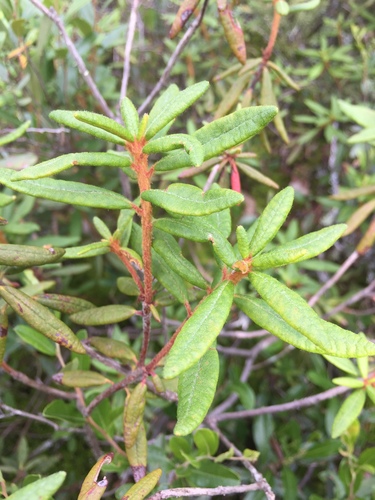
iNaturalist· cc-by
(c) Guillaume Delaitre, some rights reserved (CC BY)
iNaturalist· cc-by
(c) Guillaume Delaitre, some rights reserved (CC BY)
Description
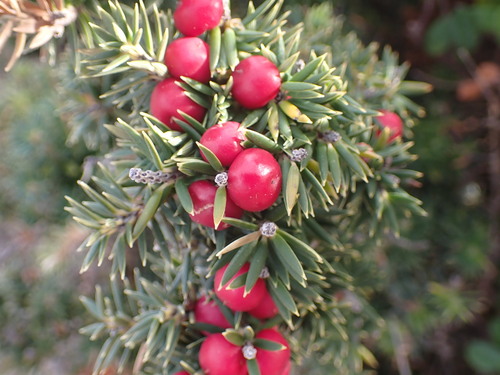
A creeping shrub in the Ericaceae family that grows up to 1.3 m tall with purple fruits, found in tropical regions at elevations between 1,000–3,500 m.
Edible Uses
The fruit are eaten raw.
Traditional Uses
The fruit are eaten raw.
This uses section is brief — help expand it
Distribution
It is a tropical plant. It grows between 1,000-3,500 m above sea level.
Where It Grows
Amazon, Andes, Belize, Bolivia, Brazil, Central America, Colombia, Ecuador, Guiana, Guianas, Guyana, Haiti, South America, Suriname, Trinidad & Tobago, Venezuela, West Indies,
Synonyms
Sophoclesia cordifolia (Benth.) KlotzschSophoclesia cordifolia var. normalis KuntzeSophoclesia domingensis Urb. & EkmanSophoclesia flaccida Seem.Sophoclesia major (Griseb.) Benth. & Hook.f. ex B.D.Jacks.Sophoclesia major (Griseb.) Benth. & Hook. f.Sophoclesia mirandensis S.F.Blake ex Knuth [Invalid]Sophoclesia ovata KlotzschSophoclesia robusta RusbySophoclesia subscandens KlotzschSophoclesia trinitensis BrittonSphyrospermum majus Griseb.Themistoclesia valerioi (Standl.) SleumerVaccinium valerioi Standl.
Also Known As
Tenbu'tape
References (5)
- Dastmalchi, K. et al, 2011, Edible Neotropical Blueberries: Antioxidant and Compositional Fingerprint Analysis. Journal of Agricultural and Food Chemistry 59: 3020-3026
- Plants of Haiti Smithsonian Institute http://botany.si.edu/antilles/West Indies
- Roa, J. A. G. & Boada, D. S. G., 2018, Fundación para el Fortalecimiento de la Fruticultura y Plantas Alimenticias no Convencionales en Colombia.
- Torre, de la, L., et al, 2008, Enciclopedia de las Plantas Útiles del Ecuador. Herbario QCA. Pontificia Universidad Católica del Ecuador. p 315
- Van den Eynden, V., et al, 2003, Wild Foods from South Ecuador. Economic Botany 57(4): 576-603