Styphelia adscendens
R. Br.
Golden heath
iNaturalist· cc-by-nc-sa
(c) Reiner Richter, some rights reserved (CC BY-NC-SA), uploaded by Reiner Richter
iNaturalist· cc-by
(c) Jesse de Vries, some rights reserved (CC BY)
iNaturalist· cc-by
(c) Jesse de Vries, some rights reserved (CC BY)
Summary
Source: WikipediaStyphelia adscendens, commonly known as golden heath, is a species of flowering plant in the heath family Ericaceae and is endemic to south-eastern Australia. It is a prostrate or low-lying shrub with lance-shaped leaves and cream-coloured, pale yellowish-green or reddish flowers arranged singly or in paris in leaf axils.
Description
A shrub which lies along the ground. It is wiry and much branched. It can be 10-30 cm high. It spreads 30-60 cm wide. It forms a mat of flat leaves. They are crowded and pointed at the end. The leaves are 1-2 cm long. The leaves are dark green above and paler underneath. They can be silvery. There are fine hairs along the edge. There are fine veins on the leaf. The flowers are pale yellow and fringed tubes. The stamens extend beyond the flowers. The petals are curved. The fruit is fleshy and has a single large stone inside.
Edible Uses
The fruit is edible raw or cooked and is sweet and tasty.
Medicinal Uses
None known.
Distribution
It grows in temperate and semi-arid regions. It mainly occurs near the coast. It can be on dry sites or damp peaty sites. It needs well drained soil. It can grow in full sun or light shade. It can stand light frosts. It suits hardiness zones 8-9.
Where It Grows
Australia*, Tasmania*,
Cultivation
It can be grown from cuttings. They are slow to form roots. It can also be grown from seed.
Propagation
Seed is probably best sown as soon as ripe in a greenhouse, as it can be very slow to germinate. Prick out seedlings into individual pots as soon as they are large enough to handle and grow on in the greenhouse for at least the first winter before planting out in early summer. Cuttings can be taken, though sufficient material is often hard to find.
Other Uses
None known.
Notes
There are about 11-14 (130) Styphelea species.
References (12)
- Bodkin, F., 1991, Encyclopedia Botanica. Cornstalk publishing, p 956
- Collier, P., 1993, Woodland Wild flowers of Tasmania. Plant Identikit. Society for growing Australian Plants Tasmania Region. Hobart. p 36
- Cribb, A.B. & J.W., 1976, Wild Food in Australia, Fontana. p 60
- Cundall, P., (ed.), 2004, Gardening Australia: flora: the gardener's bible. ABC Books. p 1381
- Curtis, W.M., 1963, The Students Flora of Tasmania Vol 2 p 423
Show all 12 references Hide references
- Gilfedder, L et al, 2003, The Nature of the Midlands. Midlands Bushweb. PO Box 156 Longford, Tasmania. p 88
- Lord, E.E., & Willis, J.H., 1999, Shrubs and Trees for Australian gardens. Lothian. p 192
- Molyneux, B. and Forrester, S., 1997, The Austraflora A-Z of Australian Plants. Reed. p 152
- Plants for a Future database, The Field, Penpol, Lostwithiel, Cornwall, PL22 0NG, UK. http://www.scs.leeds.ac.uk/pfaf/
- Prodr. 537. 1810
- Tasmanian Herbarium Vascular Plants list p 27
- Whiting, J. et al, 2004, Tasmania's Natural Flora. Tasmania's Natural Flora Editorial Committee PO Box 194, Ulverstone, Tasmania, Australia 7315 p 151
More from Ericaceae
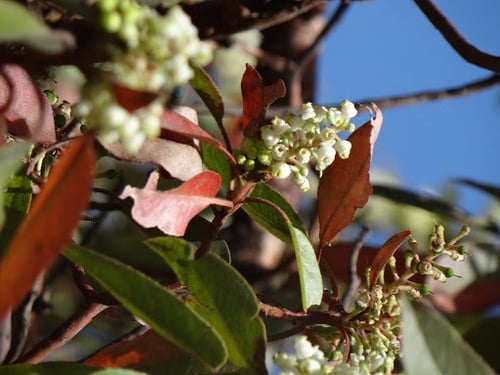
Arbutus xalapensis
Madrone
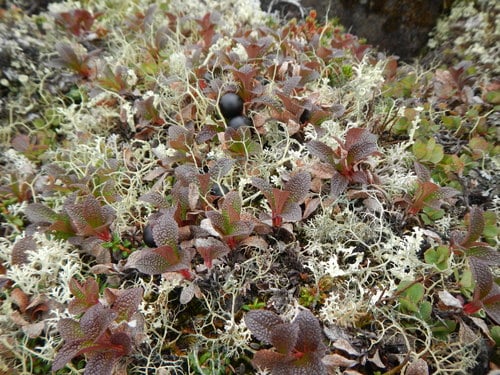
Arctostaphylos alpina
Alpine bearberry, Black bearberry, Alpine manzanita, Amprick
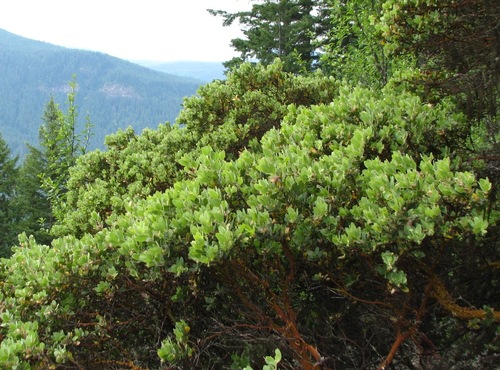
Arctostaphylos columbiana
Hairy manzanita, Columbian manzanita
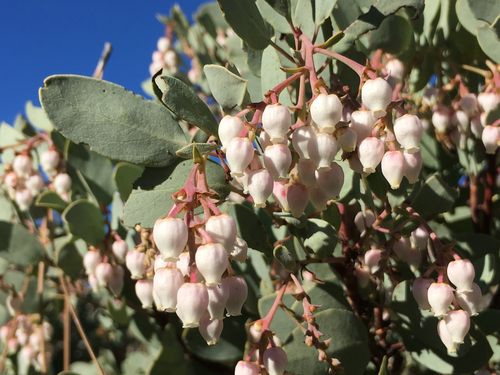
Arctostaphylos glauca
Bigberry manzanita, Great-berried manzanita
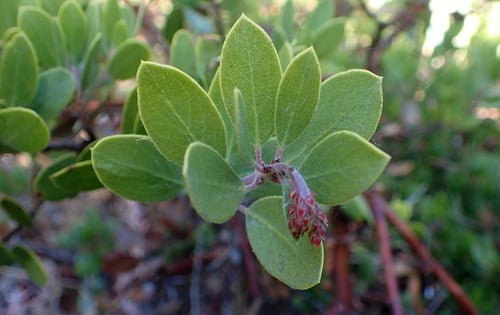
Arctostaphylos hookeri
Monterey manzanita
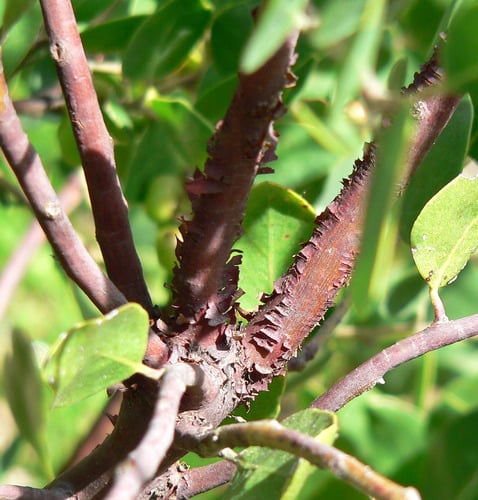
Arctostaphylos manzanita
Manzanita, Common manzanita