Santiria laevigata
Blume
Kedongdong kerut
iNaturalist· cc-by-nc
(c) Akmal Idham, some rights reserved (CC BY-NC), uploaded by Akmal Idham
iNaturalist· cc-by-nc
(c) Akmal Idham, some rights reserved (CC BY-NC)
Summary
Source: WikipediaSantiria laevigata is a species of plant in the Burseraceae family. It is found in Indonesia, Malaysia, the Philippines, and Singapore.
Description
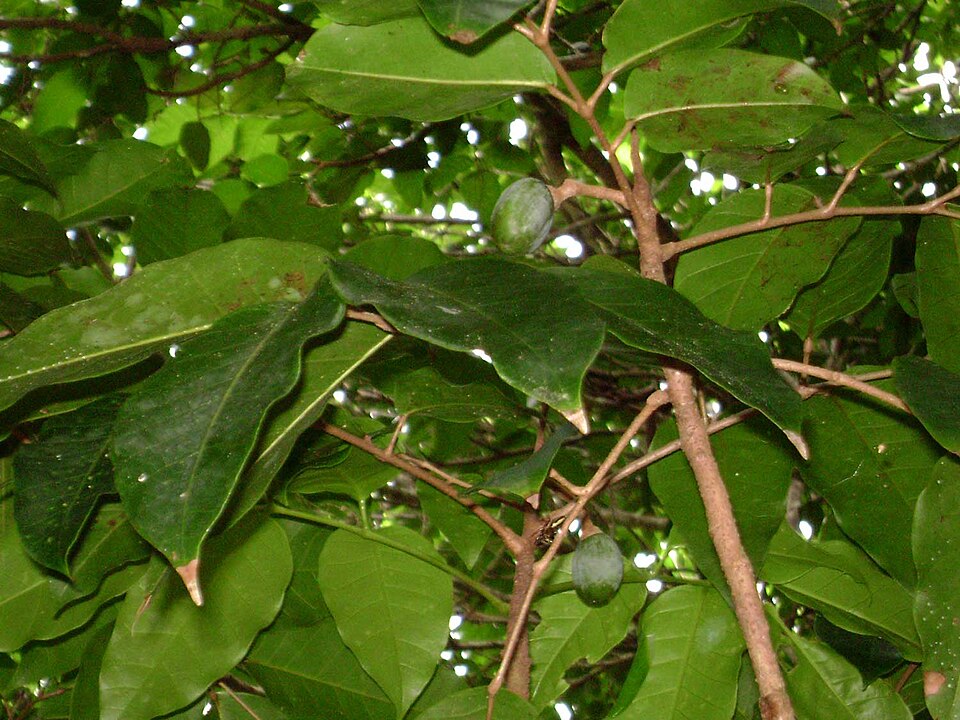
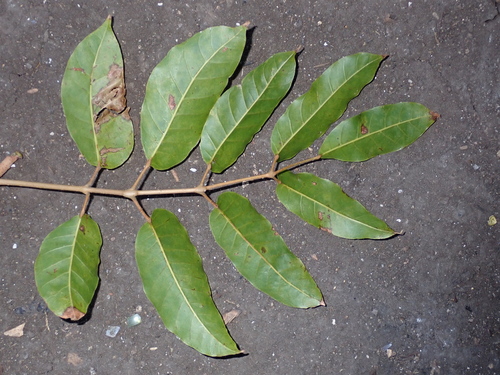
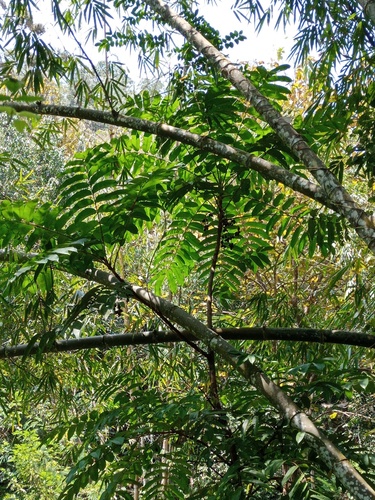
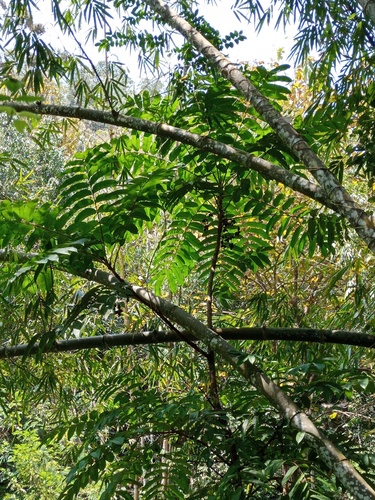
A large tree. It grows 30 m tall and the trunk is 80 cm across. It has buttresses 4 m high. The bark is grey brown and cracked and scaly. The leaves have 1-4 pairs of leaflets. They are 7-12 cm long by 3-7 cm wide. They are rounded at the base and have a pointed tip. There are 7-15 pairs of side veins. They are raised on both surfaces. The flowers are in groups in the axils of leaves. The fruit can be rounded or oblong. They are 1-2 cm across.
Edible Uses
The fruits are edible.
Distribution
A tropical plant. It can grow on poor and swampy soils from sea level to 1,200 m above sea level.
Where It Grows
Asia, Brunei, Indochina, Indonesia, Malaysia, Philippines, SE Asia, Singapore, Thailand,
Other Uses
The timber is used for posts, planks and chopping-knife handles. This species is one of the sources of kedondong timber, which is obtained from several species in the family Burseraceae. We do not have a specific description of the wood for this species, but the general description of kedondong wood is as follows:- The heartwood is generally a light brown; it is not sharply demarcated from the 3 - 5cm wide band of lighter-coloured sapwood. The texture is moderately fine and even; the grain is interlocked to wavy; the surface is lustrous. The wood is light in weight; moderately hard; not very durable, being susceptible to fungi, dry wood borers and termites. It seasons somewhat slowly with only a slight risk of checking and distortion; once dry it is moderately stable to stable in service. The wood has a fairly high blunting effect, stellite-tipped and tungsten carbide tools are recommended; it is moderately easy to slightly difficult to plane; finishes smooth to rough; can be easy to very difficult to bore; slightly difficult to difficult to turn; nailing and screwing properties are good; gluing is correct. The wood is suitable for internal use as a general utility timber for planking, cladding, plywood, flooring, furniture, packing cases, pallets and general carpentry work. The species regenerates well in logged-over forest and has been found to become the dominant species five years after logging. It has potential for use as a pioneer species when re-establishing native woodland.
Synonyms
Also Known As
Asam, Gandis, Geronggang semut, Kedondong tunjuk, Kembajau burung, Kerantai, Kerantai merah, Merambang, Merasam, Pasan, Pinyayasan, Silidah, Terantai
References (6)
- Altschul, S.V.R., 1973, Drugs and Foods from Little-known Plants. Notes in Harvard University Herbaria. Harvard Univ. Press. Massachusetts. no. 1990
- Burkill, I.H., 1966, A Dictionary of the Economic Products of the Malay Peninsula. Ministry of Agriculture and Cooperatives, Kuala Lumpur, Malaysia. Vol 2 (I-Z) p 1991
- Leenhouts, P.W., 1955, Burseraceae in Flora Malesiana Vol 5 p 232
- Slik, F., www.asianplant.net
- Soepadmo, E. and Wong, K. M., 1995, Tree Flora of Sabah and Sarawak. Forestry Malaysia. Volume One. p 90
Show all 6 references Hide references
- Suwardi, A. B., et al, 2020, Wild edible fruits generate substantial income for local people of the Gunung Leuser National Park, Aceh Tamiang Region. Ethnobotany Research & Applications 20:11