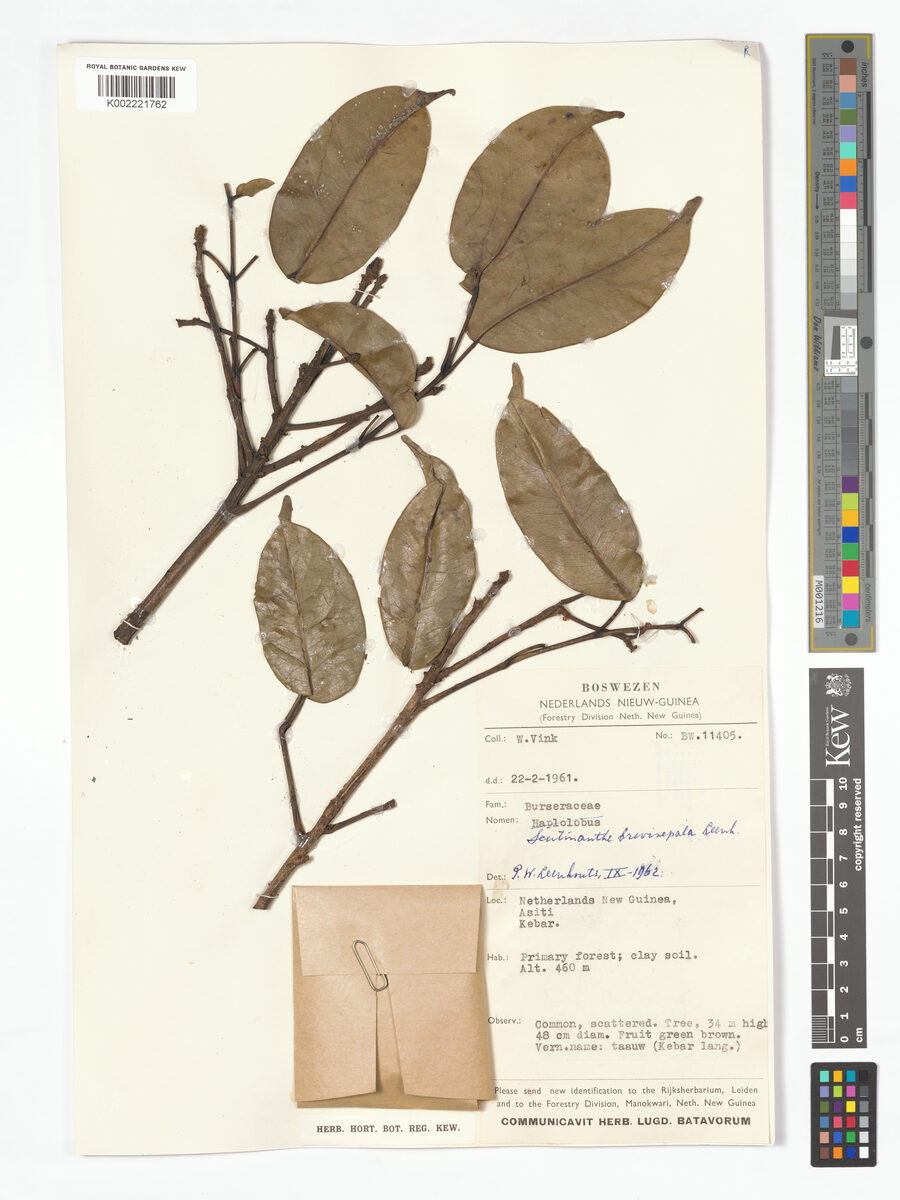
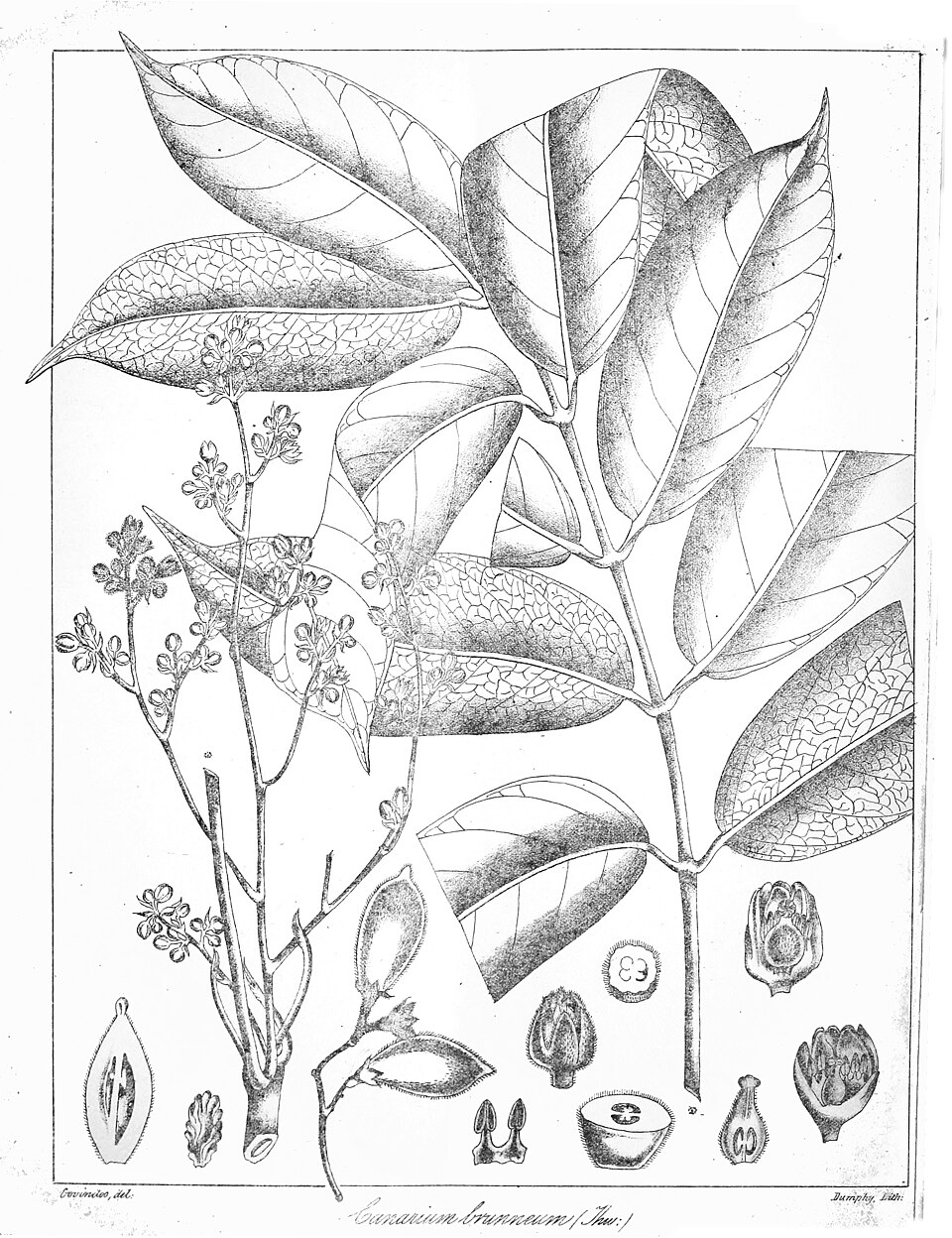
Canarium hirsutum
Willd.
Kim, White dhup
iNaturalist· cc-by-nc
(c) Naufal Urfi Dhiya'ulhaq, some rights reserved (CC BY-NC), uploaded by Naufal Urfi Dhiya'ulhaq
iNaturalist· cc-by-nc
(c) Naufal Urfi Dhiya'ulhaq, some rights reserved (CC BY-NC)
Summary
Source: WikipediaCanarium hirsutum is a tree in the family Burseraceae. The specific epithet hirsutum comes from the Latin meaning 'bristly', referring to the rough hairs of the fruit.
Description
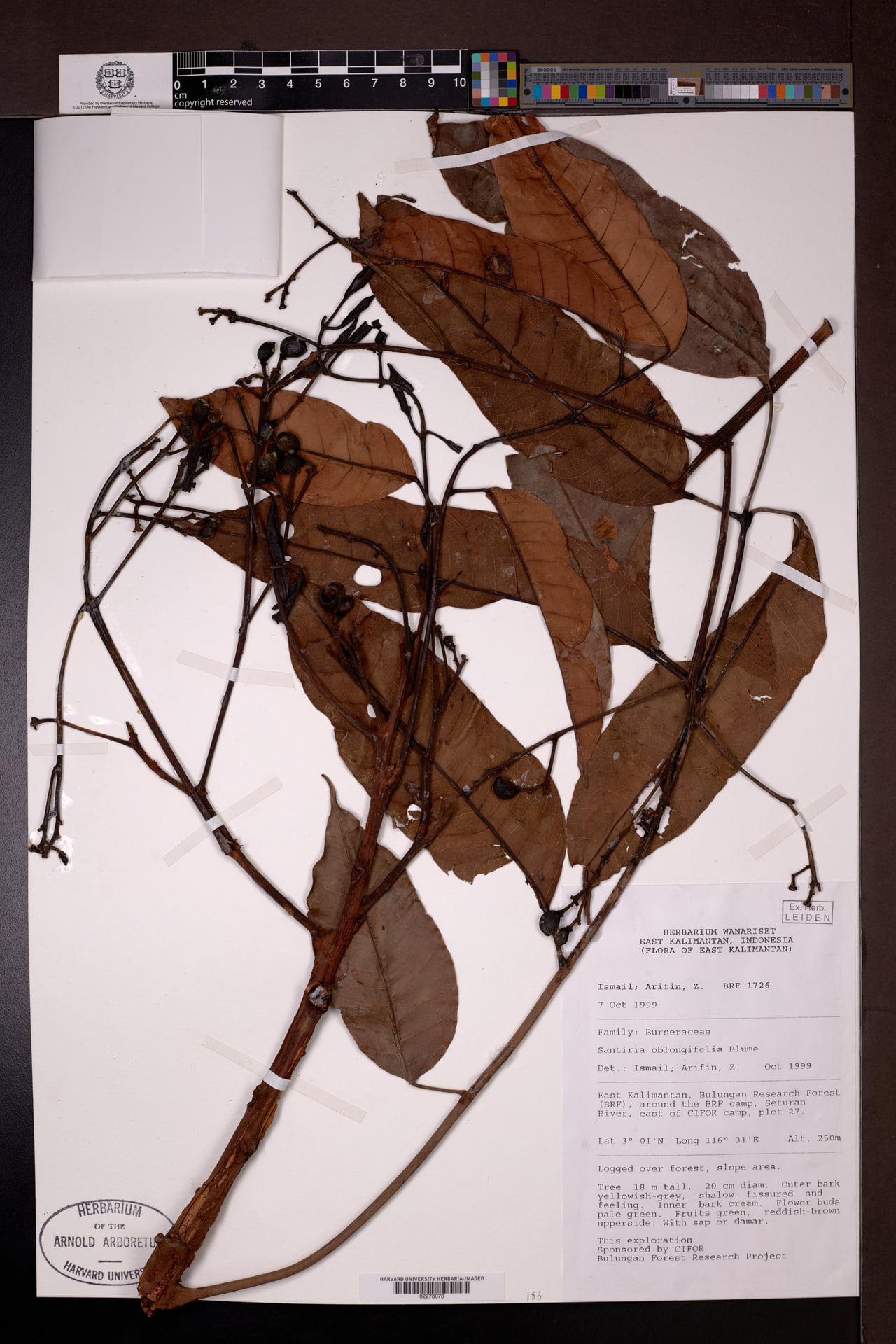
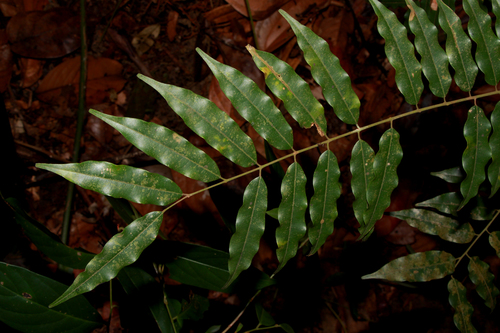
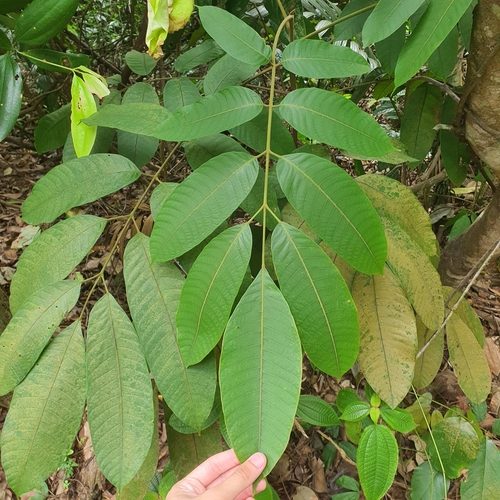
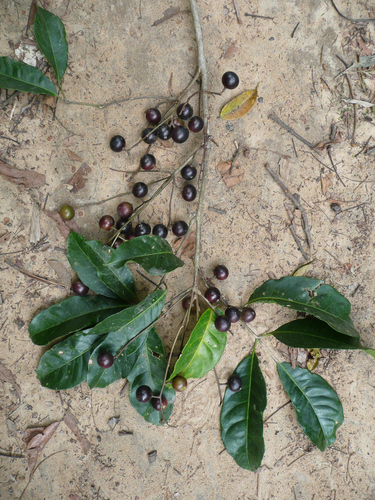
A tree. It grows 30 m high. The trunk is straight. It is 60 cm across. The outer bark is greyish brown and finely cracked. The leaves have leaflets along the stalk. The leaves are arranged in spirals. There are 9-27 leaflets. The leaflet stalks have sharp edges. The leaflets taper at the tip. The flowers are in groups in the axils of leaves. The flowers are 12 mm long. The fruit are oval and 2-6 cm long by 2-4 cm wide. They can have irritating brown hairs.
Edible Uses
The seeds or nuts are eaten.
Medicinal Uses
A decoction of the roots is used in the treatment of stomach troubles.
Known Hazards
The fruit surface bears irritating brown hairs.
Distribution
A tropical plant. It grows in tropical forests. It occasionally grows up to 1,800 m above sea level.
Where It Grows
Asia, Indonesia, Malaysia, Pacific, Papua New Guinea, PNG, Philippines, SE Asia, Solomon Islands,
Cultivation
Plants can be grown by seeds.
Propagation
Seed - we have no specific information for this species but seeds of this genus generally have a hard seed coat and germinate erratically. Filing away some of the seed coat to allow moisture to enter more readily, without damaging the seed, will encourage a faster and more even germination.
Other Uses
The tree is the source of Dammar Sengai, one of the hardest Malayan resins, used for varnishes. The resin is produced rather abundantly. Dammar is a hard resin, obtained from various trees of Southeast Asia. Traditionally, it is used for purposes such as caulking boats and baskets, as an adhesive, a medicine, as a fuel for torches and sometimes in foods. Dammar has many commercial applications, though many of these uses are less important nowadays due to the advent of synthetic materials. Commercially, it is an ingredient of inks, lacquers, oil paints, varnishes etc, and is used as a glazing agent in foods. Harvesting of the resin commences when the bole is around 25cm in diameter (approx 20 years old). Triangular cuts (becoming circular with age) are arranged in vertical rows around the trunk. The cuts are several centimetres wide at first, but become enlarged at every tapping and eventually become holes of 15 - 20cm in depth and width. The average number of holes for a tree about 30 metres tall and 60 - 80cm in diameter is 9 - 11 in each of 4 - 5 vertical rows. For the higher holes, the tapper climbs the tree supported by a rattan belt and using the lower holes as footholds. The exuded resin is allowed to dry on the tree before it is collected. The frequency with which the tree is visited to refreshen the cut varies from once a week to once a month, depending on how far the tree is from the village. Tapping can continue for 30 years. The wood is said to be soft to rather hard. The wood of most species in the genus Canarium is usually soft to moderately hard and probably not very durable in exposed positions. It is not, therefore of any great commercial value and is only used locally or not at all.
Notes
There are 80-95 Canarium species.
Synonyms
Also Known As
Bakayan, Breadlanka, Damar degun, Dhup, Dulit, Hagushus, Kambayau burng, Kanari jaki, Ki bonteng, Mede-mede, Merdongdong, Pagsahingin
References (8)
- Altschul, S.V.R., 1973, Drugs and Foods from Little-known Plants. Notes in Harvard University Herbaria. Harvard Univ. Press. Massachusetts. no. 1980 (As Canarium hirsutum var. leeuwenii)
- Evans, B. R, 1999, Edible nut Trees in Solomon Islands. A variety collection of Canarium, Terminalia and Barringtonia. ACIAR Technical Report No. 44 96pp
- French, B.R., 2010, Food Plants of Solomon Islands. A Compendium. Food Plants International Inc. p 163 (As Canarium hirsutum var. leeuwenii)
- Slik, F., www.asianplant.net
- Soepadmo, E. & Wong, K. M., (Eds.), 1995, Tree Flora of Sabah and Sarawak. Volume One. ITTO, Govt. Malaysia. p 55
Show all 8 references Hide references
- Sukarya, D. G., (Ed.) 2013, 3,500 Plant Species of the Botanic Gardens of Indonesia. LIPI p 175
- Walter, A. & Sam C., 2002, Fruits of Oceania. ACIAR Monograph No. 85. Canberra. p 278 (As Canarium hirsutum var. leeuwenii)
- World Checklist of Useful Plant Species 2020. Royal Botanic Gardens, Kew