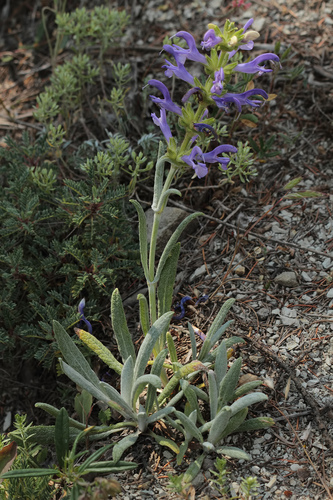
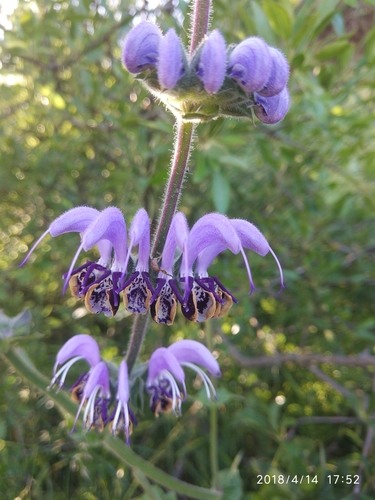
Salvia fruticosa
Miller
Greek Sage, Spanish Sage Oil, Three-leaved sage
iNaturalist· cc-by-nc
(c) Ron Frumkin, some rights reserved (CC BY-NC), uploaded by Ron Frumkin
iNaturalist· cc-by
(c) Andre Hosper, some rights reserved (CC BY)
iNaturalist· cc-by-nc
(c) carlainsf, some rights reserved (CC BY-NC)
Summary
Source: WikipediaSalvia fruticosa, or Greek sage, is a perennial herb or sub-shrub native to the eastern Mediterranean, including Southern Italy, the Canary Islands and North Africa. It is especially abundant in Palestine, Israel, and Lebanon.
Description
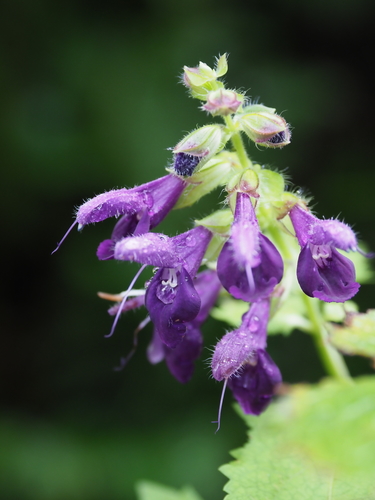
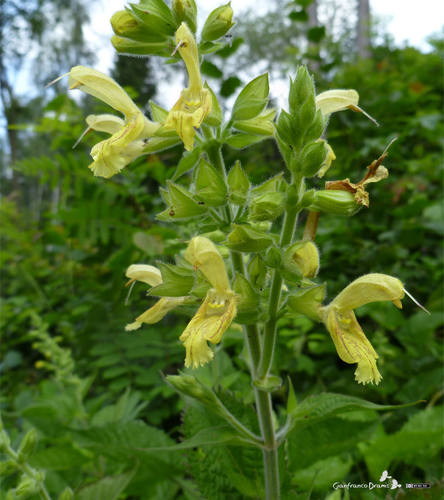
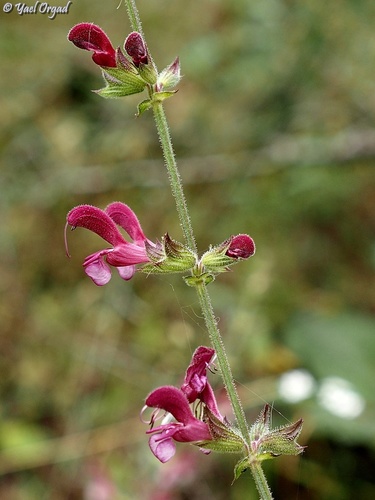
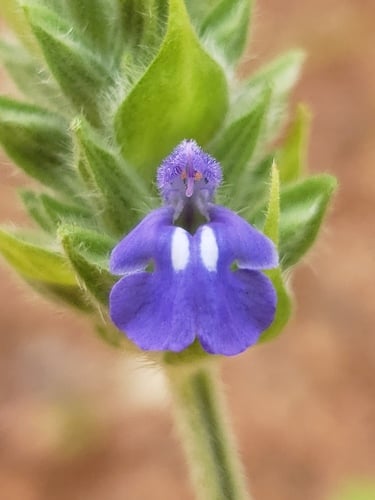
A shrub. It grows to 90 cm high. The leaves have a whitish covering. The leaves are simple and oval or sword shaped. They are 5 cm long. The flowers are pink, lilac or white. They are in spikes at the ends of branches.
Edible Uses
The leaves are used as a spice or as an adulterant of sage (S. officinalis). Though somewhat inferior in quality to true sage, this species is easier to grow indoors and accounts for 50–95% of commercially dried sage leaves. The leaves can also be infused to make a fragrant tea known as 'fascomiglia'.
Traditional Uses
The leaves are used as a spice or along with common sage. The leaves are brewed into a tea. They are also used to improve the flavour of tea.
This uses section is brief — help expand it
Medicinal Uses
The leaves are antihydrotic, antiseptic, antispasmodic, astringent, carminative, cholagogue, depurative, expectorant, febrifuge, stimulant, tonic, and vasodilator. Internally, they are used to treat digestive and respiratory complaints, menstrual problems, infertility, nervous tension, and depression. This remedy should not be prescribed to pregnant women. Leaves can be harvested as needed and used fresh, or collected before the flowers open and dried or distilled for their essential oil.
Distribution
It is a warm temperate plant. It grows in rocky places and gullies. It can grow in arid places. It suits hardiness zones 8-10.
Where It Grows
Africa, Albania, Australia, Balkans, Canary Islands, Crete, Cyprus, Europe, Greece, Israel, Italy, Jordan, Lebanon, Libya, Mediterranean, Middle East, North Africa, Palestine, Portugal, Sicily, Syria, Tasmania, Turkey, Türkiye,
Cultivation
Requires a very well-drained light sandy soil in a sunny position. Prefers a rich soil. Soils rich in nitrogen encourage excessive leaf growth at the expense of flowering. Plants are not very hardy outdoors in Britain, though they should succeed outdoors in the mildest areas of the country, but perhaps even there needing the protection of a south-facing wall. Plants can be killed by excessive winter wet. The flowers are very attractive to bees, providing a good source of nectar. Members of this genus are rarely if ever troubled by browsing deer. Sage leaves can be harvested throughout the growing season, with the best flavor typically from spring to early summer, just before flowering. Sage usually flowers in late spring to early summer, generally between May and June (Northern Hemisphere), depending on the specific species and growing conditions. Sage is a moderately fast-growing herb, often reaching maturity in about 1 to 2 years under optimal conditions.
Propagation
Sow seed in March or April in a greenhouse; germination usually takes place within 2 weeks. Prick out seedlings into individual pots when large enough to handle and plant out in early summer. In areas at the limits of the plant's hardiness, grow on under glass through the first winter and plant out in late spring the following year. Cuttings of half-ripe wood can be taken at almost any time during the growing season.
Other Uses
An essential oil obtained from the leaves is used to adulterate spike lavender oil (obtained from Lavandula latifolia). Sage works well as a companion plant, attracting pollinators and beneficial insects through its nectar-rich flowers, which draw bees, butterflies, and hummingbirds. Its strong aromatic scent can also deter harmful insects and herbivores, making it useful in pest management. The dense foliage and woody stems provide some shelter and overwintering sites for small animals, invertebrates, and beneficial insects.
Notes
There are about 900 Salvia species.
Synonyms
Also Known As
Adacayi, Almageyik, Almakeyik, Greek-oregano, Mariamieh, Three-lobe sage
References (25)
- Ali-Shtayeh, M. S., et al, 2008, Traditional knowledge of wild edible plants used in Palestine (Northern West Bank): A comparative study. J Ethnobiol Ethnomed. 4: 13
- Al-Qura'n, S. A., 2010, Ethnobotanical and Ecological Studies of Wild Edible Plants in Jordan. Libyan Agriculture Research Center Journal International 1(4):231-243
- Balut, G., 2016, Medicinal and wild food plants of Marmara Island (Balikesir - Turkey). Acta Societatis Botanicorum Poloniae 85 (2): 3501
- Blamey, M and Grey-Wilson, C., 2005, Wild flowers of the Mediterranean. A & C Black London. p 401
- Ciftcioglu, C. G., 2015, Sustainable wild-collection of medicinal and edible plants in Lefke region of North Cyprus. Agroforest Syst. Springer
Show all 25 references Hide references
- Cundall, P., (ed.), 2004, Gardening Australia: flora: the gardener's bible. ABC Books. p 1302
- Ertug, F., 2004, Wild Edible Plants of the Bodrum Area. (Mugla, Turkey). Turk. J. Bot. 28 (2004): 161-174
- Ertug, F, Yenen Bitkiler. Resimli Türkiye Florası -I- Flora of Turkey - Ethnobotany supplement
- Ertug, F, Yenen Bitkiler. Resimli Türkiye Florası -I- Flora of Turkey - Ethnobotany supplement
- Facciola, S., 1998, Cornucopia 2: a Source Book of Edible Plants. Kampong Publications, p 134
- Gard. dict. ed. 8: Salvia no. 5. 1768
- Gurdal, B. & Kultur, S., 2014, The edible and miscellaneous useful plants in Marmaris (Southwest Turkey). İstanbul Ecz. Fak. Derg. / J. Fac. Pharm. Istanbul 44(1) 2014 pp.69-78
- Hibbert, M., 2002, The Aussie Plant Finder 2002, Florilegium. p 284
- Hinnawi, N. S. A., 2010, An ethnobotanical study of wild edible plants in the Northern West Bank "Palestine". An-Najah National University. p 93
- Lawton, B.P., 2002, Mints. A Family of Herbs and Ornamentals. Timber Press, Portland, Oregon. p 184
- Pasta, S., et al, 2020, An Updated Checklist of the Sicilian Native Edible Plants: Preserving the Traditional Ecological Knowledge of Century-Old Agro-Pastoral Landscapes. Frontiers in Plant Science. Volume 11|Article 388 (As subsp. thomasii)
- Plants for a Future database, The Field, Penpol, Lostwithiel, Cornwall, PL22 0NG, UK. http://www.scs.leeds.ac.uk/pfaf/
- Rivera, D., Obon, C., and Cano, F., 1994, The Botany, History and Traditional Uses of Three-lobed Sage (Salvia fruticosa Miller). Economic Botany, Vol. 48, No. 2, pp. 190-195
- Rivera, D. et al, 2006, Gathered Mediterranean Food Plants - Ethnobotanical Investigations and Historical Development, in Heinrich M, Müller WE, Galli C (eds): Local Mediterranean Food Plants and Nutraceuticals. Forum Nutr. Basel, Karger, 2006, vol 59, pp 18–74
- Royal Botanic Gardens, Kew (1999). Survey of Economic Plants for Arid and Semi-Arid Lands (SEPASAL) database. Published on the Internet; http://www.rbgkew.org.uk/ceb/sepasal/internet [Accessed 19th April 2011]
- Skoula, M & Sarpaki, A., 2005, Traditional knowledge on the uses of wild plants in Crete, Greece.
- Tukan, S. K., et al, 1998, The use of wild edible plants in the Jordanian diet. International Journal of Food Sciences and Nutrition. 49:225-235
- van Wyk, B., 2005, Food Plants of the World. An illustrated guide. Timber press. p 335
- Wiersema, J. H. & Leon, B., 2013, World Economic Plants. A Standard Reference CRC Press. 2nd Ed. p 610
- World Checklist of Useful Plant Species 2020. Royal Botanic Gardens, Kew