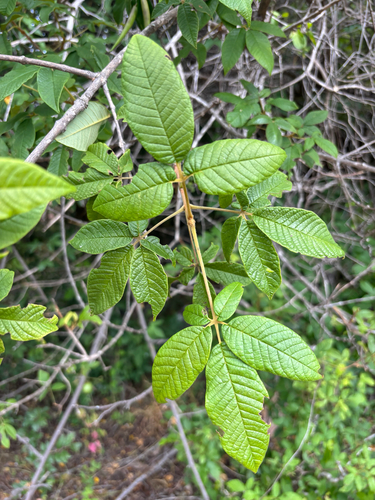
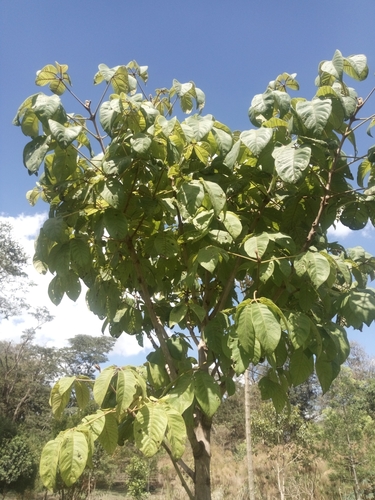
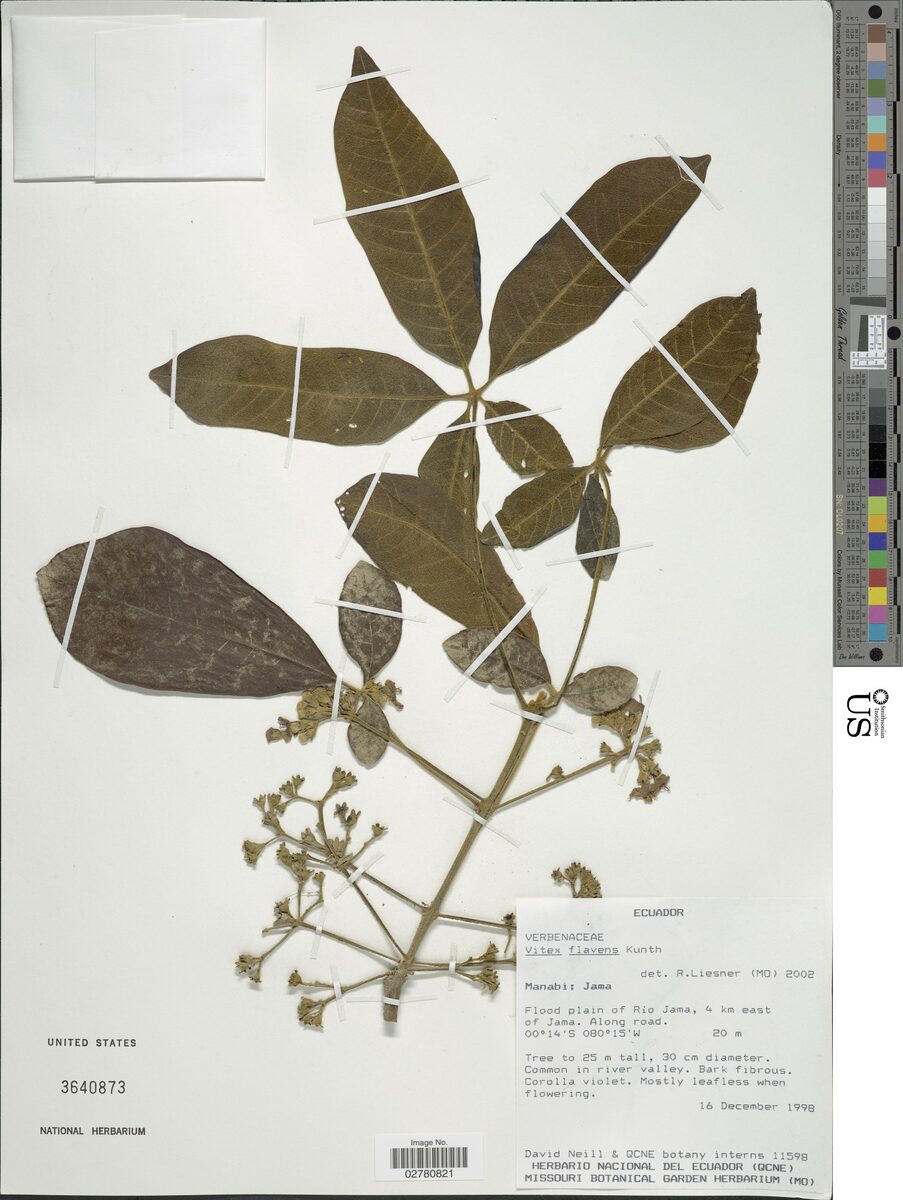
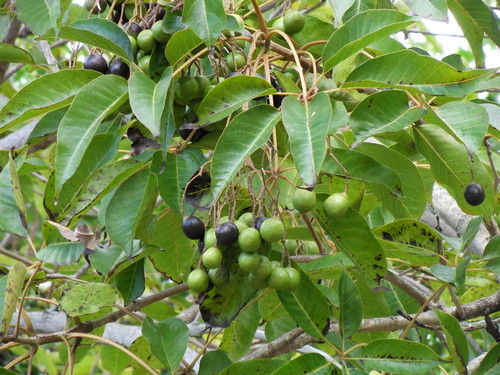
Salvia hispanica
L.
Chia, Mexican chia
iNaturalist· cc-by
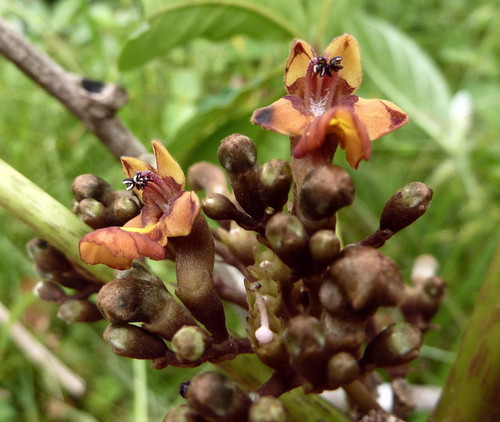
(c) Alex Abair, some rights reserved (CC BY), uploaded by Alex Abair
iNaturalist· cc-by-nc
(c) reinderw, some rights reserved (CC BY-NC)
iNaturalist· cc-by-nc
(c) adinie, some rights reserved (CC BY-NC), uploaded by adinie
Summary
Source: WikipediaSalvia hispanica, one of several related species commonly known as chia (), is a species of flowering plant in the mint family, Lamiaceae. It is native to central and southern Mexico and Guatemala. It is considered a pseudocereal, cultivated for its edible, hydrophilic chia seed, grown and commonly used as food in several countries of western South America, western Mexico, and the southwestern United States.
Description
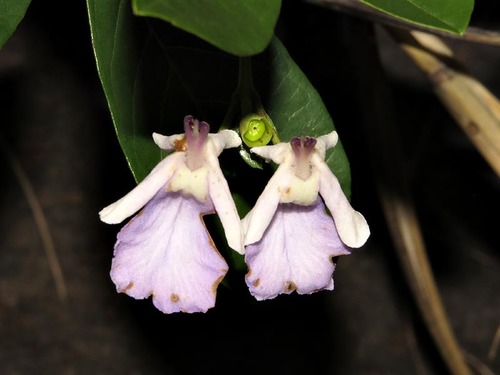
A small herb. Plants grow up to 1 m tall. It grows each year from seed. The leaves are opposite and 5-8 cm long and 3-5 cm wide. There are notches along the edges. The flowers are small and blue. They are in a spike at the top.
Edible Uses
When soaked in water, the seeds form a gelatinous mass that can be flavoured with fruit juices and consumed as a cooling drink, or prepared as a gruel or pudding. Sprouted seeds are eaten in salads, sandwiches, soups, and stews; their mucilaginous nature makes them well suited to sprouting on clay or other porous materials. The seed can also be ground into a meal and used to make bread, biscuits, and cakes, typically mixed with cereal flours. The seed is a good source of protein and easily digested fats.
Traditional Uses
The seeds are used to make a drink. They are soaked in water then lemon juice and cinnamon added. Chia leaves can be used to add flavour to poultry and meats. The sprouted seeds can be sprinkled on salads to give peppery taste. They are sprouted on a porous material to remove the slimy mucilage. The seeds can be prepared as a porridge. The ground seeds are used for bread, biscuits, muffins and cakes. The seeds yield an edible oil.
Medicinal Uses
None known
Distribution
A tropical plant. They need well drained soil. It can grow in arid conditions. It needs a temperature between 14° and 20 °C. It suits hardiness zone 9.
Where It Grows
Argentina, Asia, Australia, Bolivia, Central America, Cuba, El Salvador, Europe, Guatemala, India, Indonesia, Mexico*, North America, Paraguay, Peru, SE Asia, Slovenia, South America, Spain, West Indies,
Cultivation
Requires a light to medium well-drained fertile soil in a warm sunny position. Plants are not very frost tolerant but can be grown as summer annuals in Britain. This species is widely cultivated for its edible seed in Mexico. Many of the plants cultivated under this name are in fact S. lavandulifolia. Members of this genus are rarely if ever troubled by browsing deer. Sage usually flowers in late spring to early summer, generally between May and June (Northern Hemisphere), depending on the specific species and growing conditions. Sage is a moderately fast-growing herb, often reaching maturity in about 1 to 2 years under optimal conditions.
Propagation
Sow seed in March or April in a greenhouse; germination usually takes place within 2 weeks. Prick out seedlings into individual pots when large enough to handle and plant out in late spring or early summer. Seed can also be sown in situ during April or May, though this sowing may not mature seed during a cool summer.
Other Uses
Sage works well as a companion plant, attracting pollinators and beneficial insects through its nectar-rich flowers, which draw bees, butterflies, and hummingbirds. Its strong aromatic scent can deter harmful insects and herbivores, making it useful in pest management. The dense foliage and woody stems provide some shelter and overwintering sites for small animals, invertebrates, and beneficial insects.
Production
Plants are very fast growing.
Other Information
It is a cultivated food crop.
Notes
There are about 900 Salvia species. Seeds are rich in omega-3 fatty acids.
Synonyms
Also Known As
Spanish sage
References (17)
- Altschul, S.V.R., 1973, Drugs and Foods from Little-known Plants. Notes in Harvard University Herbaria. Harvard Univ. Press. Massachusetts. no. 3758
- Burkill, I.H., 1966, A Dictionary of the Economic Products of the Malay Peninsula. Ministry of Agriculture and Cooperatives, Kuala Lumpur, Malaysia. Vol 2 (I-Z) p 1979
- Creasey, R., 2000, Edible Mexican Garden. Periplus. p 29
- Facciola, S., 1998, Cornucopia 2: a Source Book of Edible Plants. Kampong Publications, p 134
- Hermandez Bermejo, J.E., and Leon, J. (Eds.), 1994, Neglected Crops. 1492 from a different perspective. FAO Plant Production and Protection Series No 26. FAO, Rome. p18
Show all 17 references Hide references
- Hibbert, M., 2002, The Aussie Plant Finder 2002, Florilegium. p 284
- http://www.botanic-gardens-ljubljana.com/en/plants
- INFOODSUpdatedFGU-list.xls
- Kermath, B. M., et al, 2014, Food Plants in the Americas: A survey of the domesticated, cultivated and wild plants used for Human food in North, Central and South America and the Caribbean. On line draft. p 778
- Kiple, K.F. & Ornelas, K.C., (eds), 2000, The Cambridge World History of Food. CUP p 1751
- Lawton, B.P., 2002, Mints. A Family of Herbs and Ornamentals. Timber Press, Portland, Oregon. p 184
- Mapes, C. & Basurto, F., 2016, Biodiversity and Edible Plants of Mexico. Chapter 5 in R. Lira, et al. (eds.), Ethnobotany of Mexico, Ethnobiology, Springer. p 91
- Martin, F.W. & Ruberte, R.M., 1979, Edible Leaves of the Tropics. Antillian College Press, Mayaguez, Puerto Rico. p 105, 196
- Plants for a Future database, The Field, Penpol, Lostwithiel, Cornwall, PL22 0NG, UK. http://www.scs.leeds.ac.uk/pfaf/
- Sp. pl. 1:25. 1753
- Wiersema, J. H. & Leon, B., 2013, World Economic Plants. A Standard Reference CRC Press. 2nd Ed. p 610
- World Checklist of Useful Plant Species 2020. Royal Botanic Gardens, Kew