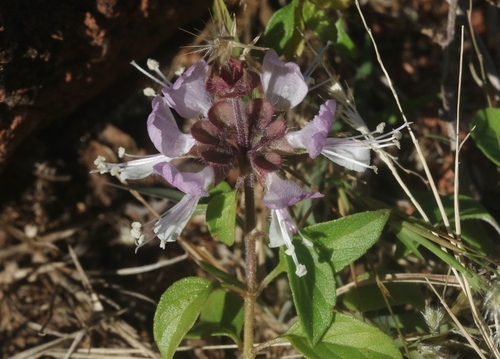
Salvia hierosolymitana
Boiss.
Jerusalem sage
iNaturalist· cc-by-nc
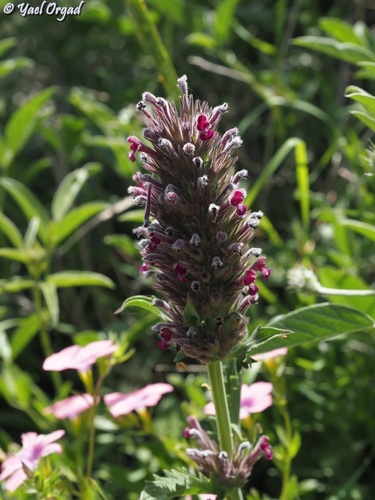
(c) Yael Orgad, some rights reserved (CC BY-NC), uploaded by Yael Orgad
iNaturalist· cc-by-nc
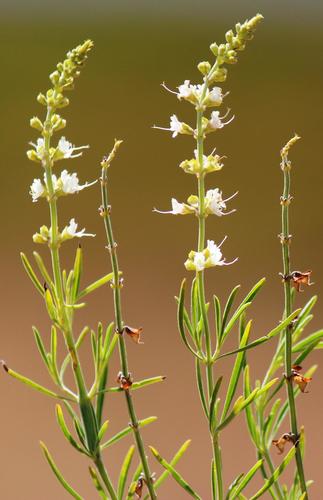
(c) Sami Tamson, some rights reserved (CC BY-NC)
iNaturalist· cc-by-nc
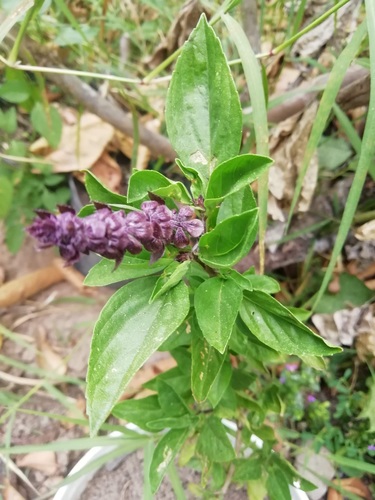
(c) Ron Frumkin, some rights reserved (CC BY-NC)
Summary
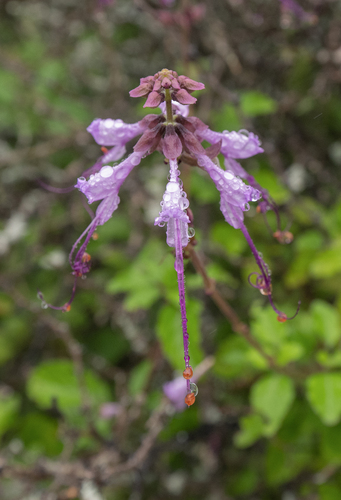
Source: WikipediaSalvia hierosolymitana is a species of flowering plant in the family Lamiaceae. It is a herbaceous perennial commonly called Jerusalem salvia or Jerusalem sage that is native to the eastern Mediterranean, with populations in Cyprus, Israel, Jordan, Lebanon, Syria, and the West Bank. It typically grows in open fields, rocky soils, and among low-growing native shrubs. It was first described in 1853 by botanist Pierre Edmond Boissier, with the epithet "hierosolymitana" referring to "royal, sacred Jerusalem". It forms a mound of basal leaves that spreads to 2 ft (0.6 m), and slightly less in height. The ovate mid-green leaves are evergreen, lightly covered with hairs, and with a scalloped margin, growing 8–10 in (20–25 cm) long with prominent veining underneath. The 1 in or smaller flowers are a wine-red color, growing in widely spaced whorls, with 2–6 flowers per whorl. The lower lip is white, with wine-red spotting. The calyces are pea-green with red veins and bracts edged in red. The square stem of the 1 ft long inflorescences are also edged in red. Unlike many salvias, there is no odor when the leaves are crushed, and there is no known medicinal use of this plant.
Description
A herb. It has dark pink or reddish flowers.
This description is brief — help expand it
Edible Uses
In Jordanian and Palestinian cuisine, the leaves are stuffed with meat and rice then cooked with lamb riblets.
Traditional Uses
The leaves are cooked as a vegetable with rice and meat. They are chopped and added to soups and stews or as a pot herb.
This uses section is brief — help expand it
Medicinal Uses
In Jordan and Palestine, the plant is used for folk herbal medicine for treating various ailments, the seeds are used to prepare a remedy for skin cancer.
Distribution
It is a Mediterranean climate plant.
Where It Grows
Jordan, Mediterranean, Middle East, Palestine, Turkey, Türkiye,
Also Known As
Lessaineh
References (5)
- Ali-Shtayeh, M. S., et al, 2008, Traditional knowledge of wild edible plants used in Palestine (Northern West Bank): A comparative study. J Ethnobiol Ethnomed. 4: 13
- Hinnawi, N. S. A., 2010, An ethnobotanical study of wild edible plants in the Northern West Bank "Palestine". An-Najah National University. p 93
- Oran, S. A. S., 2015, Selected wild plant species with exotic flowers from Jordan. International Journal of Bioversity and Conservation. Vol. 7(5), pp 308-320
- Rivera, D. et al, 2006, Gathered Mediterranean Food Plants - Ethnobotanical Investigations and Historical Development, in Heinrich M, Müller WE, Galli C (eds): Local Mediterranean Food Plants and Nutraceuticals. Forum Nutr. Basel, Karger, 2006, vol 59, pp 18–74 (As hyerosolimitana)
- Tukan, S. K., et al, 1998, The use of wild edible plants in the Jordanian diet. International Journal of Food Sciences and Nutrition. 49:225-235