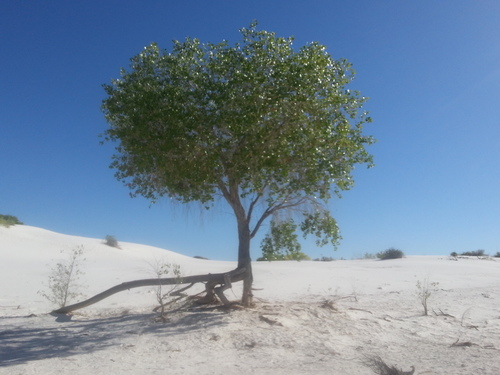
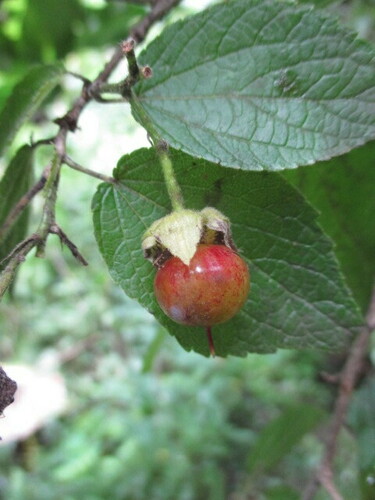
Salix viminalis
L.
Common Osier, Basket willow, Silky osier
iNaturalist· cc-by-nc
(c) Дмитрий Епихин, some rights reserved (CC BY-NC)
iNaturalist· cc-by-nc
(c) Дмитрий Епихин, some rights reserved (CC BY-NC)
iNaturalist· cc-by-nc
(c) Дмитрий Епихин, some rights reserved (CC BY-NC)
Summary
Source: WikipediaSalix viminalis, the basket willow, common osier or osier, is a species of willow native to Europe, Western Asia, and the Himalayas.
Description
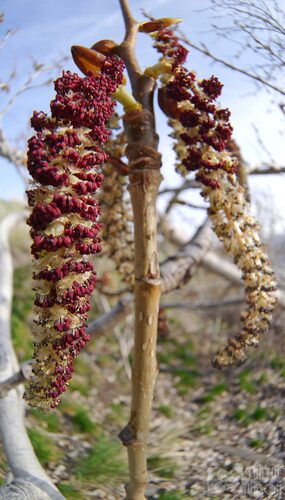
A shrub which loses its leaves during the year. It grows to 10 m tall and often has several flexible stems. The leaves are very long and narrow. They are green on top and have dense silvery hairs underneath. They have a sharp point and without teeth. The edges often roll inwards on the underside. Male and female catkins grow on separate twigs. The fruit are capsules covered with down. The fruit do not have stalks.
Edible Uses
The inner bark can be eaten raw or cooked, or dried, ground into a powder, and added to cereal flour for bread-making. It has a very bitter flavour and is a famine food, used only when nothing else is available. Young shoots can be cooked but are not very palatable.
Medicinal Uses
The fresh bark of all willows contains salicin, which likely breaks down into salicylic acid (closely related to aspirin) in the body. This gives it antirheumatic and febrifuge properties, as well as use as an anodyne.
Known Hazards
None listed.
Distribution
It is a temperate plant. It suits cool, moist soils. In Argentina it grows from sea level to 1,000 m above sea level. It suits hardiness zones 4-10.
Where It Grows
Argentina, Asia, Australia, Britain, Canada, Chile, Europe, Falklands, Greece, India, Luxembourg, Mediterranean, North America, Pakistan, Slovenia, USA,
Cultivation
Succeeds in most soils, including wet, ill-drained or intermittently flooded soils, but prefers a damp, heavy soil in a sunny position. Dislikes heavy shade and dry soils. Rarely thrives on chalk. Tolerates atmospheric pollution. A fast growing tree, it is very wind resistant. Widely cultivated for basket making, there are many named varieties. Trees are usually coppiced annually for this purpose, they do not respond so well to pollarding. It should be cut back almost to ground level each year when being grown for basket making since this encourages the production of long flexible shoots. In very good conditions plants can put on 4 metres or more of new growth in a year when treated in this way. A very important food source for the caterpillars of many butterfly species, it is also a valuable early pollen source for bees. The plants are rich in insect life. Best planted into its permanent position as soon as possible. The root system is rather aggressive and can cause problems with drains. Plants are best not grown within 10 metres of buildings. Plants in this genus are notably susceptible to honey fungus. Dioecious. Male and female plants must be grown if seed is required.
Propagation
Seed must be surface sown as soon as it ripens in late spring, as viability is very short — perhaps only a few days. Cuttings of mature wood from the current year's growth can be taken November to February and rooted in a sheltered outdoor bed or planted directly into their permanent position with a good weed-suppressing mulch; this is very easy. Plant out in autumn. Half-ripe cuttings taken June to August and rooted in a frame are also very easy.
Other Uses
The flexible stems are used in basket making, with plants typically coppiced annually or every two years for thicker upright poles. Annual yield can reach around 12 tonnes per hectare, of which 40% is class 1. The bark contains about 10% tannin. The plant is frequently planted along river and lake banks to prevent soil erosion.
Notes
There are about 300 Salix species.
Also Known As
Beka
References (10)
- Ambasta, S.P. (Ed.), 2000, The Useful Plants of India. CSIR India. p 542
- Cundall, P., (ed.), 2004, Gardening Australia: flora: the gardener's bible. ABC Books. p 1299
- Flora of Pakistan. www.eFloras.org
- Harris, E & J., 1983, Field Guide to the Trees and Shrubs of Britain. Reader's Digest. p 119
- http://www.botanic-gardens-ljubljana.com/en/plants
Show all 10 references Hide references
- Little, E.L., 1980, National Audubon Society Field Guide to North American Trees. Alfred A. Knopf. p 337
- Plants for a Future database, The Field, Penpol, Lostwithiel, Cornwall, PL22 0NG, UK. http://www.scs.leeds.ac.uk/pfaf/
- Schuler, S., (Ed.), 1977, Simon & Schuster's Guide to Trees. Simon & Schuster. No. 165
- Sfikas, G., 1984, Trees and shrubs of Greece. Efstathiadis Group. Athens. p 168
- Sp. pl. 2:1021. 1753