Populus angustifolia
E. James ex Torr.
Narrowleaf cottonwood
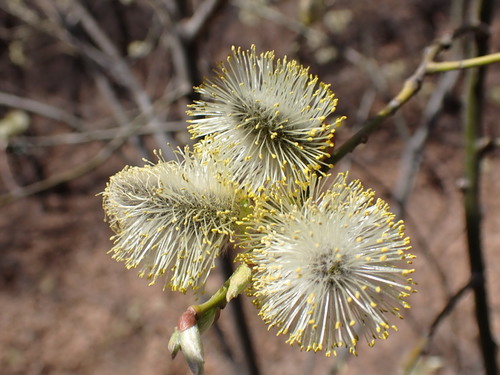
iNaturalist· cc-by-nc
(c) Eric Hough, some rights reserved (CC BY-NC), uploaded by Eric Hough
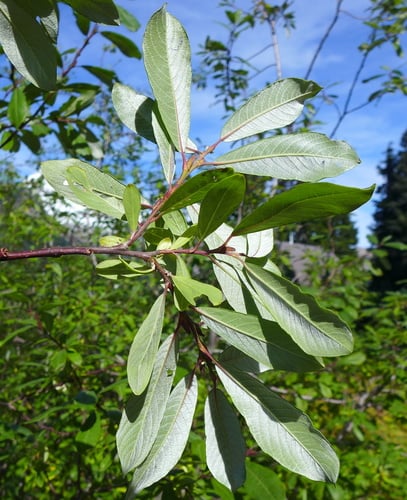
iNaturalist· cc-by-nc
(c) Bryan Hamilton, some rights reserved (CC BY-NC), uploaded by Bryan Hamilton
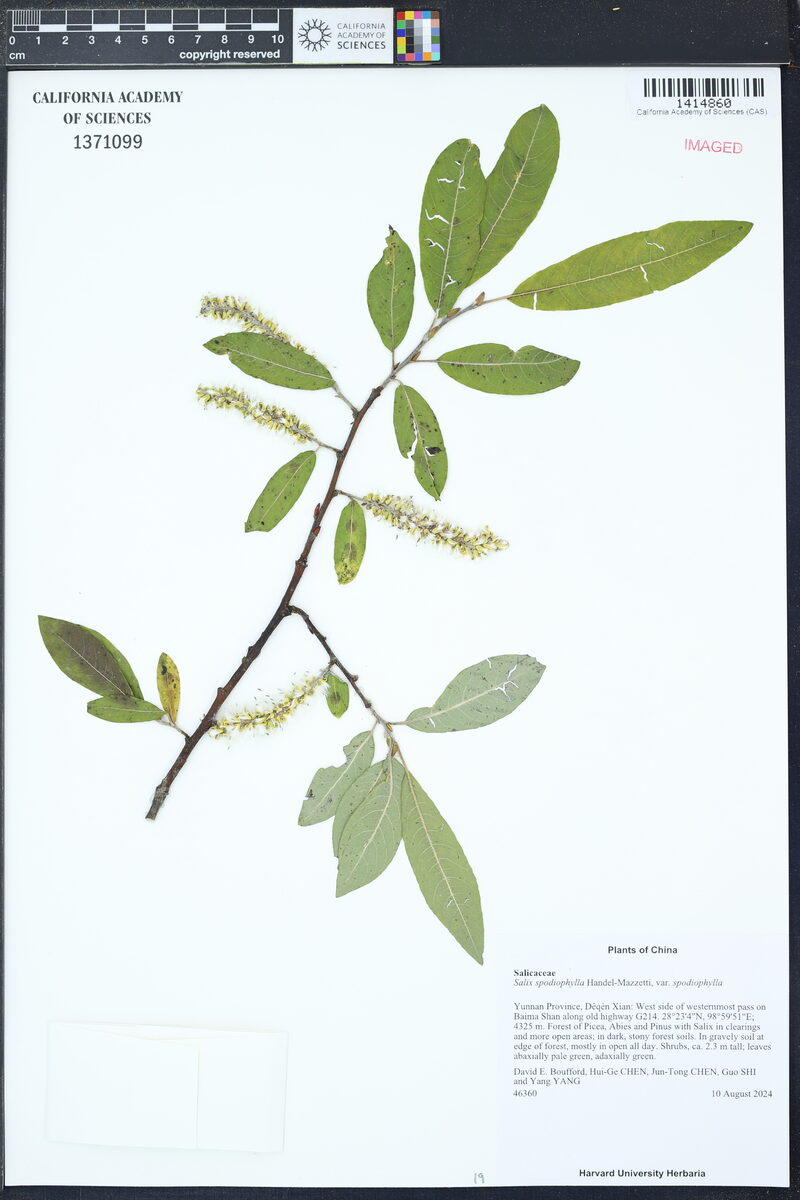
iNaturalist· cc-by-sa
(c) Matt Lavin, some rights reserved (CC BY-SA)
Summary
Source: WikipediaPopulus angustifolia, commonly known as the narrowleaf cottonwood, is a species of tree in the willow family (Salicaceae). It is native to western North America, where it is a characteristic species of the Rocky Mountains and the surrounding plains. It ranges north to the provinces of Alberta and Saskatchewan in Canada and south to the states of Chihuahua, Coahuila, and Sonora in Mexico. Its natural habitat is by streams and creeks between 3,900 to 7,900 feet (1,200 to 2,400 m) elevation.
Description
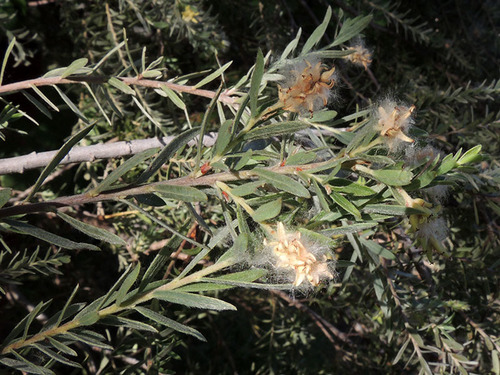
A small tree. It grows to 15 m high. The trunk can be 30 cm across. The leaves are 5-9 cm long. There are fine teeth along the edge.
This description is brief — help expand it
Edible Uses
Inner bark is available, and while no further details are given for this species, inner bark is typically dried, ground into a powder, and used as a thickener in soups or added to cereals when making bread. A honeydew produced on the undersides of leaves by aphids was collected by various native North American Indian tribes and used as a sweetener. The buds have been used as a chewing gum.
Traditional Uses
The buds are eaten and also used as a chewing gum.
This uses section is brief — help expand it
Medicinal Uses
A tea made from the inner bark is used to treat scurvy. The bark contains salicin, a glycoside that likely breaks down into salicylic acid (aspirin) in the body, giving the bark anodyne, anti-inflammatory, and febrifuge properties. It is used particularly for rheumatism, fevers, and menstrual cramp pain. The woolly fruit is moistened and applied to the gums to treat infections. A tea made from the fruits is used for toothache.
Distribution
It is a temperate plant.
Where It Grows
Canada, North America, USA,
Cultivation
An easily grown plant, it does well in a heavy cold damp soil. Prefers a deep rich well-drained circumneutral soil, growing best in the south and east of Britain. Growth is much less on wet soils, on poor acid soils and on thin dry soils. It does not do well in exposed upland sites. Dislikes shade, it is intolerant of root or branch competition. A fast-growing but short-lived species in the wild. The young leaves and expanding buds emit a pleasant distinctive fragrance in the spring. Poplars have very extensive and aggressive root systems that can invade and damage drainage systems. Especially when grown on clay soils, they should not be planted within 12 metres of buildings since the root system can damage the building's foundations by drying out the soil. Dioecious. Male and female plants must be grown if seed is required. Hybridizes freely with other members of this genus.
Propagation
Seed must be sown as soon as it is ripe in spring, as poplar seed has an extremely short viability period and must be sown within a few days of ripening. Surface sow or lightly cover seed in trays in a cold frame. Prick seedlings into individual pots when large enough to handle and grow on in the cold frame. If sufficient growth is made, plant out in late summer into permanent positions; otherwise overwinter in the cold frame and plant out the following late spring. Most poplar species hybridize freely, so seed may not come true unless collected in the wild where no other poplar species are present. Take cuttings of mature wood from the current season's growth, 20–40 cm long, in November or December, in a sheltered outdoor bed or directly into permanent positions — very easy to root. Suckers can be taken in early spring.
Other Uses
An extract of the shoots can be used as a rooting hormone for all types of cuttings, prepared by soaking chopped shoots in cold water for a day. Young shoots are used in basket making. The tree's well-developed root system helps reduce erosion when planted on banks and slopes. The wood is weak, soft, rather woolly in texture, without smell or taste, of low flammability, not durable, and very resistant to abrasion, weighing 24 lb per cubic foot. The tree's scarcity and small size make it commercially unimportant, though it is used locally for fence posts and fuel.
Notes
There are about 35 Populus species.
Synonyms
References (5)
- Ann. Lyceum Nat. Hist. New York 2:249. 1828 (E. James,Account exped. Pittsburgh 1:497. 1823, nom. nudum)
- Beckstrom-Sternberg, Stephen M., and James A. Duke. "The Foodplant Database." http://probe.nalusda.gov:8300/cgi-bin/browse/foodplantdb.(ACEDB version 4.0 - data version July 1994)
- Farrar, J.L., 1995, Trees of the Northern United States and Canada. Iowa State University press/Ames p 342
- http://www.stoller-eser.com/Flora/ethnobotany_table.htm
- Moerman, D. F., 2010, Native American Ethnobotany. Timber Press. p 427