Populus alba
L.
Silver poplar
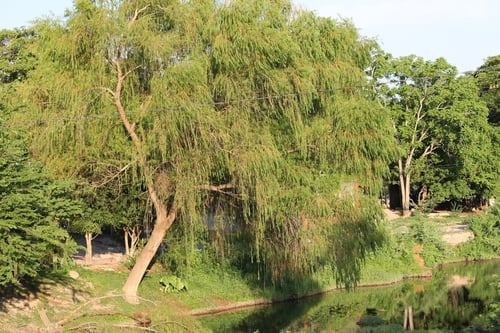
iNaturalist· cc-by-nc
(c) nbonnemaison, some rights reserved (CC BY-NC)
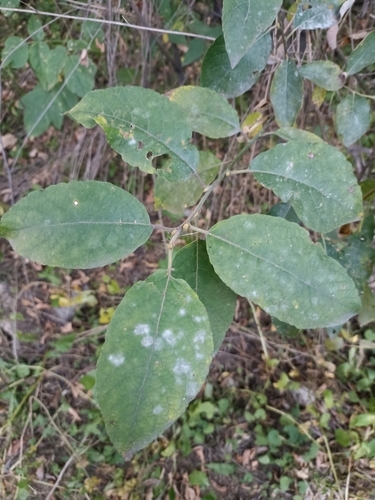
iNaturalist· cc-by-nc
(c) Дмитрий, some rights reserved (CC BY-NC), uploaded by Дмитрий
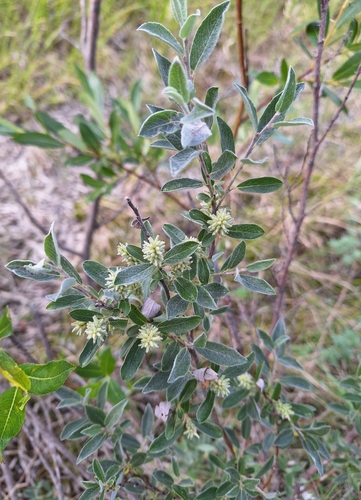
iNaturalist· cc-by-nc
(c) Kristin Johnson, some rights reserved (CC BY-NC), uploaded by Kristin Johnson
Summary
Source: WikipediaPopulus alba, commonly called silver poplar, silverleaf poplar, white poplar, or abele is a species of poplar, most closely related to the aspens (Populus sect. Populus). It is native to a region spanning from the Atlas Mountains of Africa, through most of South and Central Europe, into Central Asia; it has been introduced to many temperate, moist regions worldwide. It grows in moist sites, often by watersides, in regions with hot summers and cold to mild winters.
Description
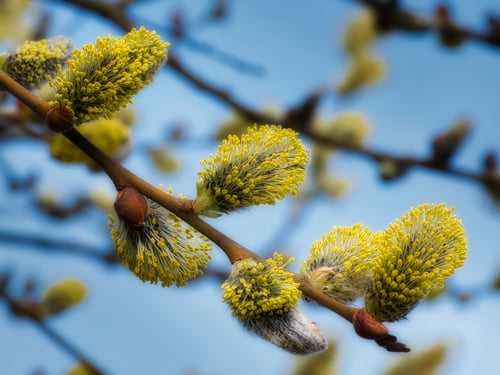
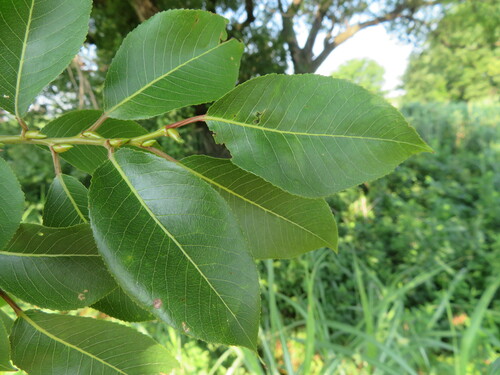
A broad spreading tree. It grows to 20-30 m high. The bark is dark grey-green and cracked. The branches are twisted. The young shoots are covered with thick white felt. The leaves are alternate. The leaves are dark green with a silvery and downy underside. They are 10 cm long by 7.5 cm wide. They can be maple like with 3-5 lobes and a wavy or slightly lobed edge. Leaves turn yellow in autumn, then fall. The leaf stalks are flattened and flexible. The flowers are separately male and female on separate trees. They are catkins. Male flowers are crimson and female flowers are green. The plant produces many suckers.
Edible Uses
The leaves are rich in vitamin C. The inner bark can be dried, ground into a powder, and added to flour for making bread. It is considered a famine food, used only when nothing else is available.
Traditional Uses
The leaves are boiled then eaten with oil and salt. The inner bark is used as a substitute for flour in making bread. The seed 'cotton' has been chewed.
Medicinal Uses
The stem bark is anodyne, anti-inflammatory, antiseptic, astringent, diuretic, and tonic. It contains salicylates, from which aspirin is derived. Internally, it is used to treat rheumatism, arthritis, gout, lower back pain, urinary complaints, digestive and liver disorders, and debility, as well as to reduce fevers, treat anorexia, and relieve menstrual cramp pain. Externally, the bark is used for chilblains, haemorrhoids, infected wounds, and sprains. Bark is harvested from side branches or coppiced trees and dried for later use. The leaves are used in treating caries of teeth and bones. The twigs are depurative.
Distribution
It is a temperate plant. It is native to N. Africa, C. and W. Asia and Europe. It grows well near the sea. It likes lime. It suits hardiness zones 3-10. Tasmania Herbarium. Arboretum Tasmania.
Where It Grows
Africa, Andorra, Asia, Australia, Britain, Canada, China, Eurasia, Europe, Greece, India, Iraq, Italy, Korea, Mediterranean, Middle East, North Africa, North America, Pakistan, San Marino, Slovenia, St Helena, Tasmania, Turkey, Türkiye, USA,
Cultivation
An easily grown plant, it does well in a heavy cold damp soil. Prefers a deep rich well-drained circumneutral soil, growing best in the south and east of Britain. Growth is much less on wet soils, on poor acid soils and on thin dry soils. This species thrives on drier soils than other members of the genus. It does not do well in exposed upland sites but it is tolerant of maritime exposure, though it can be wind pruned in such a situation. Dislikes shade, it is intolerant of root or branch competition. Tolerates both hot and cool summers. A very ornamental tree, it is fast-growing but fairly short-lived. There are several named varieties. An important food plant for the caterpillars of many species of butterflies. The leaf buds are resinous and exude an aromatic perfume in the spring. Poplars have very extensive and aggressive root systems that can invade and damage drainage systems. Especially when grown on clay soils, they should not be planted within 12 metres of buildings since the root system can damage the building's foundations by drying out the soil. Dioecious. Male and female plants must be grown if seed is required. Hybridizes freely with other members of this genus.
Propagation
Seed must be sown as soon as it is ripe in spring, as poplar seed has an extremely short viability period and must be sown within a few days of ripening. Surface sow or lightly cover seed in trays in a cold frame. Prick seedlings into individual pots when large enough to handle and grow on in the cold frame. If sufficient growth is made, plant out in late summer into permanent positions; otherwise overwinter in the cold frame and plant out the following late spring. This species does not often produce viable seed in Britain. Most poplar species hybridize freely, so seed may not come true unless collected in the wild where no other poplar species are present. Take cuttings of mature wood from the current season's growth, 20–40 cm long, in November or December, and place in a sheltered outdoor bed or directly into permanent positions — very easy to root. Suckers can be taken in early spring.
Other Uses
An extract of the shoots can be used as a rooting hormone for all types of cuttings, made by soaking chopped shoots in cold water for a day. The tree is fairly wind resistant and suitable for shelterbelt planting. A yellow dye is obtained from the bark. The wood is rather woolly in texture, without smell or taste, of low flammability, not durable, very resistant to abrasion, and very light, soft, and elastic. It is used for lower-grade purposes such as making matches and packing materials.
Notes
There are about 35 (100) Populus species. There are 4 in tropical America. Chemical composition: rich in Vitamin C. Contains populin and monobenzylsalicin. The inner bark of most poplar species can be eaten raw, or boiled.
Also Known As
Abele, Alamo blanco, Bolleana poplar, Chitta bagnu, Choupo-branco, Fras, Jangli-frast, Safeda, Topol, White poplar
References (27)
- Ambasta, S.P. (Ed.), 2000, The Useful Plants of India. CSIR India. p 484
- Bodkin, F., 1991, Encyclopedia Botanica. Cornstalk publishing, p 822
- Brickell, C. (Ed.), 1999, The Royal Horticultural Society A-Z Encyclopedia of Garden Plants. Convent Garden Books. p 820
- Coombes, A.J., 2000, Trees. Dorling Kindersley Handbooks. p 286
- Cundall, P., (ed.), 2004, Gardening Australia: flora: the gardener's bible. ABC Books. p 1072
Show all 27 references Hide references
- Farrar, J.L., 1995, Trees of the Northern United States and Canada. Iowa State University press/Ames p 351
- Flora of Australia, Volume 8, Lecythidales to Batales, Australian Government Publishing Service, Canberra (1982) p 201
- Harris, E & J., 1983, Field Guide to the Trees and Shrubs of Britain. Reader's Digest. p 139
- Hedrick, U.P., 1919, (Ed.), Sturtevant's edible plants of the world. p 512
- Hibbert, M., 2002, The Aussie Plant Finder 2002, Florilegium. p 238
- http://www.botanic-gardens-ljubljana.com/en/plants
- Hussey, B.M.J., Keighery, G.J., Cousens, R.D., Dodd, J., Lloyd, S.G., 1997, Western Weeds. A guide to the weeds of Western Australia. Plant Protection Society of Western Australia. p 212
- Joyce, D., 1998, The Garden Plant Selector. Ryland, Peters and Small. p 116
- Kermath, B. M., et al, 2014, Food Plants in the Americas: A survey of the domesticated, cultivated and wild plants used for Human food in North, Central and South America and the Caribbean. On line draft. p 677
- Kiple, K.F. & Ornelas, K.C., (eds), 2000, The Cambridge World History of Food. CUP p 1838
- Lazarides, M. & Hince, B., 1993, Handbook of Economic Plants of Australia, CSIRO. p 196
- Little, E.L., 1980, National Audubon Society Field Guide to North American Trees. Alfred A. Knopf. p 320
- Lord, E.E., & Willis, J.H., 1999, Shrubs and Trees for Australian gardens. Lothian. p 65
- Paczkowska, G . & Chapman, A.R., 2000, The Western Australian Flora. A Descriptive Calatogue. Western Australian Herbarium. p 526
- Pieroni, A., et al, 2020, Wild food plants traditionally gathered in central Armenia: archaic ingredients or future sustainable foods? Environment, Development and Sustainability. Springer p 9
- Plants for a Future database, The Field, Penpol, Lostwithiel, Cornwall, PL22 0NG, UK. http://www.scs.leeds.ac.uk/pfaf/
- READ,
- Schuler, S., (Ed.), 1977, Simon & Schuster's Guide to Trees. Simon & Schuster. No. 145
- Sfikas, G., 1984, Trees and shrubs of Greece. Efstathiadis Group. Athens. p 160
- Sp. pl. 2:1034. 1753
- Tasmanian Herbarium Vascular Plants list p 53
- World Checklist of Useful Plant Species 2020. Royal Botanic Gardens, Kew