Salix purpurea
L.
Purple osier willow, Alaska blue willow, Arctic willow
iNaturalist· cc-by-nc-sa
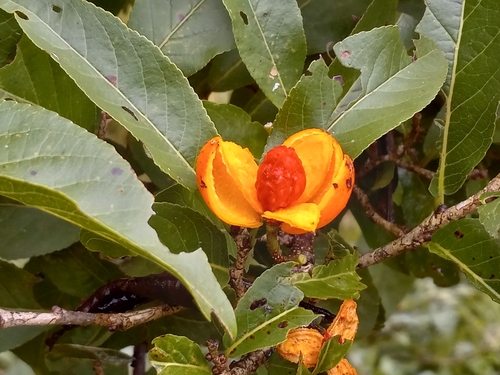
(c) Ramunė Vakarė, some rights reserved (CC BY-NC-SA)
iNaturalist· cc-by-sa
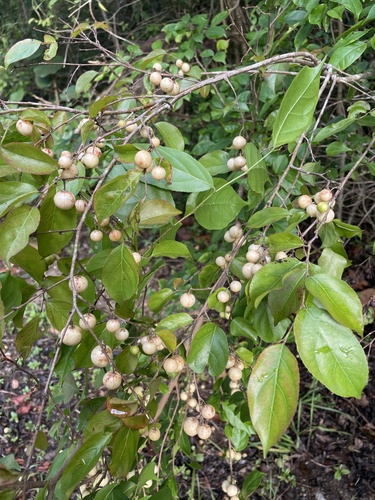
(c) MurielBendel, some rights reserved (CC BY-SA)
iNaturalist· cc-by
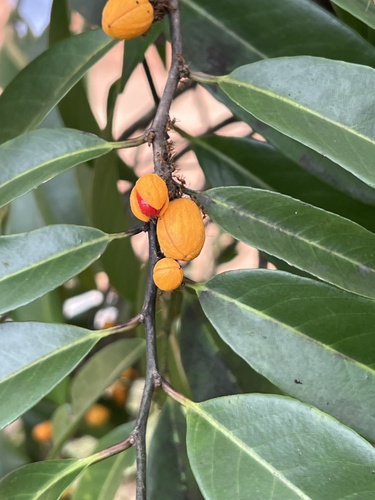
(c) Yurii Basov, some rights reserved (CC BY)
Summary
Source: WikipediaSalix purpurea, known in Britain as purple willow, is a shrub or small tree native to Europe, western Asia and northwest Africa. It has been introduced to many other parts of the world as an ornamental garden plant, and it is widely used in basket making. Within its native range and some places where it is naturalised it is found in wetlands such as lake margins and the floodplains of rivers.
Description
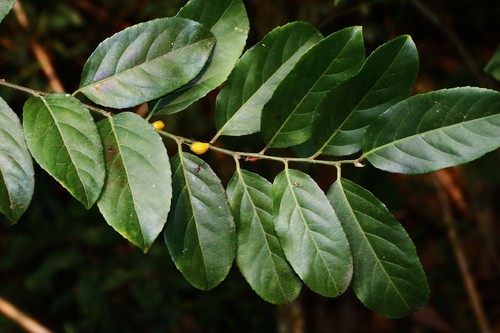
A shrubby tree. It grows to 5 m high. It spreads 5 m wide. The shoots arch over and are purple. The leaves are narrow and oblong. They are bluish green above and paler underneath. The flower catkins are red but become purple-black.
Edible Uses
The inner bark can be eaten raw or cooked, or dried, ground into a powder, and added to cereal flour for bread-making. It is very bitter and is a famine food used only as a last resort. Young shoots can be eaten raw or cooked, though they are not very palatable.
Traditional Uses
The fresh leaves are boiled in water for tea.
This uses section is brief — help expand it
Medicinal Uses
The bark is anodyne, anti-inflammatory, antiperiodic, antiseptic, astringent, diaphoretic, diuretic, febrifuge, hypnotic, sedative, and tonic. It is a very rich source of salicin, used in making aspirin. Used interchangeably with S. alba, it is taken internally for rheumatism, arthritis, gout, inflammatory stages of auto-immune diseases, diarrhoea, dysentery, feverish illnesses, neuralgia, and headache. Bark is removed in summer and dried for later use. The leaves treat minor feverish illnesses, colic, cancerous sores, and chronic dysentery, and can be harvested throughout the growing season for use fresh or dried. The twigs are used in the treatment of cancer, dysentery, and ulcers. The bark of the stem and roots is anodyne and styptic, used for rheumatism. The German Commission E Monographs approve Salix for diseases accompanied by fever, rheumatic ailments, and headaches.
Known Hazards
Gastrointestinal bleeding & kidney damage possible. Avoid concurrent administration with other aspirin-like drugs. Avoid during pregnancy. Drug interactions associated with salicylates applicable.
Distribution
It is a temperate plant. It suits hardiness zones 5-10. Tasmania Herbarium.
Where It Grows
Africa, Albania, Algeria, Asia, Australia, Austria, Belarus, Bolivia, Britain, Canada, Central Asia, China, Denmark, Eurasia, Europe, Greece, Iraq, Italy, Japan, Mediterranean, Middle East, North Africa, North America, Norway, Poland, Portugal, Romania, San Marino, Slovenia, Spain, Switzerland, Tajikistan, Tasmania, Tunisia, Turkey, Türkiye, Ukraine, USA, Yugoslavia,
Cultivation
Succeeds in most soils, including wet, ill-drained or intermittently flooded soils, but prefers a damp, heavy soil in a sunny position. Plants prefer an alkaline or neutral soil, rarely doing well in acid conditions. Said to prefer a sandy soil, plants are tolerant of dryish soils. Plants are tolerant of salt water. A very ornamental plant, it is cultivated for its branches which are used in basket making, there are some named varieties. Plants are coppiced annually for this purpose A very important food plant for the caterpillars of many butterfly species and a good bee plant, providing an early source of nectar and pollen. Plants in this genus are notably susceptible to honey fungus. Plants should be put into their permanent positions as soon as possible. Dioecious. Male and female plants must be grown if seed is required.
Propagation
Seed must be surface sown as soon as it ripens in late spring, as viability is very short — perhaps only a few days. Cuttings of mature wood from the current year's growth can be taken November to February and rooted in a sheltered outdoor bed or planted directly into their permanent position with a good weed-suppressing mulch; this is very easy. Plant out in autumn. Half-ripe cuttings taken June to August and rooted in a frame are also very easy.
Other Uses
The tough, flexible stems are used in basket making, with plants typically coppiced annually or every two years for thicker uprights. Rabbits strongly dislike the bark, so a closely woven fence of this plant can serve as a protective barrier. The bark contains about 10% tannin. The variety 'Gracilis' is suitable as a small hedge on damp sites and can be kept dense with annual clipping. The plant's extensive root system makes it useful in soil reclamation and stabilization projects along estuaries. It is also a dynamic accumulator.
Notes
There are about 300 Salix species.
Synonyms
Also Known As
Rdeča vrba
References (10)
- Cundall, P., (ed.), 2004, Gardening Australia: flora: the gardener's bible. ABC Books. p 1298
- Farrar, J.L., 1995, Trees of the Northern United States and Canada. Iowa State University press/Ames p 334
- Hibbert, M., 2002, The Aussie Plant Finder 2002, Florilegium. p 284
- http://www.botanic-gardens-ljubljana.com/en/plants
- Hu, Shiu-ying, 2005, Food Plants of China. The Chinese University Press. p 334
Show all 10 references Hide references
- Kew Plants of the World Online
- Kremer, B.P., 1995, Shrubs in the Wild and in Gardens. Barrons. p 121.
- Plants for a Future database, The Field, Penpol, Lostwithiel, Cornwall, PL22 0NG, UK. http://www.scs.leeds.ac.uk/pfaf/
- Sfikas, G., 1984, Trees and shrubs of Greece. Efstathiadis Group. Athens. p 168
- Sp. pl. 2:1017. 1753