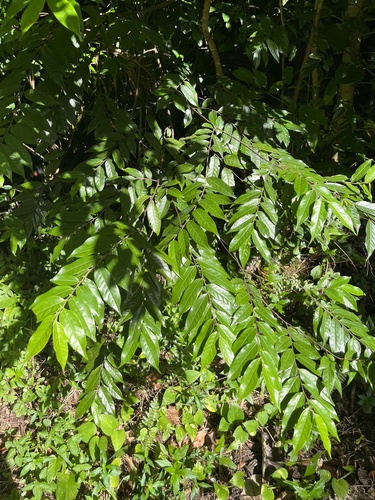
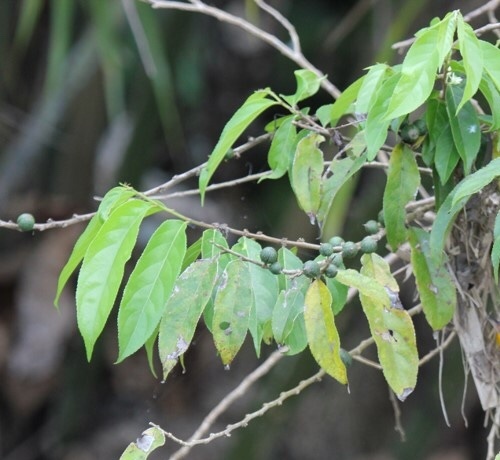
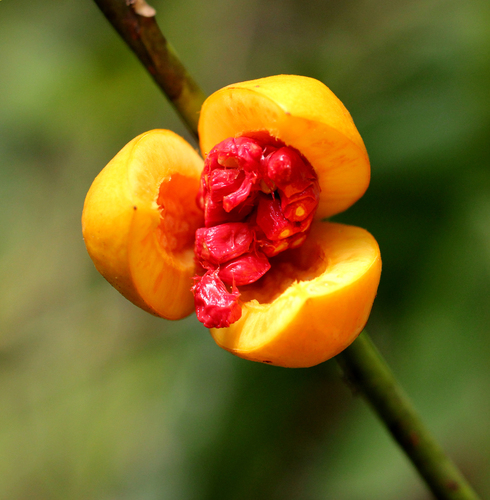
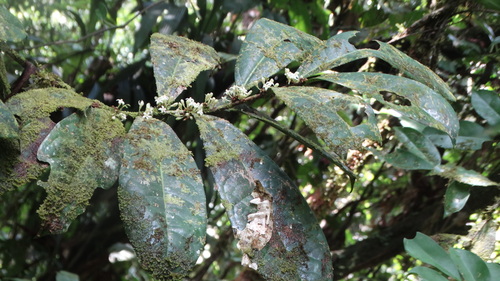
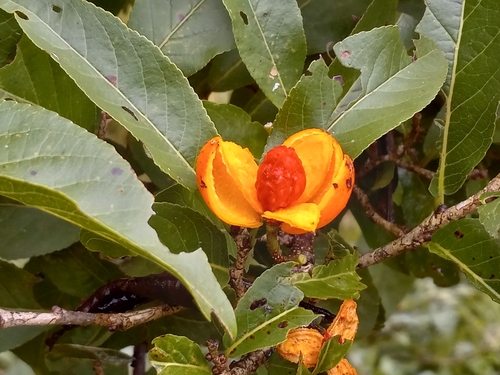
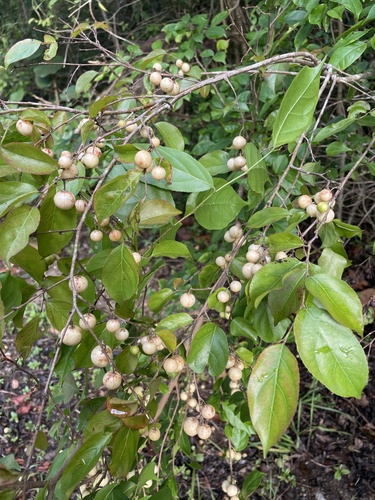
Casearia sylvestris var. lingua
(Cambess.) Eichler
iNaturalist· cc-by-nc
(c) andre2de3meijer, some rights reserved (CC BY-NC)
iNaturalist· cc-by-nc
(c) Richard Joyce, some rights reserved (CC BY-NC), uploaded by Richard Joyce
Summary
Source: WikipediaCasearia sylvestris, most commonly known as guaçatonga, is a species of flowering plant in the family Salicaceae. This plant has a very wide distribution, extending from Mexico down to Argentina, throughout the near entirety of Latin America. It grows primarily in the seasonally dry tropical biome but is also common in moist secondary forests and open disturbed areas. Its range spans elevations from 0–2,800 m (0–9,186 ft), reaching heights where cloud forests develop. While it is most abundant in lowland forests, including tropical rainforest and tropical dry forest, it is also found in oak forests and thrives in secondary vegetation.
Description
A shrubby tree found in tropical savannahs, producing edible fruit.
This description is brief — help expand it
Edible Uses
The fruit is eaten.
Medicinal Uses
The plant has medicinal properties, including activity against Leishmania.
Known Hazards
In traditional medicine, Casearia sylvestris is used to treat inflammation, skin lesions, and microbial infections. Steaped in water, the leaves and bark are also regarded to be a useful laxative and to help with rheumatic disorders. Research into the essential oils is ongoing. Casearia sylvestris is valued for its wood, resin, and ecological benefits. It is a fast-growing species, thriving in tropical forests, salty soils, full sun, and dappled shade, and regenerates well through coppicing, with a lifespan of up to 20 years. Its globose capsule produces 2–5 seeds wrapped in a yellow, edible aril, contrasting with the potentially toxic capsules of some species. Cultivation of Casearia sylvestris relies on fresh seeds, best collected when capsules begin to open, rinsed to remove arils, and sown in shaded nursery beds. Germination rates are low but variable, with seedlings sprouting within 20–30 days, reaching transplant size within months. Cuttings also serve as an alternative propagation method. The tree is used in reforestation and wildlife restoration, providing food for birds and pollen for bees, with flowers that emit a scent resembling honey and urine. Its fine-textured, strong wood, though susceptible to wood-eating organisms, is used for construction, flooring, lathe work, cabinet making, and charcoal production.
Distribution
It is a tropical plant. It grows in the savannah..
Where It Grows
Amazon, Bolivia, Brazil, Colombia, Guyana, South America, Suriname, Venezuela,
Notes
It was in the family Flacourtiaceae. It has medicinal properties including against Leishmania.
Synonyms
Also Known As
Cha-de-frade, Erve-de-teju, Pan de acure, Tortolito
References (1)
- Grandtner, M. M. & Chevrette, J., 2013, Dictionary of Trees, Volume 2: South America: Nomenclature, Taxonomy and Ecology. Academic Press p 108