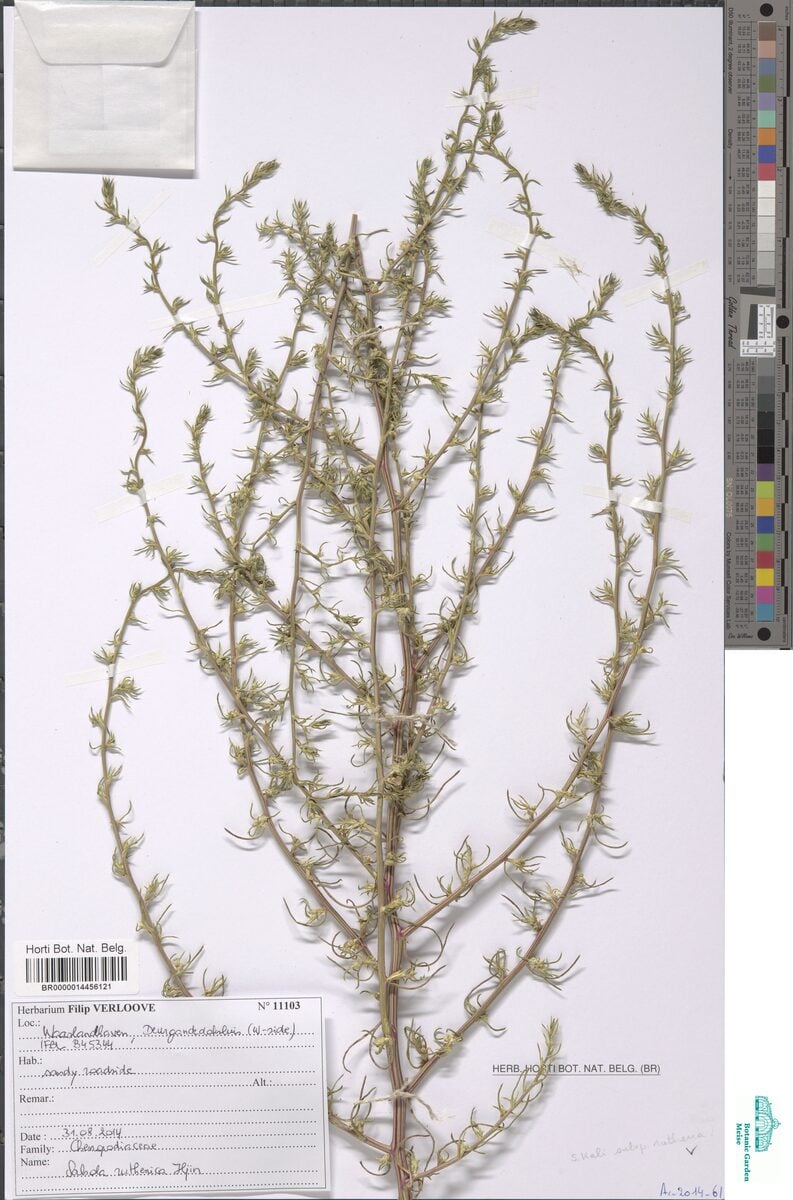
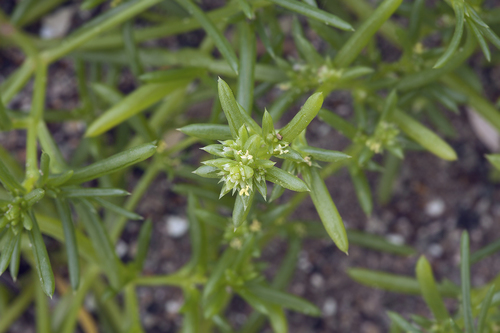
Salicornia rubra
A. Nelson
Red glasswort
iNaturalist· cc-by-nc
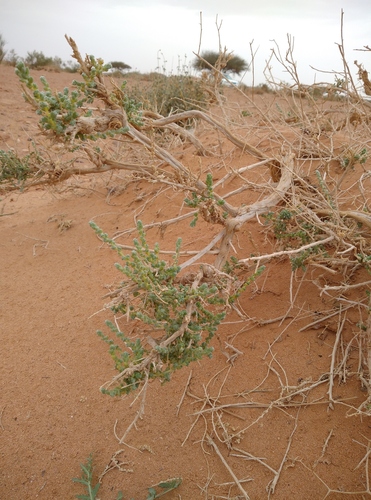
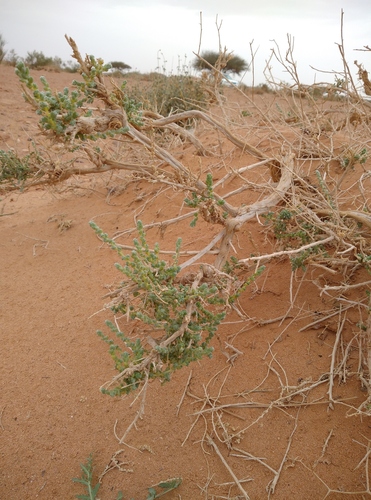
(c) rmbishop, some rights reserved (CC BY-NC)
iNaturalist· cc-by-nc
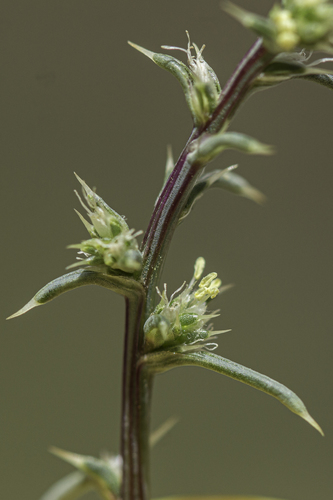
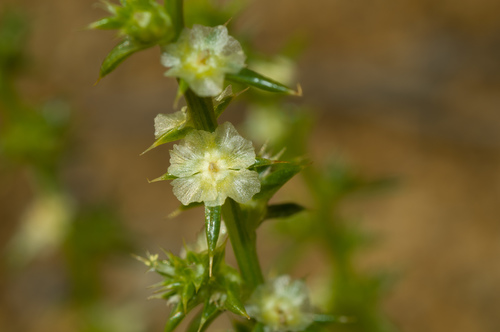
(c) FreckLes, some rights reserved (CC BY-NC)
Summary
Source: WikipediaSalicornia rubra, commonly known as the red glasswort or Rocky Mountain glasswort, is a species of flowering plant in the family Amaranthaceae. It is native to colder or higher areas of North America; the Yukon, Nunavut, British Columbia, Alberta, Saskatchewan, Manitoba, and Ontario in Canada, and the western and north-central United States. It has been introduced to Quebec and Michigan, and has gone extinct in Illinois. A halophyte, it is one of the most salt-tolerant plants of North America.
Description
An annual herb. It is fleshy and erect. It grows 5-25 cm tall. The flowers are small but the central flowers in each cluster are longer than the side flowers.
Edible Uses
The seeds can be ground into a powder and then cooked. Young stems are eaten raw or cooked.
Traditional Uses
The leaves are salty but can be eaten raw in small amounts. They can also be cooked in soups, stews or as a vegetable.
This uses section is brief — help expand it
Medicinal Uses
None known.
Distribution
It is a temperate plant. It grows in salt marshes.
Where It Grows
Canada, North America, USA,
Cultivation
Prefers a rich organic soil with ample nitrogen and regular watering. This species is little, if at all, cultivated and its exact requirements are not clearly understood. It is not known if the plant will require periodic inundation by salty water to grow well. We have very little information on this species and do not know if it will be hardy in Britain, though judging by its native range it should succeed outdoors in most parts of the country. This species might be no more than a synonym for S. europaea, some botanists seeing it as being part of that aggregate species. This species is closely related to S. prostrata. The plants native habitat will give some idea of its cultivation needs.
Propagation
No specific information is available for this species. It is suggested to sow seed in situ as soon as it is ripe where possible, otherwise sow in spring.
Other Uses
None known.
Notes
Also put in the family Chenopodiaceae.
References (2)
- Beckstrom-Sternberg, Stephen M., and James A. Duke. "The Foodplant Database." http://probe.nalusda.gov:8300/cgi-bin/browse/foodplantdb.(ACEDB version 4.0 - data version July 1994)
- MacKinnon, A., et al, 2009, Edible & Medicinal Plants of Canada. Lone Pine. p 310