Amaranthus albus
L.
Prostrate pigweed, Tumble Pigweed
iNaturalist· cc-by-nc
(c) Pavel Šinkyřík, some rights reserved (CC BY-NC)
iNaturalist· cc-by-nc
(c) Pavel Šinkyřík, some rights reserved (CC BY-NC)
iNaturalist· cc-by-nc
(c) Pavel Šinkyřík, some rights reserved (CC BY-NC)
Summary
Source: WikipediaAmaranthus albus is an annual species of flowering plant native to the Americas. Its common names include common tumbleweed, tumble pigweed, tumbleweed, prostrate pigweed, pigweed amaranth, white amaranth and white pigweed.
Description
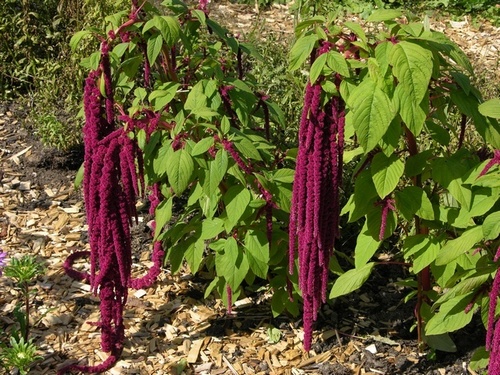
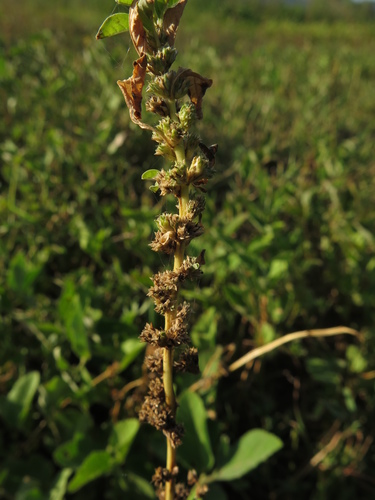
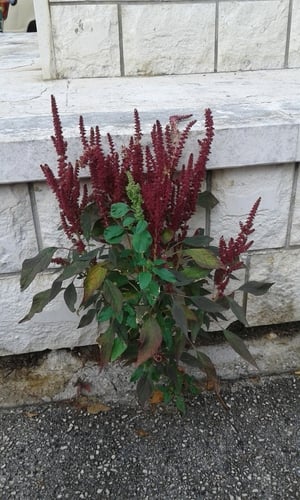
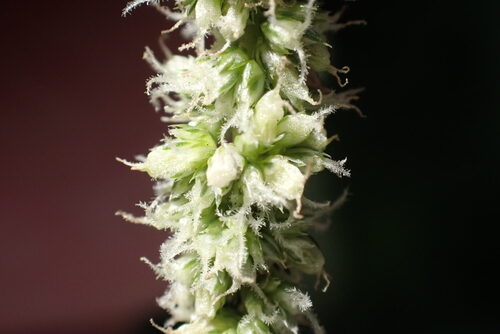
An annual herb which grows to 1 m high. It can be erect or spreading. The leaves are alternate and sword shaped. They are 3 cm long. The flowers are green. The flower stalks are leafy to the top. The seeds are 1 mm across.
Edible Uses
The seeds are the standout food this plant offers and rank among the best wild grains produced by North American amaranths. The small, glossy black seeds — with occasional reddish-brown ones — fall easily from the capsules and can be harvested in quantity with little effort. The lightweight chaff separates readily through winnowing. Seeds can be toasted for a popcorn-like crunch, boiled into porridge, ground into flour, or pressed into seed bars, all with a mild whole-grain flavor. They store exceptionally well. The leaves and young plant are also edible cooked, with a mild flavor and good vitamin and mineral content, used much like spinach. The seed can be cooked whole, though it becomes very gelatinous and the small size — around 1mm in diameter — makes it hard to crush all seeds in the mouth, meaning some may pass through the digestive system unassimilated. Ground seed can be used to make bread.
Traditional Uses
The leaves and young plant are eaten cooked. The seeds are ground into flour and used to make bread. CAUTION: This plant can accumulate nitrates if grown with high nitrogen inorganic fertilisers and these are poisonous.
Medicinal Uses
None known.
Known Hazards
No members of this genus are known to be poisonous, but when grown on nitrogen-rich soils they are known to concentrate nitrates in the leaves. This is especially noticeable on land where chemical fertilizers are used. Nitrates are implicated in stomach cancers, blue babies and some other health problems. It is inadvisable, therefore, to eat this plant if it is grown inorganically.
Distribution
It is a temperate plant. It grows naturally or naturalised on disturbed or waste ground in Southern North America and most of Europe. Plants do best under high light, warm conditions and dry conditions. They need a well drained soil. It can grow in arid places. Tasmania Herbarium.
Where It Grows
Africa, Algeria, Andorra, Argentina, Asia, Australia, Austria, Balkans, Belarus, Britain, Bulgaria, Cambodia, Central Asia, Chile, China, Denmark, Europe, France, Germany, Greece, Hungary, Indochina, Iran, Iraq, Israel, Italy, Japan, Jordan, Kazakhstan, Korea, Mediterranean, Mexico, Middle East, Mongolia, Morocco, Netherlands, New Zealand, North Africa, North America, Poland, Russia, SE Asia, South America, Spain, Tasmania, Turkey, Türkiye, Ukraine, Uruguay, USA,
Cultivation
We have very little information on this species but it should succeed as a spring-sown annual in Britain. The following notes are based on the general needs of the genus. Prefers a well-drained fertile soil in a sunny position. Requires a hot sheltered position if it is to do well. Plants should not be given inorganic fertilizers, see notes above on toxicity. Most if not all members of this genus photosynthesize by a more efficient method than most plants. Called the 'C4 carbon-fixation pathway', this process is particularly efficient at high temperatures, in bright sunlight and under dry conditions.
Propagation
Sow seed in late spring in situ. For an earlier start, sow in a greenhouse and transplant after the last expected frosts. Germination is usually rapid and good in warm soil; a drop in overnight temperature aids germination. Cuttings of growing plants root easily.
Other Uses
Yellow and green dyes can be obtained from the whole plant.
Other Information
It is a commercially cultivated vegetable.
Notes
There are about 60 Amaranthus species.
Synonyms
Also Known As
Bai xian, Bledo blanco, Blitou, Cannimaru, Phti sa, Supurge otu, Taramago, Tumbleweed, White Pigweed, Yuyo bola
References (18)
- Bao Bojian; Steve Clemants, Thomas Borsch, Amaranthaceae [Draft], Flora of China
- Bircher, A. G. & Bircher, W. H., 2000, Encyclopedia of Fruit Trees and Edible Flowering Plants in Egypt and the Subtropics. AUC Press. p 21 (As Amaranthus album)
- Biscotti, N. et al, 2018, The traditional food use of wild vegetables in Apulia (Italy) in the light of Italian ethnobotanical literature. Italian Botanist 5:1-24
- Blamey, M and Grey-Wilson, C., 2005, Wild flowers of the Mediterranean. A & C Black London. p 41
- Bodkin, F., 1991, Encyclopedia Botanica. Cornstalk publishing, p 73
Show all 18 references Hide references
- Dashorst, G.R.M., and Jessop, J.P., 1998, Plants of the Adelaide Plains & Hills. Botanic Gardens of Adelaide and State Herbarium. p 62
- Dogan, A. & Tuzlaci, E., 2015, Wild Edible Plants of Pertek (Tunceli-Turkey). Marmara Pharmaceutical Journal 19: 126-135
- Ertug, F, Yenen Bitkiler. Resimli Türkiye Florası -I- Flora of Turkey - Ethnobotany supplement
- Hussey, B.M.J., Keighery, G.J., Cousens, R.D., Dodd, J., Lloyd, S.G., 1997, Western Weeds. A guide to the weeds of Western Australia. Plant Protection Society of Western Australia. p 80
- Kays, S. J., and Dias, J. C. S., 1995, Common Names of Commercially Cultivated Vegetables of the World in 15 languages. Economic Botany, Vol. 49, No. 2, pp. 115-152
- Malezas Comestibles del Cono Sur, INTA, 2009, Buernos Aires
- Nassif, F., & Tanji, A., 2013, Gathered food plants in Morocco: The long forgotten species in Ethnobotanical Research. Life Science Leaflets 3:17-54
- Paczkowska, G. & Chapman, A.R., 2000, The Western Australian Flora. A Descriptive Catalogue. Western Australian Herbarium. p 136
- Phon, P., 2000, Plants used in Cambodia. © Pauline Dy Phon, Phnom Penh, Cambodia. p 29
- Plants for a Future database, The Field, Penpol, Lostwithiel, Cornwall, PL22 0NG, UK. http://www.scs.leeds.ac.uk/pfaf/
- Royal Botanic Gardens, Kew (1999). Survey of Economic Plants for Arid and Semi-Arid Lands (SEPASAL) database. Published on the Internet; http://www.rbgkew.org.uk/ceb/sepasal/internet [Accessed 24th March 2011]
- Syst. nat. ed. 10, 2:1268. 1759
- www.eFloras.org Flora of China