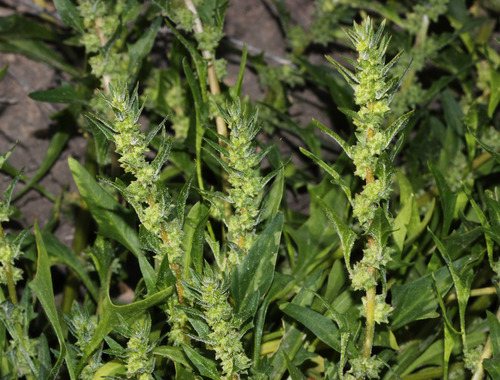
Amaranthus angustifolius var. silvestris
Thell.
iNaturalist· cc-by-nc
(c) jltasset, some rights reserved (CC BY-NC)
iNaturalist· cc-by-nc
(c) jltasset, some rights reserved (CC BY-NC)
iNaturalist· cc-by-nc
(c) jltasset, some rights reserved (CC BY-NC)
Description
An herb in the Amaranthaceae family found in tropical regions.
This description is brief — help expand it
Edible Uses
The edible leaves are used as a vegetable throughout Africa and the Middle East. It can be eaten raw, but was more often cooked, or added to sauces and stews. A common way to cook Amaranthus graecizans was to cook it in buttermilk, or to squeeze fresh lime-juice over it. The seeds are starchy and can also be eaten Leaves, stems and seeds may be eaten raw and cooked, the leaves have a high nutritional value. When grown on nitrogen-rich soils they are known to concentrate nitrates in the leaves, especially noticeable on land where nitrate fertilizer is used.
Medicinal Uses
It has a reputation as medicinal.
Distribution
It is a tropical plant.
Where It Grows
Africa, East Africa, Ethiopia, Madagascar,
Notes
Probably edible. It has a reputation as medicinal. An unresolved name in The Plant List.
Synonyms
Also Known As
Anantarikaomby
References (1)
- Molla, A., Ethiopian Plant Names. http://www.ethiopic.com/aplants.htm (As Amaranthus sylvestris)