Amaranthus acanthochiton
Sauer
Greenstripe
iNaturalist· cc-by-nc
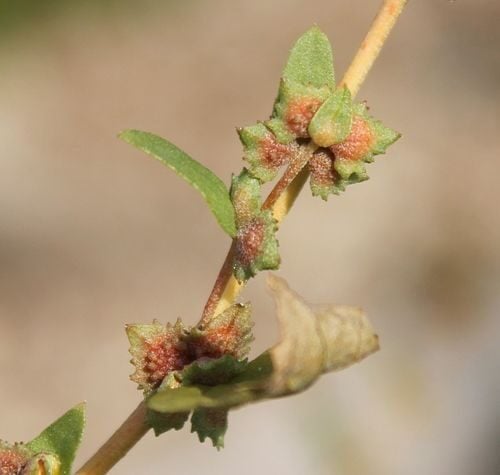
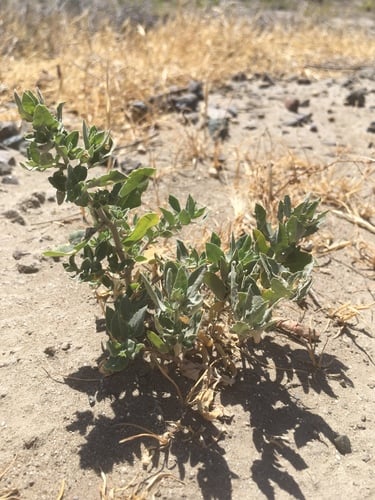
(c) Paola Garcini, some rights reserved (CC BY-NC), uploaded by Paola Garcini
iNaturalist· cc-by
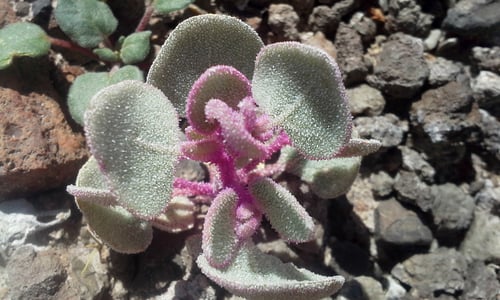
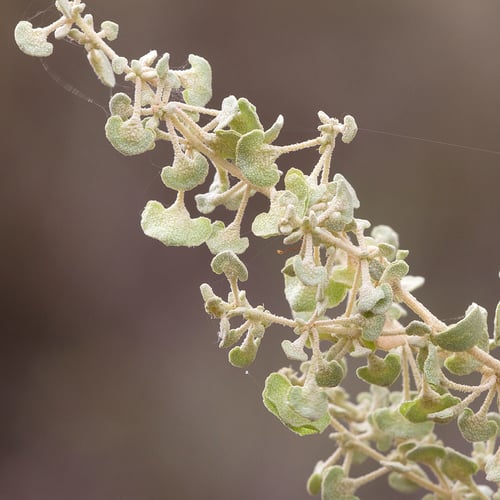
(c) Elliott Gordon, some rights reserved (CC BY)
iNaturalist· cc-by-nc
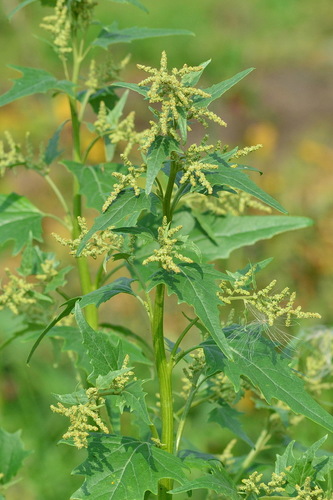
(c) brimulvey, some rights reserved (CC BY-NC)
Summary
Source: WikipediaAmaranthus acanthochiton, the greenstripe, is an annual plant species of the genus Amaranthus in the family Amaranthaceae. It is native to the southwestern United States (Arizona, New Mexico, Texas, and Utah) and northern Mexico (Chihuahua), growing at elevations of 1000–2000 m where it is uncommon. It is a dioecious plant growing to 10–80 cm tall. The leaves are slender, 2–8 cm long and 2–12 mm broad. The flowers are pale green, produced in dense terminal spikes. The seeds are brown, 1–1.3 mm diameter, contained in a 2–2.5 mm achene. It is critically endangered in Utah, and endangered in Arizona (though no status has been set). The seeds and young leaves were used by the Hopi Indians as a food source. The seeds were cooked as a form of porridge, while the leaves were used as greens.
Description
An annual herb. It grows 10-80 cm tall. The stems have stripes. The leaves are alternate and sword shaped. They are slender and 2-8 cm long by 2-12 mm wide. The flowers are pale green. They are in dense spikes. The seeds are brown and 1 mm across.
Edible Uses
Leaves are edible when cooked as a leafy vegetable. The Hopi traditionally gathered them, tied them in bundles, and boiled them. While nutritious, the leaves may contain oxalates and nitrates, as is common in other amaranths. Seeds have not been documented as a food source for this species, unlike most other amaranths. Castetter (1935) recorded the plant's historical role as a famine food among the Hopi. Because it is rare, its caloric contribution is minimal compared to more abundant amaranth species.
Traditional Uses
The leaves and shoots are used as a vegetable and also dried for use in winter. The seeds are cooked and eaten.
This uses section is brief — help expand it
Medicinal Uses
None known.
Distribution
It is a temperate and subtropical plant. In Mexico it grows between 1,000-2,000 m above sea level. Arizona
Where It Grows
Mexico, North America, USA,
Cultivation
Amaranthus acanthochiton (greenstripe / spiny amaranth, etc.) is typically 10–60 cm tall, occasionally a bit more in good conditions, with a similar lateral spread if branched; plants are often narrow/upright in dry sites. Like most pigweeds, it is functionally wind-pollinated: the tiny, inconspicuous flowers shed abundant pollen that’s carried by air, though small insects may visit and move some pollen incidentally. Growing Conditions: Sun: Full sun required for healthy growth. Soil: Adapted to sandy, gravelly, or disturbed soils. Moisture: Responds to seasonal summer rains; drought-tolerant once established but not as persistent as other amaranths. Cultivation: Rarely cultivated, but behaves similarly to other amaranths – fast-growing once rains arrive.
Propagation
Grow from seed.
Other Uses
None known.
Notes
There are about 70 genera and 1000 species of Amaranthaceae. They are usually herbs or shrubs and most are in the tropics.
Synonyms
References (11)
- Beckstrom-Sternberg, Stephen M., and James A. Duke. "The Foodplant Database." http://probe.nalusda.gov:8300/cgi-bin/browse/foodplantdb.(ACEDB version 4.0 - data version July 1994)
- Bircher, A. G. & Bircher, W. H., 2000, Encyclopedia of Fruit Trees and Edible Flowering Plants in Egypt and the Subtropics. AUC Press. p 5
- CASTETTER,
- Etkin, N.L. (Ed.), 1994, Eating on the Wild Side, Univ. of Arizona. p 70
- HOUGH,
Show all 11 references Hide references
- Kermath, B. M., et al, 2014, Food Plants in the Americas: A survey of the domesticated, cultivated and wild plants used for Human food in North, Central and South America and the Caribbean. On line draft. p 49
- MINNIS,
- Usher, G., 1974, A Dictionary of Plants Used by Man. Constable. p 15
- WHITING.
- Wikipedia.
- World Checklist of Useful Plant Species 2020. Royal Botanic Gardens, Kew