Rubus gunnianus
Hook.
Alpine raspberry, Mountain raspberry
iNaturalist· cc0
no rights reserved
iNaturalist· cc-by-nc
(c) Annabel Carle, some rights reserved (CC BY-NC)
iNaturalist· cc-by-nc
(c) Annabel Carle, some rights reserved (CC BY-NC)
Summary
Source: WikipediaRubus gunnianus is a species in the genus Rubus of the family Rosaceae. It is a small herb that grows in subalpine and alpine habitats above 900m throughout Tasmania, and bears edible fruit. It is commonly known as the native strawberry or Tasmanian alpine raspberry.
Description
A small herb. It keeps growing from year to year. The stems can branch near the surface of the ground forming mats. These can be 80 cm across. The stems are slender and spiny. The leaves are shiny and dark green. They have irregular lobes around the edge. The leaves are arranged in small rings about 5 cm across. The flower is like a white buttercup. They are 2 cm across. The fruit are red and edible.
Edible Uses
The fruit, which is of very good quality and comparable to a raspberry, can be eaten raw or cooked. Each fruit is made up of only a few drupes.
Traditional Uses
The fruit are eaten.
This uses section is brief — help expand it
Medicinal Uses
None known.
Distribution
It is a temperate plant. They grow in alpine regions. They require damp conditions. It grows in the mountains in Tasmania. It grows above 1,000 m altitude. Tasmania Herbarium.
Where It Grows
Australia*, Tasmania*,
Cultivation
We have very little information on this species and do not know if it will be hardy in Britain, though judging by its native range it should succeed outdoors at least in the milder parts of the country. The following notes are based on the general needs of the genus. Easily grown in a good well-drained loamy soil in sun or semi-shade. Plants in this genus are notably susceptible to honey fungus.
Propagation
Seed requires stratification and is best sown in early autumn in a cold frame. Stored seed needs one month stratification at about 3°C and should be sown as early as possible in the year. Prick out seedlings when large enough to handle and grow on in a cold frame, then plant out into permanent positions in late spring of the following year. Cuttings of half-ripe wood can be taken in July/August in a frame. Tip layer in July and plant out in autumn. Divide in early spring or just before leaf-fall in autumn.
Other Uses
A purple to dull blue dye is obtained from the fruit.
Production
Plants flower in early summer.
Notes
There are about 250 Rubus species.
Dangerous Lookalikes
This plant can be confused with the following toxic species. Always verify identification carefully before consuming any wild plant.
Red Baneberry
Actaea rubra
Walter Siegmund (talk)
Alpine raspberry
Rubus gunnianus
no rights reserved
Red Baneberry: Short herbaceous plant (no thorns), berries on thick red stems, each berry has a single seed, compound sharply-toothed leaves.
Alpine raspberry: Thorny woody canes (brambles), aggregate berry made of many drupelets, berries pull easily from receptacle.
References (13)
- Bodkin, F., 1991, Encyclopedia Botanica. Cornstalk publishing, p 892
- Cameron, M., (Ed.) 1981, A Guide to Flowers & Plants of Tasmania. Reed p 26
- Cherikoff V. & Isaacs, J., The Bush Food Handbook. How to gather, grow, process and cook Australian Wild Foods. Ti Tree Press, Australia p 41
- Cribb, A.B. & J.W., 1976, Wild Food in Australia, Fontana. p 54
- Curtis, W.M., 1956, The Students Flora of Tasmania Vol 1 p 168
Show all 13 references Hide references
- Icon. Pl. 3: t. 291. 1840
- Kirkpatrick, J., 1997, Alpine Tasmania, An Illustrated guide to the flora and vegetation. Oxford, p 96
- Lazarides, M. & Hince, B., 1993, Handbook of Economic Plants of Australia, CSIRO. p 207
- Low, T., 1991, Wild Food Plants of Australia. Australian Nature FieldGuide, Angus & Robertson. p 127
- Minchin, R.F., Tasmanian Wildflowers. A Field Guide. Volume one. Regal Publications, Launceston p 82
- Plants for a Future database, The Field, Penpol, Lostwithiel, Cornwall, PL22 0NG, UK. http://www.scs.leeds.ac.uk/pfaf/
- Tasmanian Herbarium Vascular Plants list p 51
- Whiting, J. et al, 2004, Tasmania's Natural Flora. Tasmania's Natural Flora Editorial Committee PO Box 194, Ulverstone, Tasmania, Australia 7315 p 292
More from Rosaceae
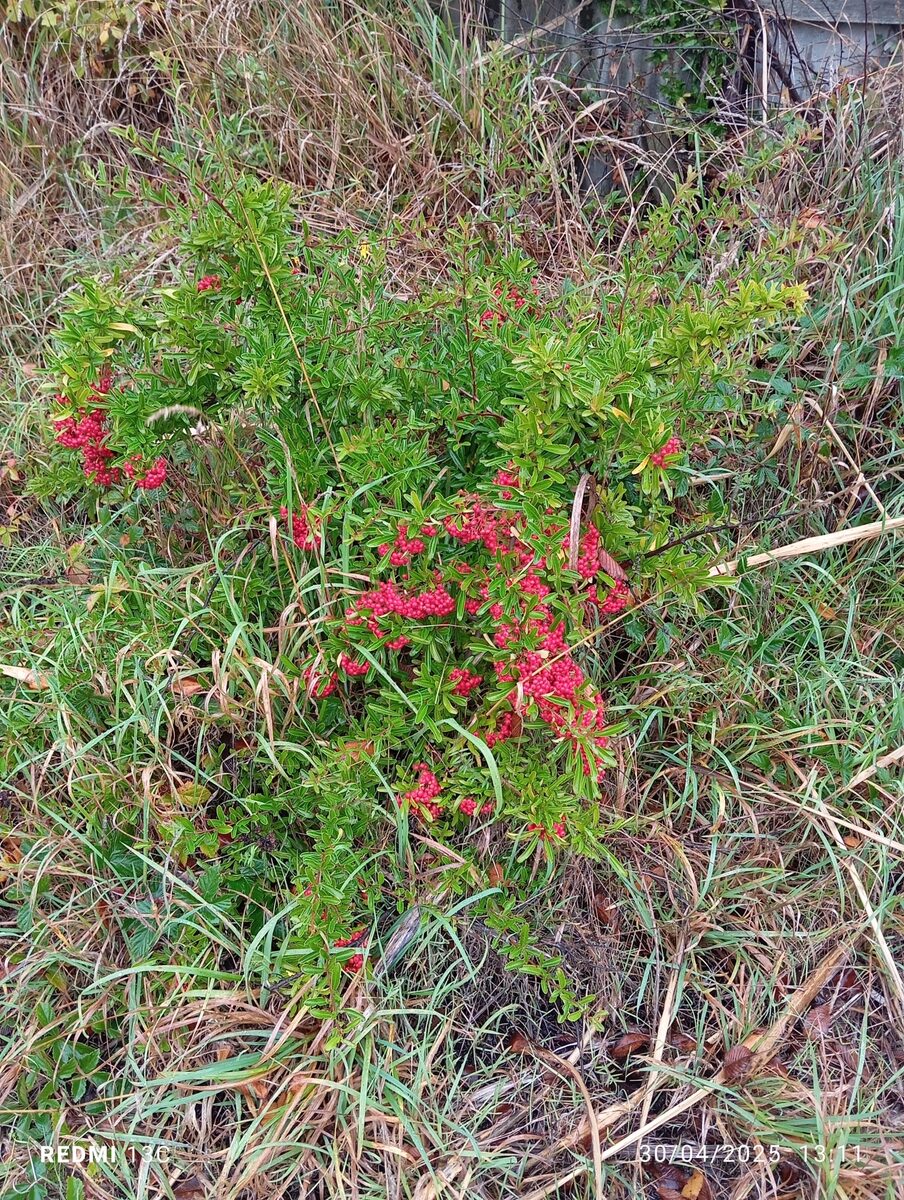
Pyracantha crenato-serrata - (Hance.)Rehder.
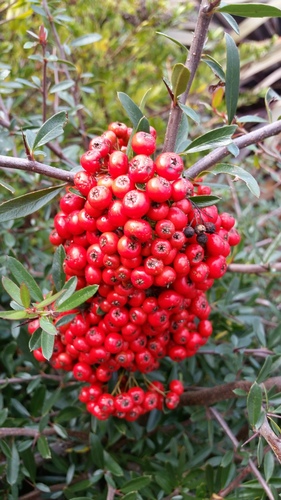
Pyracantha crenatoserrata
Chinese Firethorn
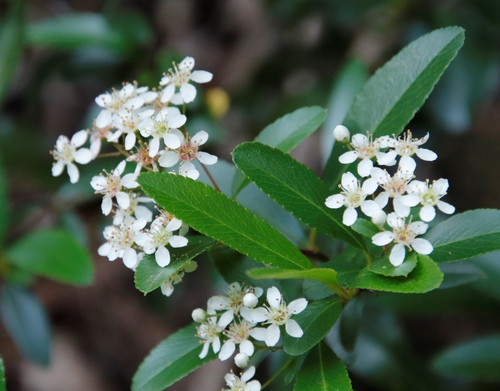
Pyracantha crenulata
Nepal Firethorn, Nepalese white thorn
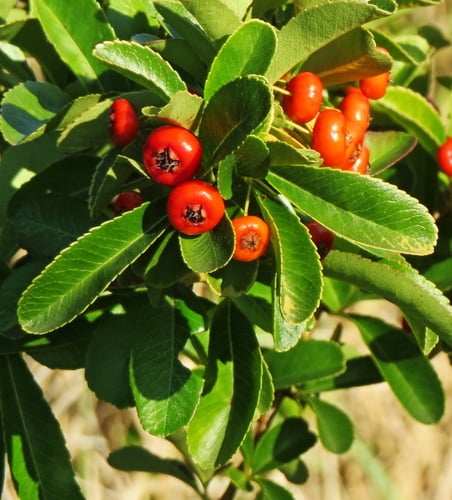
Pyracantha fortuneana
Chinese fire-thorn, Torch fruit
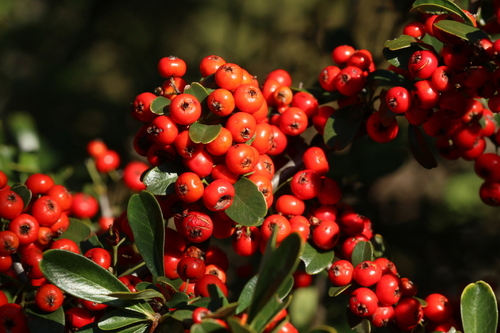
Pyracantha koidzumii
Formosa Firethorn, Taiwan firethorn, Koidzumi's firethorn
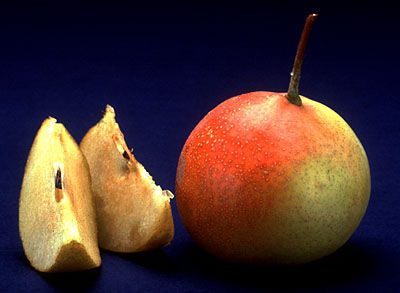
Pyraria irregularis