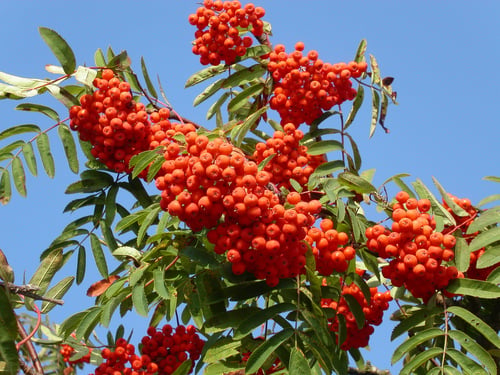
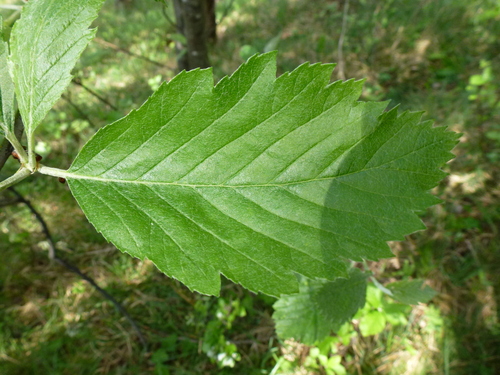
Eriobotrya deflexa
(Hemsl.) Nakai
Taiwan loquat
iNaturalist· cc-by-nc
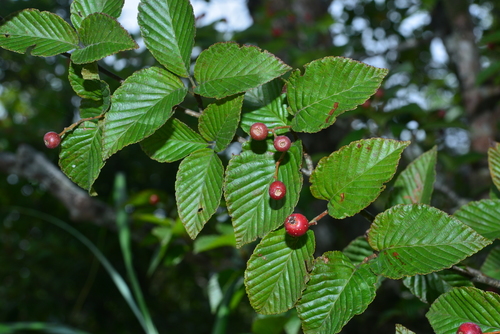
(c) 羅忠良, some rights reserved (CC BY-NC), uploaded by 羅忠良
iNaturalist· cc-by-nc
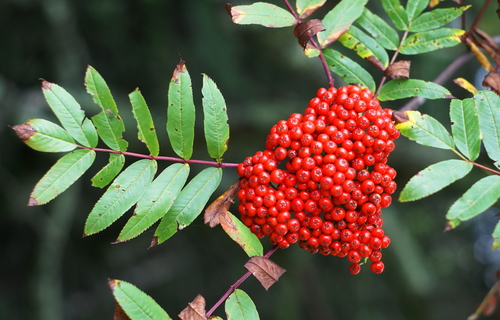
(c) BunnyTailGra22 | 兔尾草, some rights reserved (CC BY-NC), uploaded by BunnyTailGra22 | 兔尾草
iNaturalist· cc-by-nc
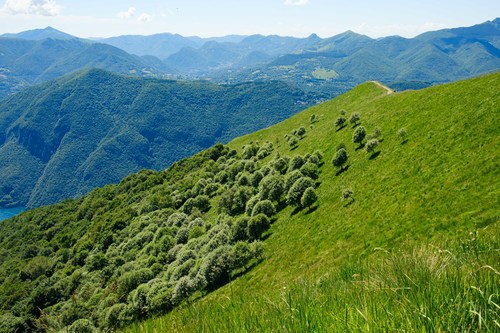
(c) Langzi, some rights reserved (CC BY-NC), uploaded by Langzi
Description
An evergreen tree. It grows 12-15 m high. The trunk is 25-30 cm across. The small branches are robust. The new growth is deep red. The flowers are white. The flower stalks are rusty brown. The fruit are 1-2.2 cm across. They are red-yellow.
Edible Uses
The juicy, sweet fruit are eaten fresh.
Traditional Uses
The fruit are juicy and sweet and eaten.
This uses section is brief — help expand it
Distribution
A tropical plant. It grows in tropical and subtropical evergreen broad-leaved forests. It occurs on low hills below 1,000 m altitude in Vietnam. It needs to be frost free. In southern China it grows between 1,000-2,100 m above sea level. In Townsville palmetum.
Where It Grows
Asia, Australia, China, Europe, France, Indochina, SE Asia, Taiwan, Vietnam,
Production
It China plants flower in May to June and fruit in June to August.
Notes
There are 30 Eriobotrya species.
Also Known As
Ti ba mep cuon
References (9)
- Barwick, M., 2004, Tropical and Subtropical Trees. A Worldwide Encyclopedic Guide. Thames and Hudson p 165
- Bot. Mag. (Tokyo) 30:18. 1916
- Flora of China @ efloras.org Volume 9
- Forest Inventory and Planning Institute, 1996, Vietnam Forest Trees. Agriculture Publishing House p 612
- Hu, Shiu-ying, 2005, Food Plants of China. The Chinese University Press. p 432
Show all 9 references Hide references
- Kuo, W. H. J., (Ed.) Taiwan's Ethnobotanical Database (1900-2000), http://tk.agron.ntu.edu.tw/ethnobot/DB1.htm
- Pham-Hoang Ho, 1999, An Illustrated Flora of Vietnam. Nha Xuat Ban Tre. p 778
- Reis, S. V. and Lipp, F. L., 1982, New Plant Sources for Drugs and Foods from the New York Botanical Garden herbarium. Harvard. p 98
- www.desert-tropicals.com