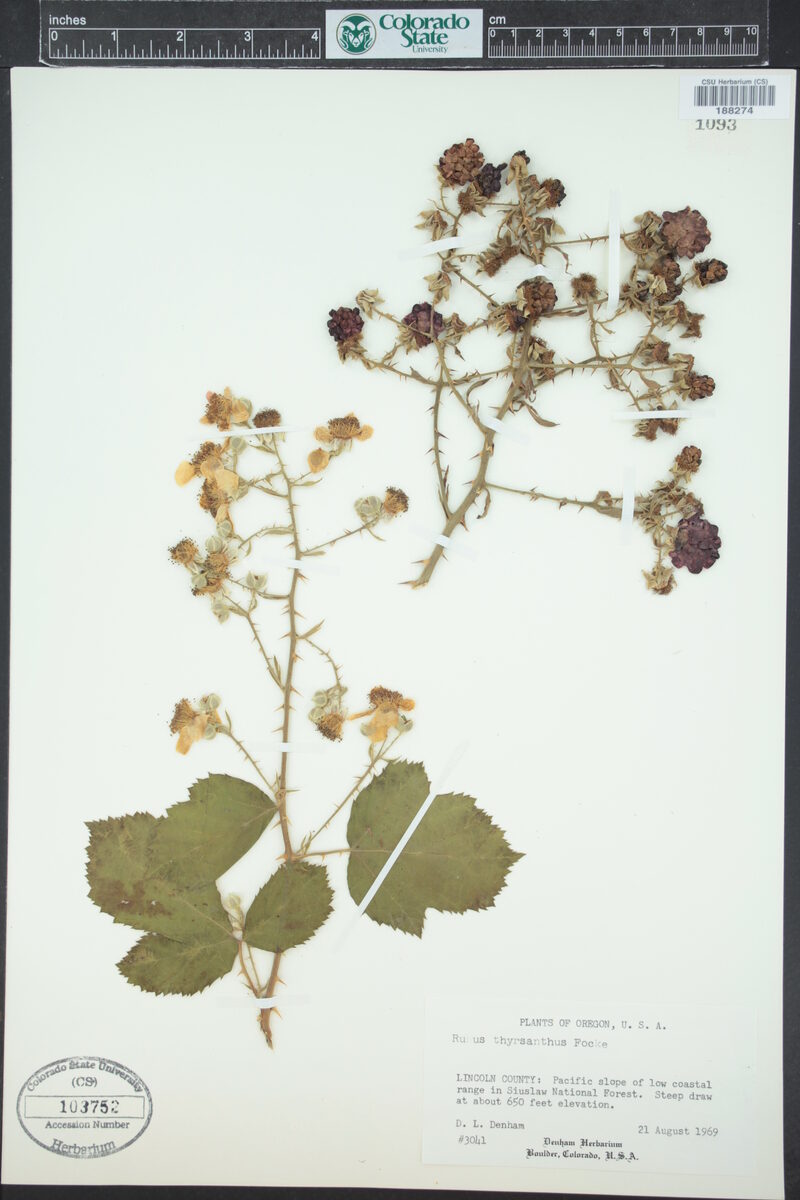
Rubus argutus
Link
Highbush blackberry, Saw-tooth Blackberry
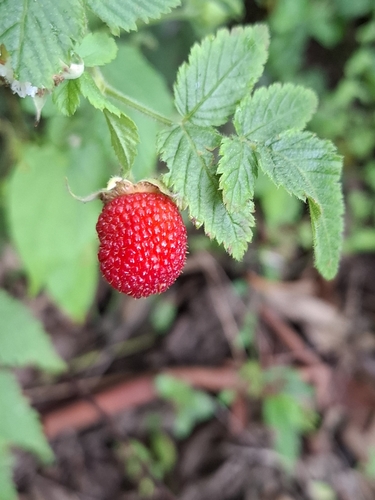
iNaturalist· cc-by
(c) Daniel J. Layton, some rights reserved (CC BY), uploaded by Daniel J. Layton
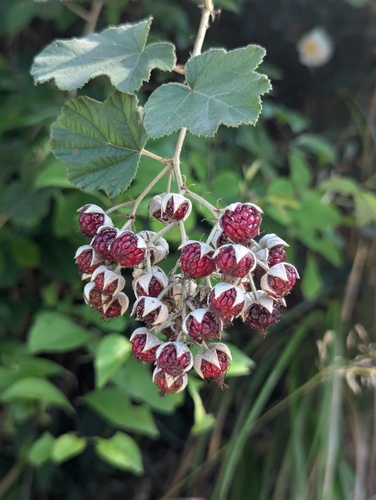
iNaturalist· cc-by
(c) Daniel J. Layton, some rights reserved (CC BY)
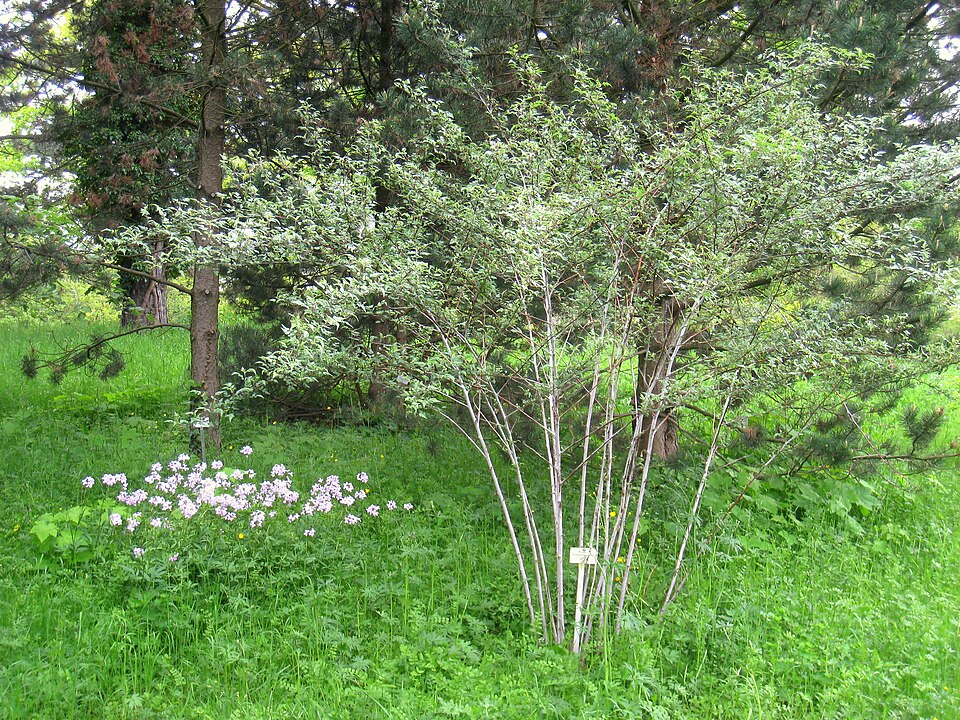
iNaturalist· cc-by-nc
(c) J. Richard Abbott, some rights reserved (CC BY-NC), uploaded by J. Richard Abbott
Summary
Source: WikipediaRubus argutus is a North American species of prickly bramble in the rose family. It is a perennial plant native to the eastern and south-central United States. Common names are sawtooth blackberry or tall blackberry after its high growth.
Description
A shrub. The stems are erect and 2 m tall. It has prickles. The leaves have 5 leaflets. The fruit often have large juicy drupelets.
This description is brief — help expand it
Edible Uses
The fruit can be eaten raw or cooked. It is variable in size and quality but generally has large, juicy drupelets, with the pulpy fruit growing up to 25mm long.
Traditional Uses
The fruit are eaten raw or cooked. They are also used for juice.
This uses section is brief — help expand it
Medicinal Uses
The roots are antihaemorrhoidal, antirheumatic, astringent, stimulant, and tonic. A root infusion can be used to treat venereal disease and applied as a wash for piles. An infusion of the roots or leaves can be used in the treatment of diarrhoea and rheumatism.
Distribution
It is a temperate plant.
Where It Grows
North America, USA*,
Cultivation
We have very little information on this species and do not know if it will be hardy in Britain, though judging by its native range it should succeed outdoors in many parts of the country. This species is cultivated for its edible fruit in N. America. The following notes are based on the general needs of the genus. Easily grown in a good well-drained loamy soil in sun or semi-shade. Plants in this genus are notably susceptible to honey fungus.
Propagation
Seed requires stratification and is best sown in early autumn in a cold frame. Stored seed needs one month stratification at about 3°c and should be sown as early as possible in the year. Prick out seedlings when large enough to handle and grow on in a cold frame, then plant out into permanent positions in late spring of the following year. Cuttings of half-ripe wood can be taken in July/August in a frame. Tip layering in July, planting out in autumn. Division can be done in early spring or just before leaf-fall in autumn.
Other Uses
A purple to dull blue dye is obtained from the fruit.
Other Information
It is cultivated.
Notes
There are about 250 Rubus species.
Dangerous Lookalikes
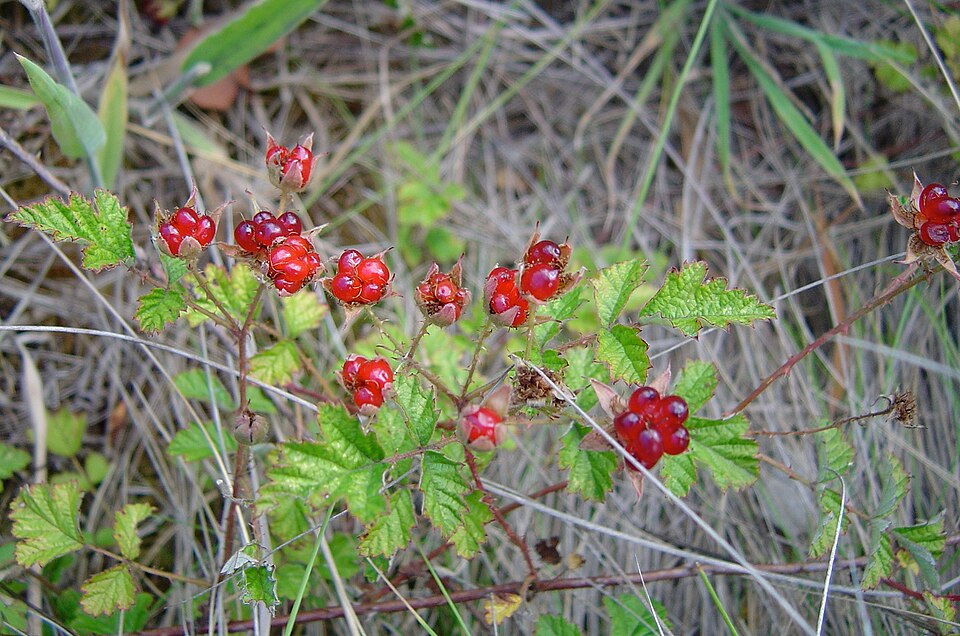
This plant can be confused with the following toxic species. Always verify identification carefully before consuming any wild plant.
Red Baneberry
Actaea rubra
Walter Siegmund (talk)
Highbush blackberry
Rubus argutus
(c) Daniel J. Layton, some rights reserved (CC BY), uploaded by Daniel J. Layton
Red Baneberry: Short herbaceous plant (no thorns), berries on thick red stems, each berry has a single seed, compound sharply-toothed leaves.
Highbush blackberry: Thorny woody canes (brambles), aggregate berry made of many drupelets, berries pull easily from receptacle.
Synonyms
Also Known As
Tall blackberry
References (9)
- Enum. hort. berol. alt. 2:60. 1822
- Facciola, S., 1998, Cornucopia 2: a Source Book of Edible Plants. Kampong Publications, p 208
- Jennings, D.L., 1979, Raspberries and blackberries, in Simmonds, N.W., (ed), Crop Plant Evolution. Longmans. London. p 251
- Kermath, B. M., et al, 2014, Food Plants in the Americas: A survey of the domesticated, cultivated and wild plants used for Human food in North, Central and South America and the Caribbean. On line draft. p 758 (As Rubus betulifolius)
- Mansfield's Encyclopedia of Agricultural and Horticultural Crops p 429
Show all 9 references Hide references
- Medsger, O. P., 1939, Edible Wild Plants. Macmillan Company. p 28
- Moerman, D. F., 2010, Native American Ethnobotany. Timber Press. p 487
- Plants for a Future database, The Field, Penpol, Lostwithiel, Cornwall, PL22 0NG, UK. http://www.scs.leeds.ac.uk/pfaf/
- Reis, S. V. and Lipp, F. L., 1982, New Plant Sources for Drugs and Foods from the New York Botanical Garden herbarium. Harvard. p 103