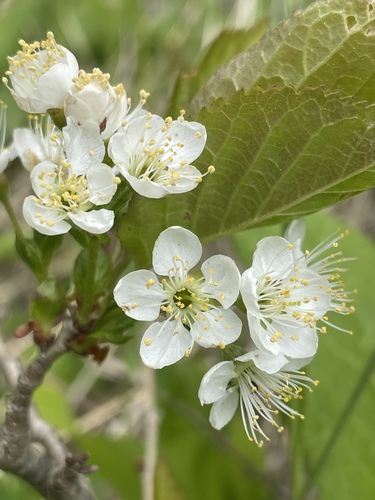
Sorbus sitchensis
M. Roemer
Sitka mountain ash, Pacific mountain ash
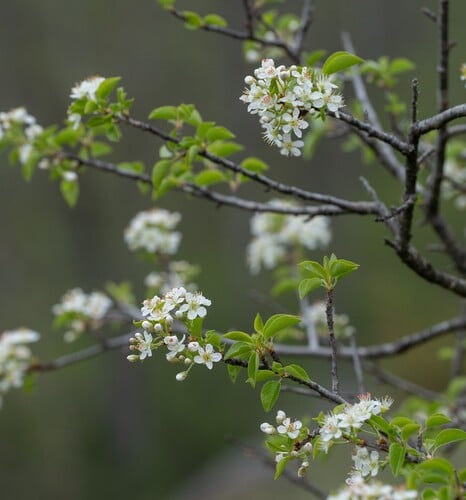
iNaturalist· cc-by
(c) Peter Stevens, some rights reserved (CC BY)
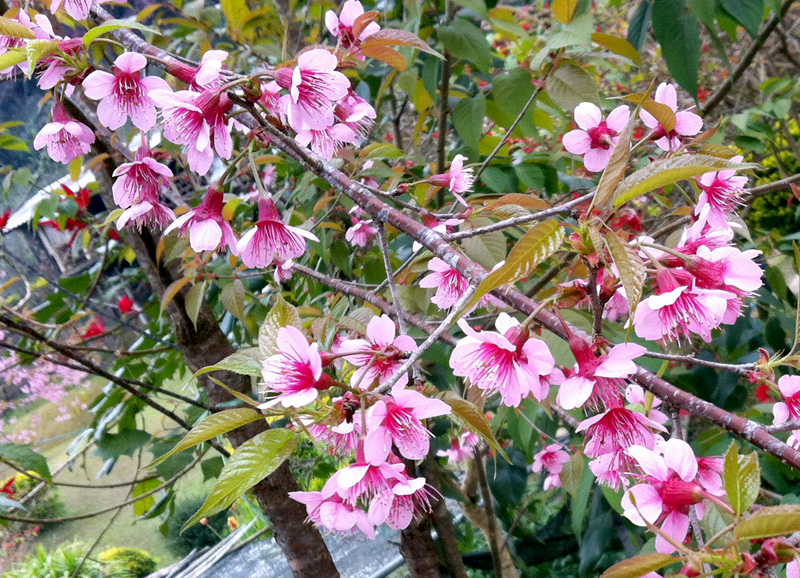
iNaturalist· cc-by
(c) Peter Stevens, some rights reserved (CC BY)
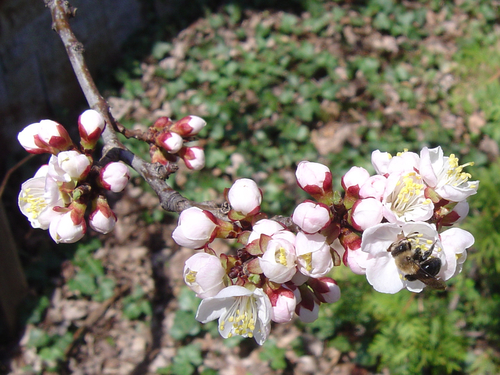
iNaturalist· cc-by-nc
(c) John D Reynolds, some rights reserved (CC BY-NC), uploaded by John D Reynolds
Summary
Source: WikipediaSorbus sitchensis, commonly known as western mountain ash and Sitka mountain-ash, is a small species of shrub of northwestern North America.
Description
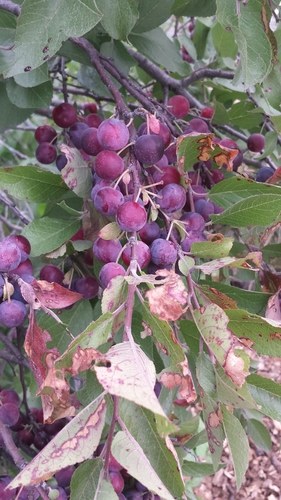
A shrub or small tree. It grows to 6 m high. The bark is smooth and light grey. The crown is rounded. The leaves are alternate and compound. There are 7-11 leaflets on a red central stalk. This stalk is 8-15 cm long. The leaflets are oval and 2-6 mm long. There are teeth towards the tip. They are dark green above and paler underneath. The fruit are small. They are 6-8 mm across. They occur in erect rounded clusters. The fruit are orange, red or purple. They are 10-12 mm across. They occur in small clusters 5-10 cm across.
Edible Uses
The fruit can be eaten raw or cooked in pies and preserves, though it is of poor quality. It becomes sweeter and tastes best after a frost. Fruit is produced in clusters, with each individual fruit measuring about 6–12mm in diameter.
Traditional Uses
The fruit are used for jellies, marmalades, jams, wines and liqueurs. The fruit can be dried and stored.
This uses section is brief — help expand it
Medicinal Uses
An infusion of the branches has been given to young children to treat bed-wetting, and a separate infusion of the branches has been used to treat weak kidneys and reduce frequent urination. An infusion of the root and branch bark has been drunk to treat stomach problems and rheumatism, and the same infusion can be applied externally as a bath for rheumatism. A decoction of the root and branch bark has been used as an eyewash. The bark has been chewed to treat colds.
Known Hazards
The seeds probably contain hydrogen cyanide. This is the ingredient that gives almonds their characteristic flavour. Unless the seed is very bitter it should be perfectly safe in reasonable quantities. In small quantities, hydrogen cyanide has been shown to stimulate respiration and improve digestion, it is also claimed to be of benefit in the treatment of cancer. In excess, however, it can cause respiratory failure and even death.
Distribution
It is a temperate plant. It reaches the alpine tree line in Canada.
Where It Grows
Alaska, Canada, North America, USA,
Cultivation
Succeeds in most reasonably good soils in an open sunny position. Dislikes dry soils. Tolerates light shade, though it fruits better in a sunny position. This species is able to succeed in poor soils and to become established on exposed broken ground, it is thus suitable for use as a pioneer species in re-establishing woodland. A slow-growing shrub in the wild, it can sometimes become a small tree up to 9 metres tall. It usually produces abundant crops of fruit every year. Plants are susceptible to fireblight.
Propagation
Seed is best sown as soon as it is ripe in a cold frame, though with sufficient quantity it can go directly into an outdoor seedbed. Stored seed benefits from 2 weeks of warm stratification followed by 14–16 weeks of cold stratification, so sow as early in the year as possible. Prick seedlings into individual pots once large enough to handle. Top-growth is very slow in the first year or two as the plants focus on root development, so keep them in a cold frame through their first winter before planting out into permanent positions in late spring.
Other Uses
This species tolerates exposed conditions and poor soils, making it a candidate as a pioneer plant in reforestation projects where it can help establish conditions suitable for other woodland trees, though its slow growth limits its use to situations where faster-growing species are less appropriate. The berries have been rubbed onto the scalp to treat lice. The wood is moderately light with little strength and holds no commercial value.
Notes
There are about 75 Sorbus species.
References (12)
- Beckstrom-Sternberg, Stephen M., and James A. Duke. "The Foodplant Database." http://probe.nalusda.gov:8300/cgi-bin/browse/foodplantdb.(ACEDB version 4.0 - data version July 1994)
- Elias, T.S. & Dykeman P.A., 1990, Edible Wild Plants. A North American Field guide. Sterling, New York p 240
- Facciola, S., 1998, Cornucopia 2: a Source Book of Edible Plants. Kampong Publications, p 211
- Fam. nat. syn. monogr. 3:139. 1847
- Farrar, J.L., 1995, Trees of the Northern United States and Canada. Iowa State University press/Ames p 224
Show all 12 references Hide references
- Grandtner, M. M., 2008, World Dictionary of Trees. Wood and Forest Science Department. Laval University, Quebec, Qc Canada. (Internet database http://www.wdt.qc.ca)
- Kermath, B. M., et al, 2014, Food Plants in the Americas: A survey of the domesticated, cultivated and wild plants used for Human food in North, Central and South America and the Caribbean. On line draft. p 830
- MacKinnon, A., et al, 2009, Edible & Medicinal Plants of Canada. Lone Pine. p 82
- Moerman, D. F., 2010, Native American Ethnobotany. Timber Press. p 539
- Plants for a Future database, The Field, Penpol, Lostwithiel, Cornwall, PL22 0NG, UK. http://www.scs.leeds.ac.uk/pfaf/
- Turner, N., 1995, Food Plants of Coastal First Peoples. Royal BC Museum Handbook p 129
- Turner, N., et al, 2011, "Up on the Mountain": Ethnobotanical Important of Montane Sites in Pacific Coastal North America. Journal of Ethnobiology 31(1): 4-43