Sorbus sibirica
Hedl.
Siberian mountain ash
iNaturalist· cc-by-nc
(c) Petr Kosachev, some rights reserved (CC BY-NC), uploaded by Petr Kosachev
iNaturalist· cc-by-nc
(c) Игорь Поспелов, some rights reserved (CC BY-NC)
Description
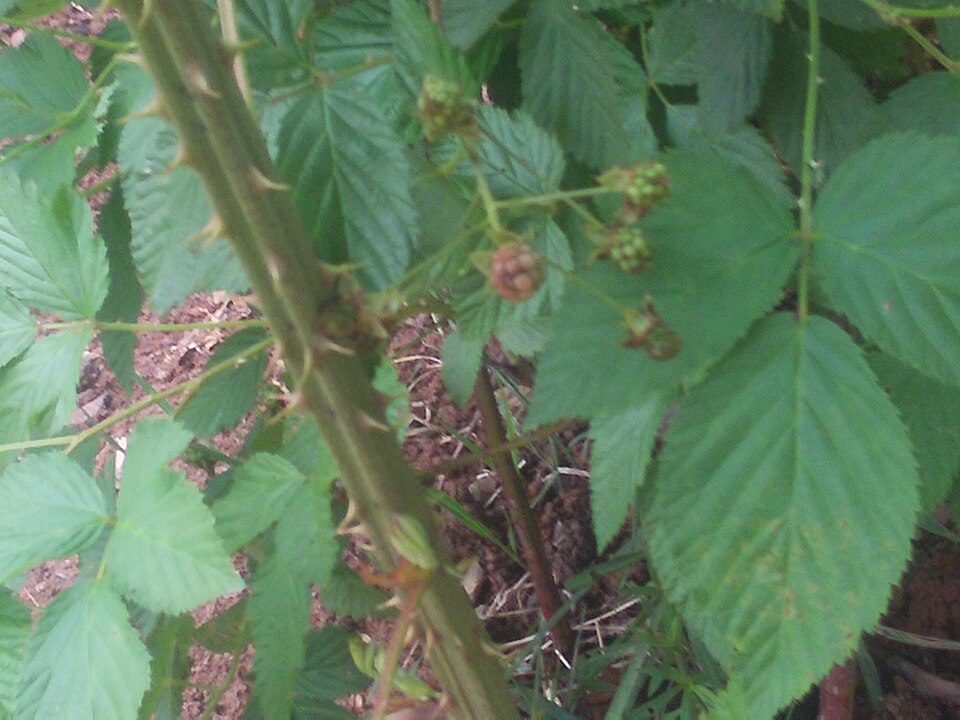
A tree. It grows 3-10 m tall. The leaves are 10-20 cm long and 8-12 cm wide. The leaflets are broadly sword shaped and 4-5 cm long by 2 cm wide. They are green above and grey-green underneath. The flowers are in dense groups 8 cm long by 12 cm wide. The fruit are large and 12 mm across. They are round, juicy and orange-red. They are bitter-sweet.
Edible Uses
The fruit of S. aucuparia were used in the past to lure and catch birds. To humans, the fruit are bitter, astringent, laxative, diuretic and a cholagogue. They have vitamin C, so they prevent scurvy, but the parasorbic acid irritates the gastric mucosa. Pharmacist Mannfried Pahlow wrote that he questioned the toxicity of the fruit but advised against consuming large amounts. The fruit contain sorbitol, which can be used as a sugar substitute by diabetics, but its production is no longer relevant. Sorbus aucuparia fruits have been used in the traditional Austrian medicine internally (as tea, syrup, jelly or liqueur) for treatment of disorders of the respiratory tract, fever, infections, colds, flu, rheumatism and gout. Due to their bitterness, raw rowan berries normally are not very palatable, but can be debittered and made into compote, jelly, jam, a tart syrup or chutney, pressed into juice. It is also used to make wine, liqueurs, teas, and flour. Fruit are served as a side dish to lamb or game. Debittering can be accomplished by freezing, cooking, or drying, which degrades the parasorbic acid. The fruit are red colored in August but usually only harvested in October after the first frost by cutting the corymbs. The robust qualities of S. aucuparia make it a source for fruit in harsh mountain climate and Maria Theresa, ruler of the Habsburg monarchy, recommended the planting of the species in 1779. The oldest Finnish candy still commercially produced, Pihlaja, is named after and originally contained rowanberries. A more palatable variety, named Sorbus aucuparia var. dulcis Kraetzl, or var. edulis Dieck, or var. moravica Dippel, was first discovered in 1810 near Ostružná in the Hrubý Jeseník mountain range of Northern Moravia and became widespread in Germany and Austria the early 20th century. Its leaves are larger and pointed, only the front part of the leaflets is serrated, and they have darker bark, larger buds and larger fruit. Similar non-bitter varieties found in Southern Russia were first introduced in Central Europe in 1900 as 'Rossica' and 'Rossica Major', which has large fruit up to 1.5 cm (5⁄8 in) in diameter. Two widespread cultivars of the Moravian variety are 'Konzentra' and 'Rosina', which were selected beginning in 1946 by the Institut für Gartenbau Dresden-Pillnitz, an agricultural research institute in Saxony, from 75 specimens found mostly in the Ore Mountains, and made available in 1954. Fruit of the more widely used 'Konzentra' are small to medium-sized, mildly aromatic and tart, easier to transport because of their thicker peel, and used for juicing, while fruit of 'Rosina' are larger, sweet and tart, and aromatic, and candied or used in compote. The two cultivars are self-pollinating, yield fruit early, and the sugar content increases while the acid content decreases as the fruit ripen. 'Beissneri' is a cultivar with reddish foliage and bark and serrated leaves. Other edible varieties originate in and are named after Klosterneuburg, Lower Austria. Russian botanist Ivan Vladimirovich Michurin began in 1905 to crossbreed common S. aucuparia with other species to create fruit trees. His experiments resulted in the cultivars 'Burka', 'Likjornaja', 'Dessertnaja', 'Granatnaja', 'Rubinovaja', and 'Titan'. Other S. aucuparia hybrids planted in Western Europe beginning in the 1980s include 'Apricot Queen', 'Brilliant Yellow', 'Chamois Glow', 'Pink Queen', and 'Salmon Queen'. The leaves were fermented with leaves of sweet gale and oak bark to create herb beer. Fruits are eaten as a mash in small amounts against lack of appetite or an upset stomach and stimulate production of gastric acid. In folk medicine they are used as a laxative, against rheumatism and kidney disease, and as a gargled juice against hoarseness.
Distribution
It is a temperate plant. In Kazakhstan it grow in pine forests. It is very winter hardy. It can stand temperatures down to -50°C. It needs good light.
Where It Grows
Asia, Central Asia, Kazakhstan, Mongolia, Siberia,
Cultivation
It is grown from seeds.
Notes
40-60 mg vitamin C/100g.
References (2)
- Dzhangaliev, A. D., et al, 2003, The Wild Fruit and Nut Plants of Kazakhstan, Horticultural Reviews, Vol. 29. pp 305-371
- https://en.wikipedia.org/wiki/List of wild edible plants in Mongolian cuisine