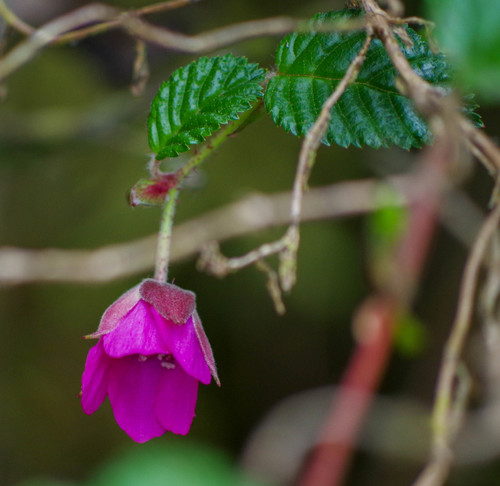
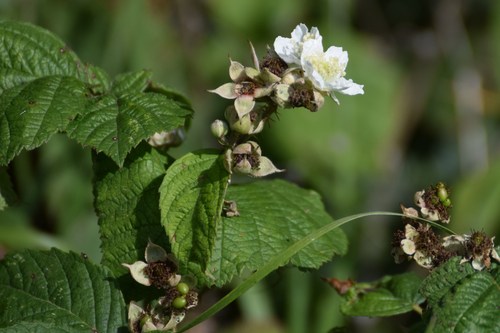
Sorbus thibetica
(Cardot.) Hand-Mazz.
iNaturalist· cc-by-nc
(c) Phuentsho, some rights reserved (CC BY-NC)
iNaturalist· cc-by-nc
(c) Phuentsho, some rights reserved (CC BY-NC)
Summary
Source: WikipediaA deciduous tree reaching 20 m tall and 15 m wide, hardy to UK zone 6 and not frost tender. Flowers in May with seeds ripening in October. Hermaphroditic and insect-pollinated. Tolerates light sandy, medium loamy, and heavy clay soils with good drainage. Grows in mildly acidic to mildly alkaline conditions. Thrives in semi-shade to full sun and prefers moist soil. Withstands strong winds but not coastal exposure.
Description
A deciduous tree reaching 20 m tall and 15 m wide, hardy to UK zone 6 and not frost tender. Flowers in May with seeds ripening in October. Hermaphroditic and insect-pollinated. Tolerates light sandy, medium loamy, and heavy clay soils with good drainage. Grows in mildly acidic to mildly alkaline conditions. Thrives in semi-shade to full sun and prefers moist soil. Withstands strong winds but not coastal exposure.
Edible Uses
The fruit can be eaten raw or cooked. When fully ripe — ideally picked after a frost — it is very pleasant raw, with a mealy texture and a mild, slightly sweet flavour. It can also be bletted by storing in a cool, dry place until nearly but not quite rotten, at which point it develops a delicious taste reminiscent of a luscious tropical fruit. Each fruit grows up to 15mm across.
Traditional Uses
The fruit are eaten after frost.
This uses section is brief — help expand it
Medicinal Uses
None known.
Where It Grows
Fruit,
Propagation
Seed is best sown as soon as it is ripe in a cold frame, though with sufficient quantity it can go directly into an outdoor seedbed. Stored seed benefits from 2 weeks of warm stratification followed by 14–16 weeks of cold stratification, so sow as early in the year as possible. Prick seedlings into individual pots once large enough to handle. Top-growth is very slow in the first year or two as the plants focus on root development, so keep them in a cold frame through their first winter before planting out into permanent positions in late spring.
Other Uses
None known.
Other Information
Rosaceae
Notes
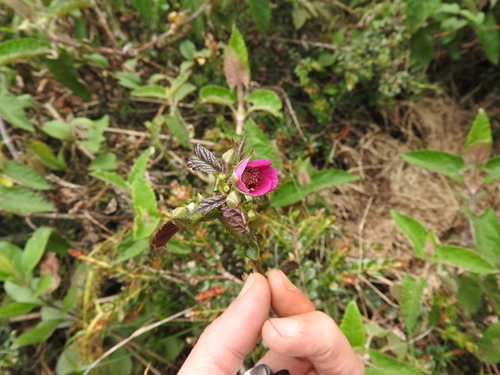
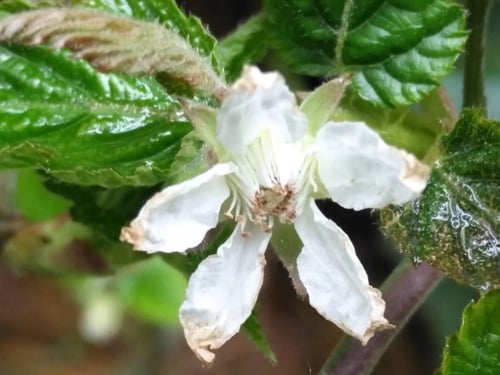
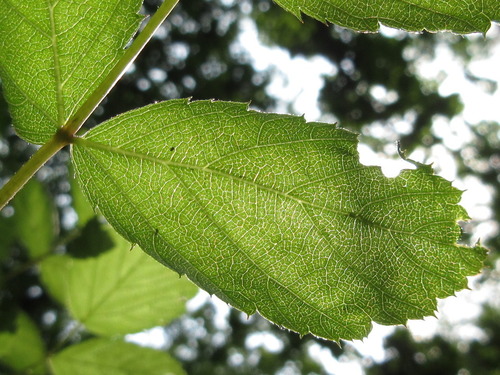
A deciduous tree. It grows 15 m tall. It is a broad cone shape. The bark is grey-brown and is thinly scaly and cracks and flakes. The leaves are broadly oval and 15 cm long by 10 cm wide. They taper to the base and are pointed at the tip. They have sharp teeth. They are hairy at first but become smooth. They are dark green above and densely covered with white hairs underneath. There are up to 14 pairs of veins. The flowers are white. They occur in clusters up to 6 cm across. The fruit is a rounded berry. It is 1.5 cm across. It is green but turns orange or yellow as it ripens.
Synonyms
Also Known As
Bo lang
References (7)
- Coombes, A.J., 2000, Trees. Dorling Kindersley Handbooks. p 281
- Cundall, P., (ed.), 2004, Gardening Australia: flora: the gardener's bible. ABC Books. p 1358
- Flora of China. Vol 9 p 72
- Hibbert, M., 2002, The Aussie Plant Finder 2002, Florilegium. p 292
- Li, F., et al, 2015, Ethnobotanical study on wild plants used by Lhoba people in Milin County, Tibet. Journal of Ethnobiology and Ethnomedicine, 11:23
Show all 7 references Hide references
- Plants for a Future database, The Field, Penpol, Lostwithiel, Cornwall, PL22 0NG, UK. http://www.scs.leeds.ac.uk/pfaf/
- www.Efloras.org Annotated checklist of the Flowering Plants of Nepal.