Sorbus scopulina
Greene
Greene mountain ash, Mountain Ash, Western mountain ash
iNaturalist· cc-by-nc-nd
(c) judith holm, some rights reserved (CC BY-NC-ND), uploaded by judith holm
iNaturalist· cc-by-nc
(c) Chuck Sexton, some rights reserved (CC BY-NC), uploaded by Chuck Sexton
iNaturalist· cc0
no rights reserved, uploaded by Kate Manning
Summary
Source: WikipediaSorbus scopulina, also known as Greene's mountain-ash, is a North American species of rowan within the rose family. Although it may resemble poisonous species of baneberries, its own fruits are edible.
Description
A shrub. It grows 1-4 m high. The leaves are alternate and compound. There are 11-13 sword shaped leaflets. There are teeth along the edge. The flowers are white and small. They are 5-10 mm across. They are urn shaped. The occur as a group in rounded clusters. These are 8-16 cm across. The fruit is a small orange-red berry.
Edible Uses
The fruit can be eaten raw, cooked in pies and preserves, or dried for later use. It has a bitter flavour but becomes noticeably sweeter after a frost. It can also be bletted for raw eating — stored in a cool, dry place until nearly but not quite rotten — at which point many species develop a delicious taste reminiscent of a luscious tropical fruit. Each fruit grows up to 5mm across.
Traditional Uses
The fruit are eaten raw, cooked or dried. They are made into helly, marmalade, jams and wines.
This uses section is brief — help expand it
Medicinal Uses
An infusion of the branches has been given to young children to treat bed-wetting. The bark is febrifuge and tonic, and has been used in the treatment of general sickness.
Known Hazards
The seeds probably contain hydrogen cyanide. This is the ingredient that gives almonds their characteristic flavour. Unless the seed is very bitter it should be perfectly safe in reasonable quantities. In small quantities, hydrogen cyanide has been shown to stimulate respiration and improve digestion, it is also claimed to be of benefit in the treatment of cancer. In excess, however, it can cause respiratory failure and even death.
Distribution
A temperate plant.
Where It Grows
Australia, Canada, North America, USA,
Cultivation
Succeeds in most reasonably good soils in an open sunny position. Dislikes dry soils. Tolerates light shade, though it fruits better in a sunny position. Plants are susceptible to fireblight.
Propagation
Seed is best sown as soon as it is ripe in a cold frame, though with sufficient quantity it can go directly into an outdoor seedbed. Stored seed benefits from 2 weeks of warm stratification followed by 14–16 weeks of cold stratification, so sow as early in the year as possible. Prick seedlings into individual pots once large enough to handle. Top-growth is very slow in the first year or two as the plants focus on root development, so keep them in a cold frame through their first winter before planting out into permanent positions in late spring.
Other Uses
The wood is soft, weighing 37lb per cubic foot.
Notes
There are about 75 Sorbus species.
Synonyms
References (9)
- Bodkin, F., 1991, Encyclopedia Botanica. Cornstalk publishing, p 941
- Brickell, C. (Ed.), 1999, The Royal Horticultural Society A-Z Encyclopedia of Garden Plants. Convent Garden Books. p 972
- Cormack, R. G. H., 1967, Wild Flowers of Alberta. Commercial Printers Edmonton, Canada. p 166
- Elias, T.S. & Dykeman P.A., 1990, Edible Wild Plants. A North American Field guide. Sterling, New York p 240
- Facciola, S., 1998, Cornucopia 2: a Source Book of Edible Plants. Kampong Publications, p 211
Show all 9 references Hide references
- Kermath, B. M., et al, 2014, Food Plants in the Americas: A survey of the domesticated, cultivated and wild plants used for Human food in North, Central and South America and the Caribbean. On line draft. p 830
- MacKinnon, A., et al, 2009, Edible & Medicinal Plants of Canada. Lone Pine. p 82
- Pittonia 4:130. 1900
- Plants for a Future database, The Field, Penpol, Lostwithiel, Cornwall, PL22 0NG, UK. http://www.scs.leeds.ac.uk/pfaf/
More from Rosaceae
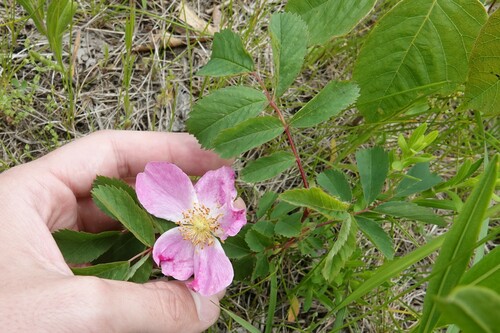
Rosa pratincola
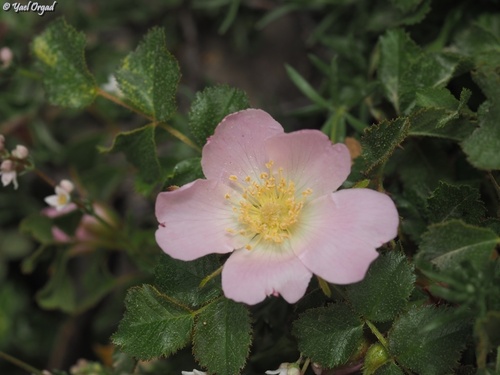
Rosa pulverulenta
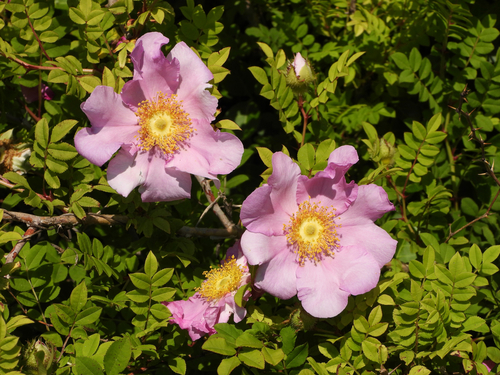
Rosa roxburghii
Sweet chestnut rose, Burr rose, Silk-reeling flower, Roxburgh's rose
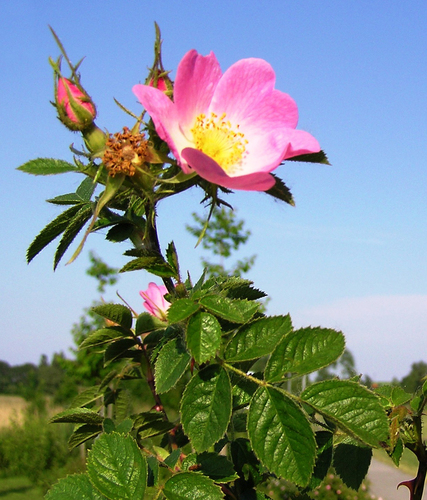
Rosa rubiginosa
Sweetbrier rose, Eglantine Rose, Briar rose
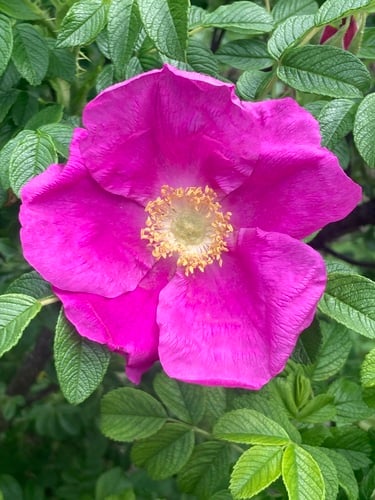
Rosa rugosa
Japanese Rose, Ramanas Rose, Wrinkled rose, Turkestan rose, Meigui, Mau, Humanasi, Beach rose, Hedgehog rose, Rugose rose, Tomato rose, Mei gui
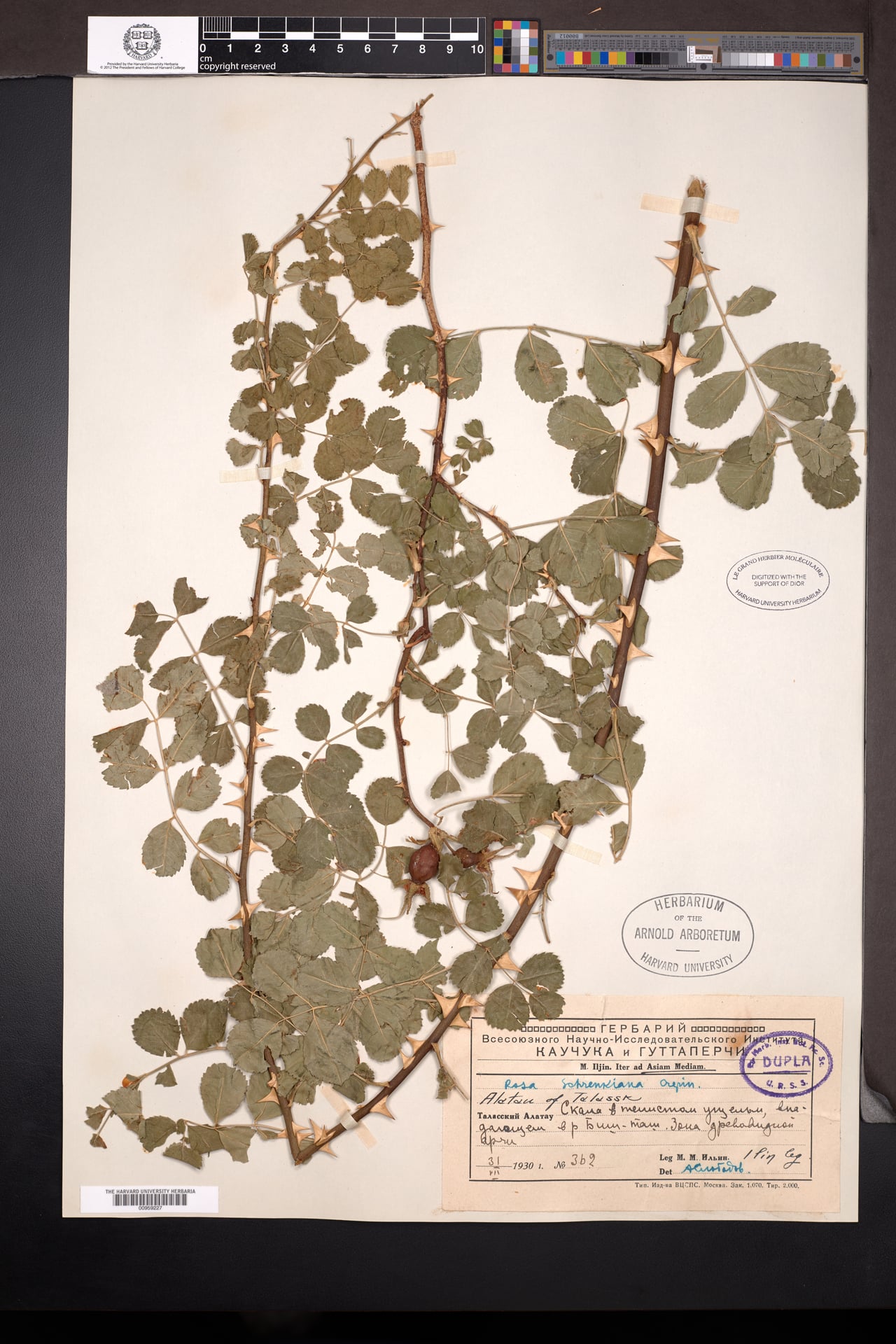
Rosa schrenkiana
Schrenkovskiy rose