Rubia chinensis
Regel & Maack.
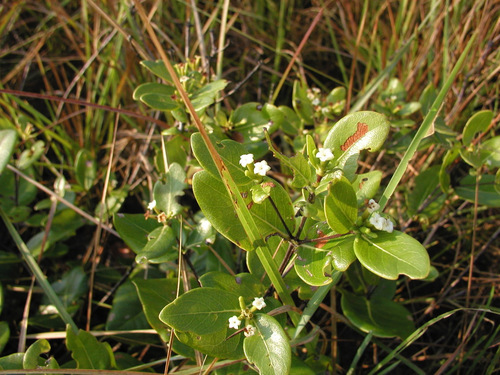
iNaturalist· cc-by-nc
(c) Svetlana Nesterova, some rights reserved (CC BY-NC), uploaded by Svetlana Nesterova
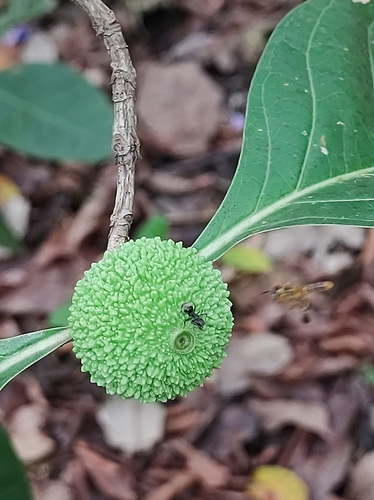
iNaturalist· cc-by-nc
(c) V.S. Volkotrub, some rights reserved (CC BY-NC)
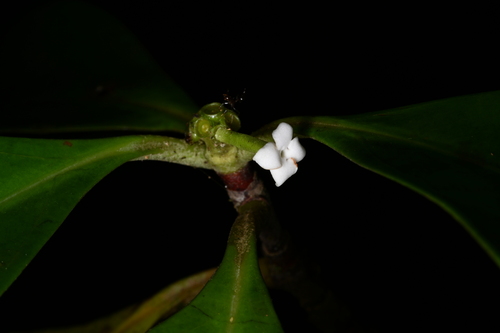
iNaturalist· cc-by-nc
(c) V.S. Volkotrub, some rights reserved (CC BY-NC)
Summary
Source: WikipediaRubia chinensis is a species of flowering plants belonging to the family Rubiaceae. It is native to Southern Russian Far East.
Description
A herb. It keeps growing from year to year. It has rhizomes. It grows 60 cm tall. The stems are angular. The leaves are in rings of 4. They are broadly oval and 3-10 cm long by 1-5 cm wide. The flowering shoots are near the ends of the stems. There are many flowers in a group between 5-30 cm long. They are greenish-white. The fruit is a black berry 4 mm across.
Edible Uses
The leaves are edible when cooked, but are considered a famine food — used only when nothing else is available.
Medicinal Uses
None known.
Distribution
It is a temperate plant. It grows in forests on mountains between 20-1,400 m above sea level.
Where It Grows
Asia, China, Japan, Korea, Manchuria, Mongolia, Russia,
Cultivation
We have very little information on this species and do not know if it will be hardy in Britain, though judging by its native range it should succeed outdoors in many parts of the country. The following notes are based on the general needs of the genus. Prefers a loose moist leafy soil in some shade. Tolerates dry soils but quickly becomes scorched in full sun.
Propagation
Seed is best sown as soon as it is ripe in a cold frame, as stored seed can be very slow to germinate. Prick out seedlings when large enough to handle and grow on in light shade in the greenhouse for the first year, then plant out into permanent positions in early summer. Divide in spring or at any point during the growing season, keeping divisions well watered until established. Larger divisions can go straight into permanent positions; smaller ones are best potted up and grown on in a lightly shaded cold frame, then planted out once well established in summer.
Other Uses
None known.
Synonyms
References (1)
- Plants for a Future database, The Field, Penpol, Lostwithiel, Cornwall, PL22 0NG, UK. http://www.scs.leeds.ac.uk/pfaf/