Rothmannia wittii
(Craib) Bremek.
Witt's bell gardenia
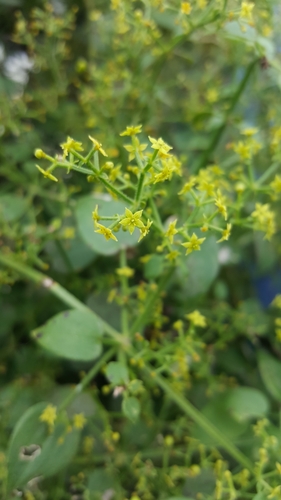
iNaturalist· cc-by-nc
(c) Sam Hambly, some rights reserved (CC BY-NC)
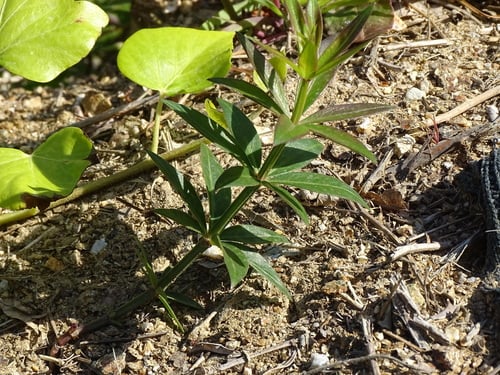
iNaturalist· cc-by-nc
(c) Sam Hambly, some rights reserved (CC BY-NC)
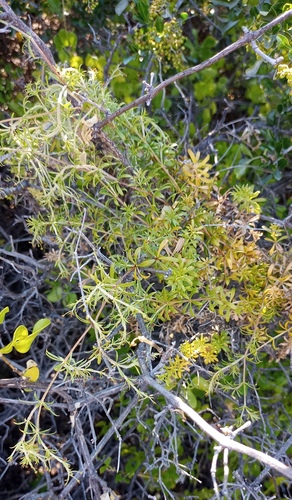
iNaturalist· cc-by-nc
(c) Edd Russell, some rights reserved (CC BY-NC)
Description
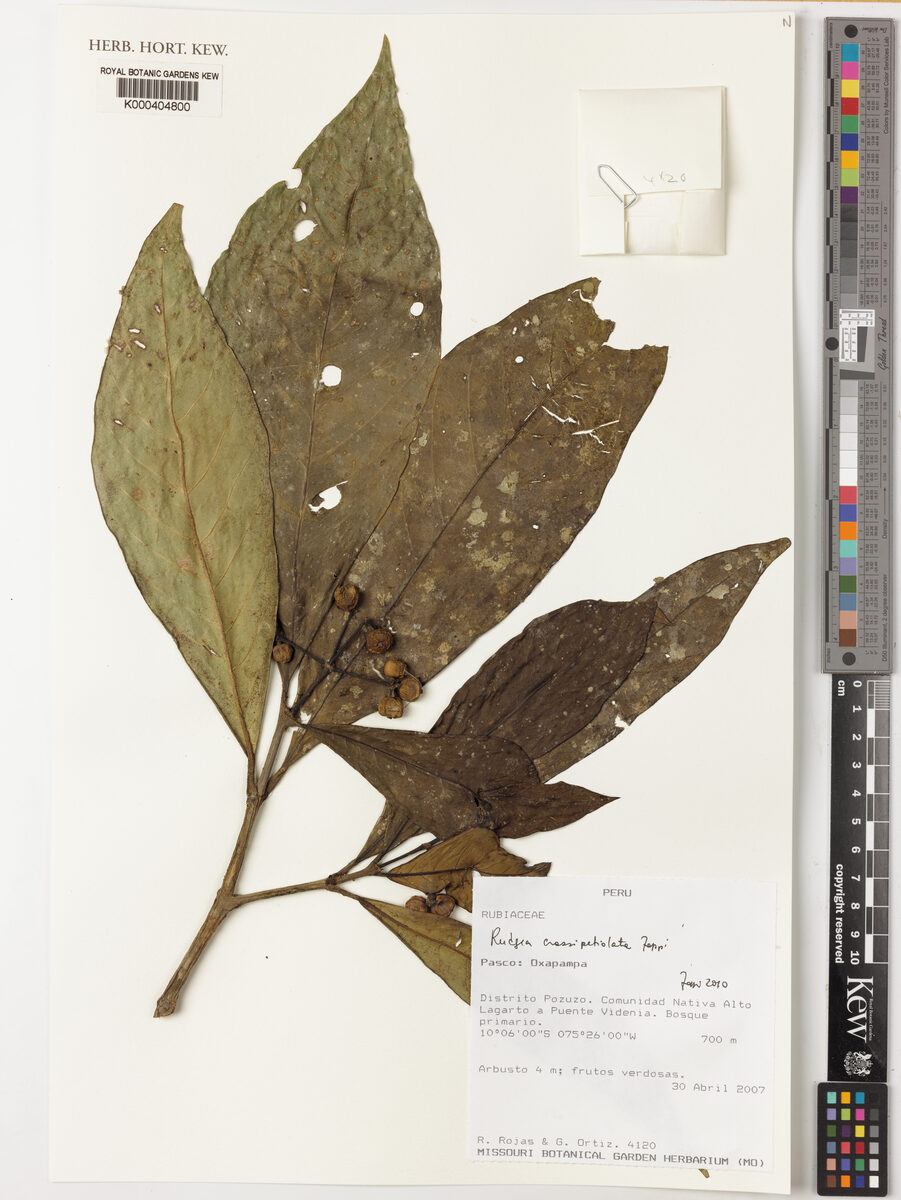
A shrub or small tree. It grows 4-10 m tall. The leaves are opposite and narrowly oval. They are 12-16 cm long by 3-6 cm wide. The flowers are in a cluster in the axils of leave. They are bell shaped and greenish white with purple blotches. The fruit is a round berry.
Edible Uses
The ripe fruit are eaten.
Traditional Uses
The ripe fruit are eaten.
This uses section is brief — help expand it
Distribution
It is a tropical plant.
Where It Grows
Asia, Indochina, Laos, SE Asia, Thailand, Vietnam,
Production
In NE Thailand fruit are ripe in April to August.
Notes
It has medicinal benefits.
Synonyms
Also Known As
Bak maaw, Mak mau, Mak mo, Ta mo
References (4)
- Cruz-Garcia, G. S., & Price, L. L., 2011, Ethnobotanical investigation of 'wild' food plants used by rice farmers in Kalasin, Northeast Thailand. Journal of Ethnobiology and Ethnomedicine 7:33
- Kachenchart, B., et al, 2008, Phenology of Edible Plants at Sakaerat Forest. In Proceedings of the FORTROP II: Tropical Forestry Change in a Changing World. Bangkok, Thailand.
- Natuhara, Y., et al, 2011, Uses of trees in paddy fields in Champasak Province, Southern Lao PDR. Landscape and Ecological Engineering. p 8
- Suksri, S., et al, 2005, Ethnobotany in Bung Khong Long Non-Hunting Area, Northeast Thailand. Kasetsart J., (Nat. Sci) 39: 519-533