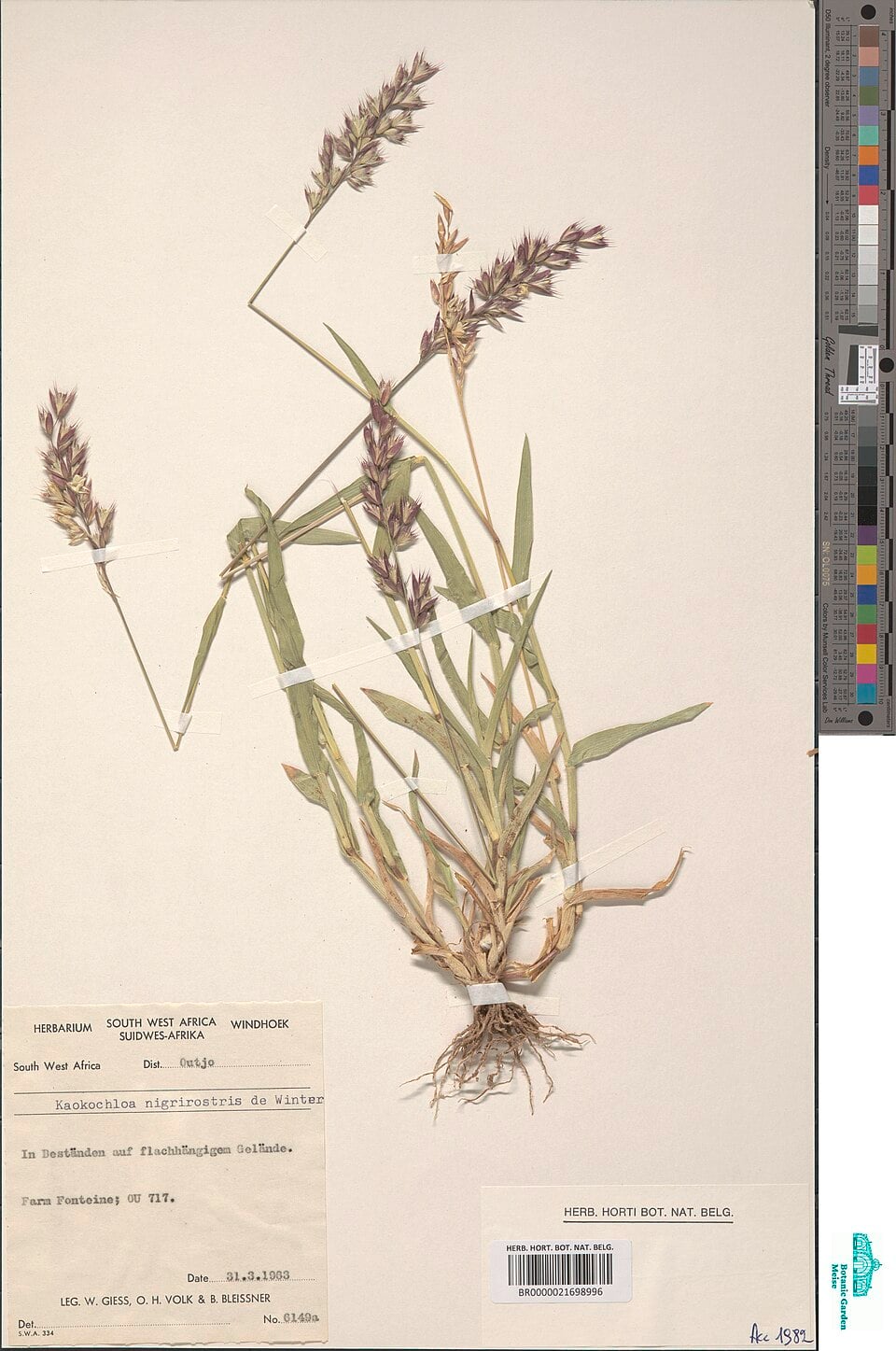
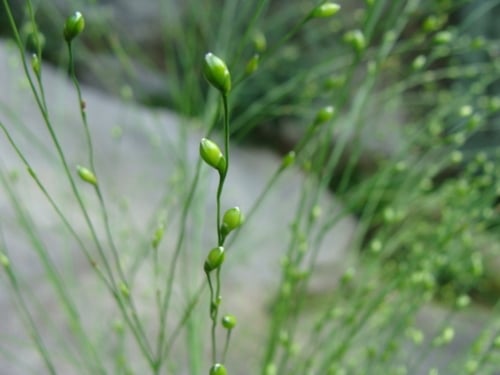
Rottboellia cochinchinensis
(Lour.) Clayton
Guinea fowl grass, Itch grass
iNaturalist· cc-by-nc
(c) 小铖/Smalltown, some rights reserved (CC BY-NC), uploaded by 小铖/Smalltown
iNaturalist· cc0
no rights reserved
Summary
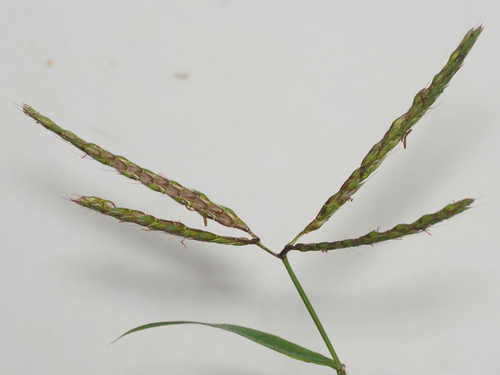
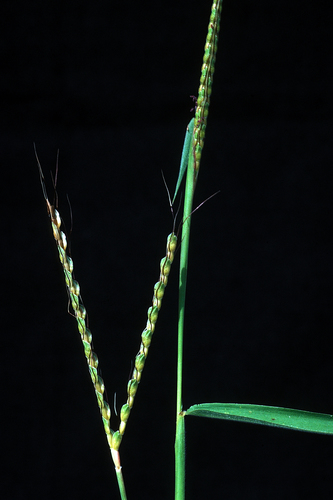
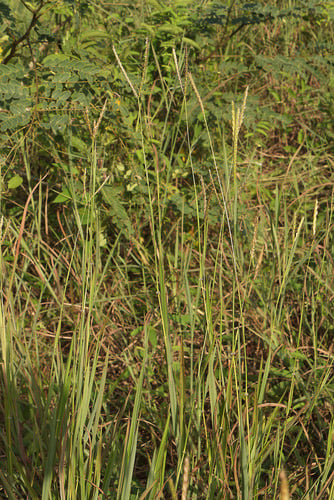
Source: WikipediaRottboellia cochinchinensis is a species of flowering plant in the family Poaceae. This grass is known by the common names Itchgrass, Raoul grass, corngrass, Kokoma grass, Guinea-fowl grass, jointed grass, Shamwa grass and Kelly grass. It is a tall, tufted annual grass whose stems (culms) grow up to 3 metres (9 ft 10 in) in height with leaf-blades of up to 45 centimetres (1 ft 6 in) in length. The species flowers at the apex of culms in the form of spike-like racemes composed of paired spikelets. The common name Itchgrass comes from the bristly (hispid) leaf-sheath which can be irritating to the skin. Rottboellia cochinchinensis is native to tropical Asia and Africa and has also been introduced to the Americas where it is often considered to be an invasive species. It is a major weed of a wide range of crops including maize, rice, sorghum and sugar cane.
Description
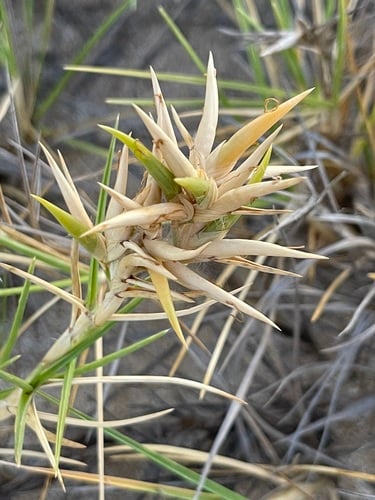
A grass. It is a robust annual plant. It is erect and can be 3 m high. The stems are stiff and have few branches. There are lumpy bristles near the base. There can be stilt roots. The leaves are flat and 1.8 cm wide. They taper to a long fine point. There are sharp spiny hairs along the edges. The spike is simple, straight and 15 cm long. The spikelets are pressed closely.
Edible Uses
The seeds are eaten as a cereal grain.
Distribution
A tropical plant. It grows in disturbed land and waste places but also forms extensive grasslands across West Africa. In Sichuan and Yunnan.
Where It Grows
Africa, Argentina, Asia, Australia, Bahamas, Bolivia, Botswana, Brazil, Burkina Faso, Cameroon, Caribbean, Central Africa, Central America, Chile, China, Congo, Cuba, Dominican Republic, East Africa, East Timor, Eswatini, Gambia, Ghana, Guiana, Guianas, Guinea, Guinée, Guinea-Bissau, Haiti, Jamaica, Malawi, Mali, Mozambique, Nigeria, Puerto Rico, Senegal, Sierra Leone, Somalia, South Africa, South America, Southern Africa, Sudan, Suriname, Swaziland, Taiwan, Timor-Leste, West Africa, West Indies, Zambia, Zimbabwe,
Cultivation
Plants are grown from seeds.
Notes
There are 4 Rottboellia species.
Synonyms
Also Known As
Caminadora Caminhadora, Canterum, Iam-iali, Kalim, Mesengere, Okalim, Pasto quebradizo, Quita chaco, Sabim
References (13)
- Burkill, H. M., 1985, The useful plants of west tropical Africa, Vol. 2. Kew.
- Fowler, D. G., 2007, Zambian Plants: Their Vernacular Names and Uses. Kew. p 72
- Gallagher, D. E., 2010, Farming beyond the escarpment: Society, Environment, and Mobility in Precolonial Southeastern Burkina Faso. PhD University of Michigan.
- Grivetti, L. E., 1980, Agricultural development: present and potential role of edible wild plants. Part 2: Sub-Saharan Africa, Report to the Department of State Agency for International Development. p 73 (As Rottboellia exaltata)
- Kew Bull. 35:817. 1981
Show all 13 references Hide references
- Lazarides, M. & Hince, B., 1993, Handbook of Economic Plants of Australia, CSIRO. p 207
- Malezas Comestibles del Cono Sur, INTA, 2009, Buernos Aires
- Peters, C. R., O'Brien, E. M., and Drummond, R.B., 1992, Edible Wild plants of Sub-saharan Africa. Kew. p 26
- Plants of Haiti Smithsonian Institute http://botany.si.edu/antilles/West Indies
- Scudder, 1962,
- Swaziland's Flora Database http://www.sntc.org.sz/flora
- Tredgold, M.H., 1986, Food Plants of Zimbabwe. Mambo Press. p 27
- World Checklist of Useful Plant Species 2020. Royal Botanic Gardens, Kew