Nasturtium microphyllum
(Boenn. ex Reichb.) Rchb.
One-rowed watercress, Brown watercress, Winter watercress
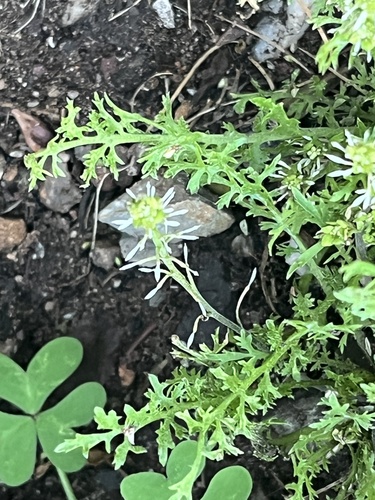
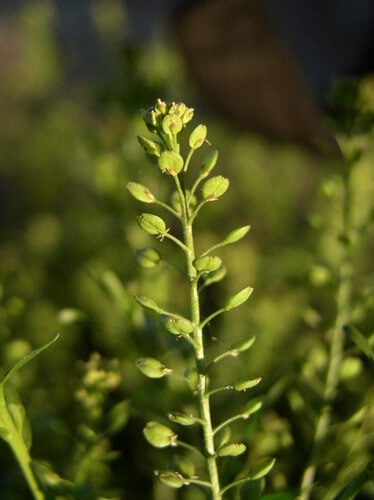
iNaturalist· cc-by-nc
(c) William Van Hemessen, some rights reserved (CC BY-NC), uploaded by William Van Hemessen
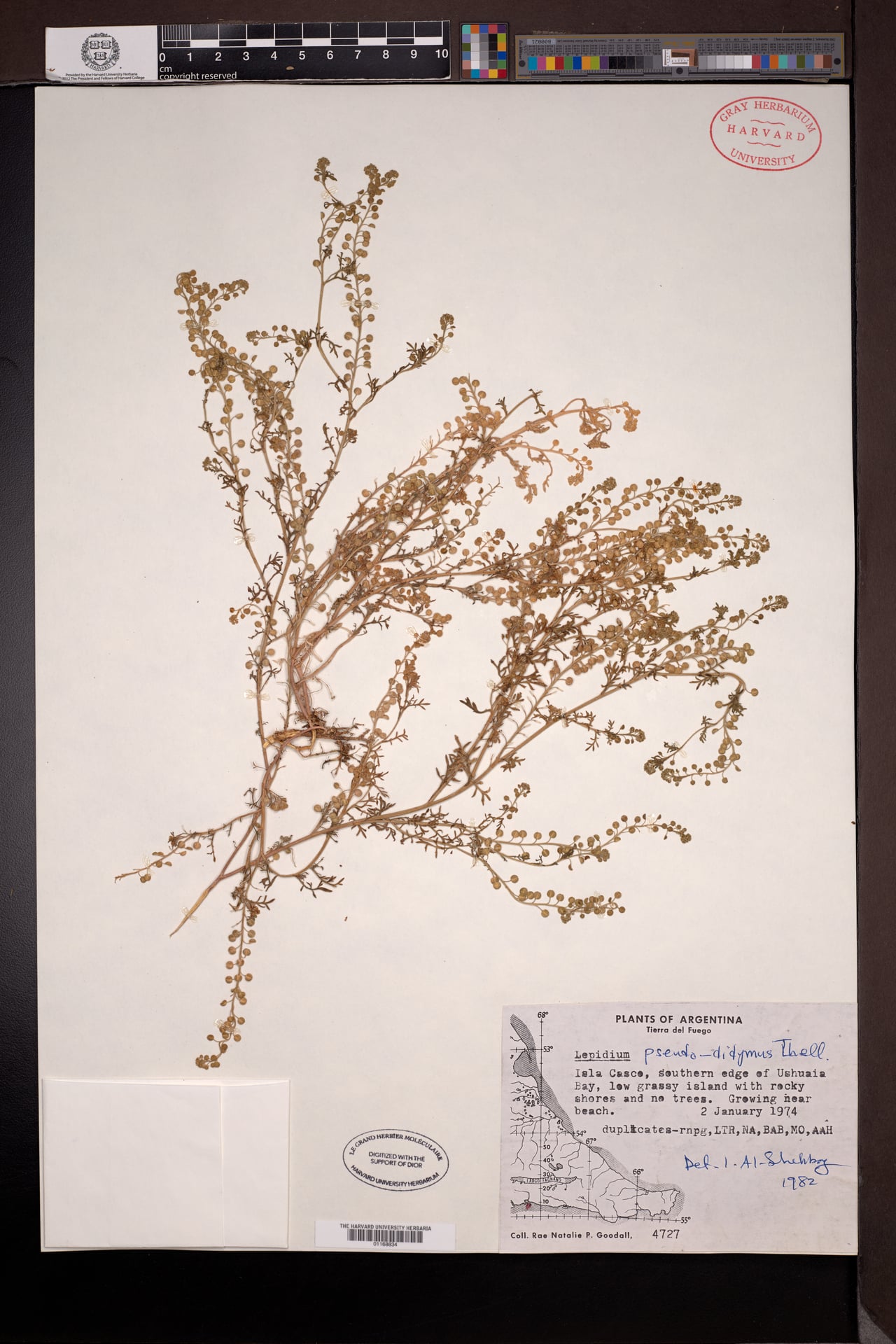
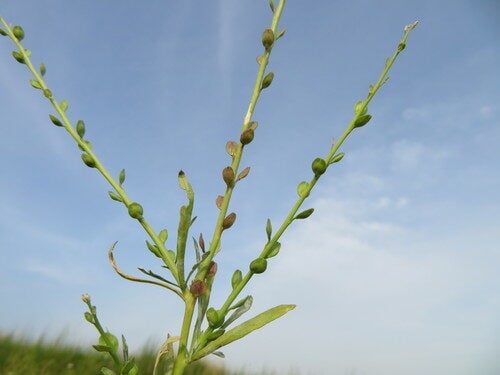
iNaturalist· cc-by-nc
(c) Joseph Knight, some rights reserved (CC BY-NC)
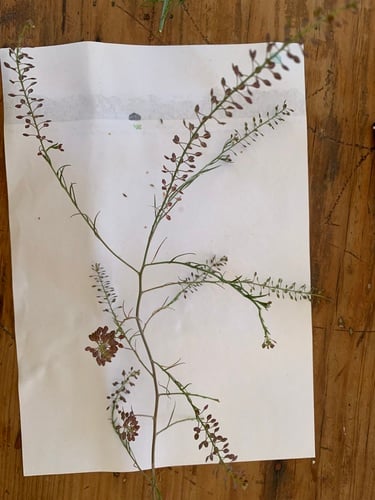
iNaturalist· cc-by-nc
(c) Joseph Knight, some rights reserved (CC BY-NC)
Summary
Source: WikipediaNasturtium microphyllum, the onerow yellowcress, is an aquatic plant species widespread across Europe and Asia, and naturalized in the United States, Canada, Mexico, Central America, Australia, New Zealand and other places. It occurs in wet locations generally at elevations less than 1500 m. It has been reported from every Canadian province except Nova Scotia and Saskatchewan. In the US, it is fairly common in New England, New York, and Michigan, with scattered populations in the southern and western parts of the country.
Description
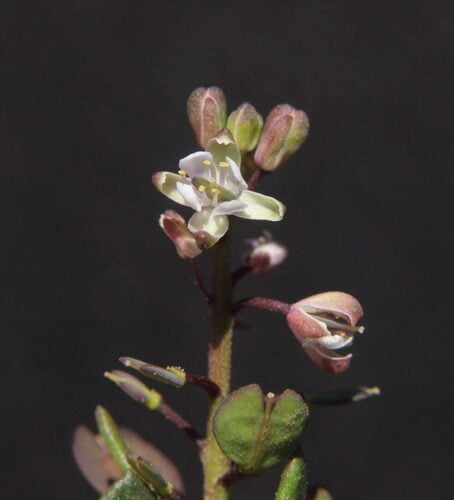
A cabbage family herb. It is similar to watercress. It keeps growing from year to year. The stems are hollow. They root at the nodes. The flowers are in clusters on the ends of shoots. The flowers are white and have 4 petals. The fruit are more narrow and 15-22 mm long.
Edible Uses
The leaves can be eaten raw or cooked and are exceptionally rich in vitamins and minerals, particularly iron. They have a strong, characteristically hot flavour and are mainly used as a garnish or salad addition. The seeds can be sprouted and eaten in salads, where they also carry a hot flavour. Ground into a powder, the seed makes a mustard: the pungency develops when cold water is added to the ground seed, as an enzyme (myrosin) acts on a glycoside (sinigrin) to produce a sulphur compound over 10–15 minutes. Adding hot water, vinegar, or salt inhibits the enzyme and produces a milder but more bitter mustard.
Traditional Uses
The leaves are boiled as a vegetable.
This uses section is brief — help expand it
Medicinal Uses
Antiscorbutic, diuretic, expectorant, purgative, stimulant, and stomachic. Use with caution.
Distribution
It is a temperate plant. It grows in muddy sites and shallow water. In Argentina it grows from sea level to 1,500 m above sea level.
Where It Grows
Afghanistan, Africa, Argentina, Asia, Australia, Austria, Belgium, Britain, Canada, Central Asia, Chile, Czech Republic, Denmark, Europe, France, Germany, Hawaii, India, Iran, Ireland, Italy, Marquesas, Mediterranean, Middle East, Morocco, Netherlands, New Zealand, North Africa, North America, Northeastern India, Pacific, Pakistan, Poland, Slovenia, South America, Spain, Switzerland, Tajikistan, Tasmania, USA, Worldwide,
Cultivation
Watercress is easily grown when given the correct conditions of slowly flowing clean water, preferably coming from chalky or limestone soils. It prefers to grow in water about 5cm deep with an optimum pH 7.2. Plants can be grown in wet soil if the position is somewhat shaded and protection is given in winter, though the flavour may be hotter. Plants are hardy to about -15°c, they tolerate somewhat lower temperatures than the closely related N. officinale. Watercress is often cultivated for its edible leaves, there are some named varieties. The plant is very sensitive to pollution so a clean source of water is required. Plants will often continue to grow all through mild winters. A fast-growing plant, the stems trail along the ground or float in water and produce new roots at the leaf nodes, thus making the plant very easy to propagate vegetatively. Unfortunately, virus diseases have become more common in cultivated plants and so most propagation is carried out by seed. This is a triploid species. It has hybridised naturally in the wild with the diploid species N. officinale to produce the sterile hybrid N. x sterilis which is also commonly cultivated as a salad crop. The flowers are a rich source of pollen and so are very attractive to bees.
Propagation
Seed can be sown in spring in a pot immersed to half its depth in water; germination should occur within a couple of weeks. Prick out seedlings into individual pots while still small, gradually increasing the water depth until they are submerged, then plant out into a pond in summer. Cuttings can be taken at any time during the growing season — virtually any part of the plant, including a single leaf, will root if detached. Place in a container of water until roots are well established, then plant out in shallow water.
Other Uses
None known.
Notes
There are about 70 Rorippa species.
Synonyms
Also Known As
Sitong pettu
References (13)
- Arora, R. K., 2014, Diversity in Underutilized Plant Species - An Asia-Pacific Perspective. Bioversity International. p 43
- Flora of Australia, Volume 8, Lecythidales to Batales, Australian Government Publishing Service, Canberra (1982) p 324 (As Rorippa microphylla)
- Howard, H.W., 1979, Watercress, in Simmonds N.W.,(ed), Crop Plant Evolution. Longmans. London. p 62
- Lazarides, M. & Hince, B., 1993, Handbook of Economic Plants of Australia, CSIRO. p 206 (As Rorippa microphylla)
- Low, T., 1991, Wild Herbs of Australia and New Zealand. Angus & Robertson. p 58 (As Rorippa microphylla)
Show all 13 references Hide references
- Martin, F.W. & Ruberte, R.M., 1979, Edible Leaves of the Tropics. Antillian College Press, Mayaguez, Puerto Rico. p 188
- Plants for a Future database, The Field, Penpol, Lostwithiel, Cornwall, PL22 0NG, UK. http://www.scs.leeds.ac.uk/pfaf/
- Rit Landbunaoard. Atvinnud. Haskolans, B. 3:109. 1948 (As Rorippa microphylla)
- Skinner, G. & Brown, 1981, C., Simply Living. A gatherer's guide to New Zealand's fields, forests and shores. Reed. p 25
- Staples, G.W. and Herbst, D.R., 2005, A tropical Garden Flora. Bishop Museum Press, Honolulu, Hawaii. p 203
- Taram, M., et al, 2018, Wild Food Plant Resources of Komkar Adi Tribe of Upper Siang District in Arunachal Pradesh, India. Bulletin of Arunachal Forest Research, Vol. 33(2), 27-35
- Tasmanian Herbarium Vascular Plants list p 18 (As Rorippa microphylla)
- van Wyk, B., 2005, Food Plants of the World. An illustrated guide. Timber press. p 324 (As Rorippa microphylla)