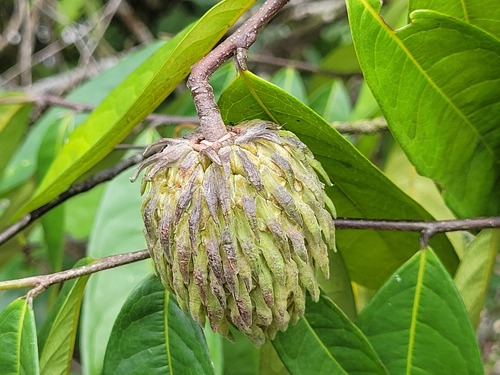
Rollinia mucosa
(Jacq.) Baillon
Rollinia
iNaturalist· cc-by-nc
(c) Apipa, some rights reserved (CC BY-NC)
iNaturalist· cc-by-nc
(c) Apipa, some rights reserved (CC BY-NC)
iNaturalist· cc-by-nc
(c) Apipa, some rights reserved (CC BY-NC)
Description
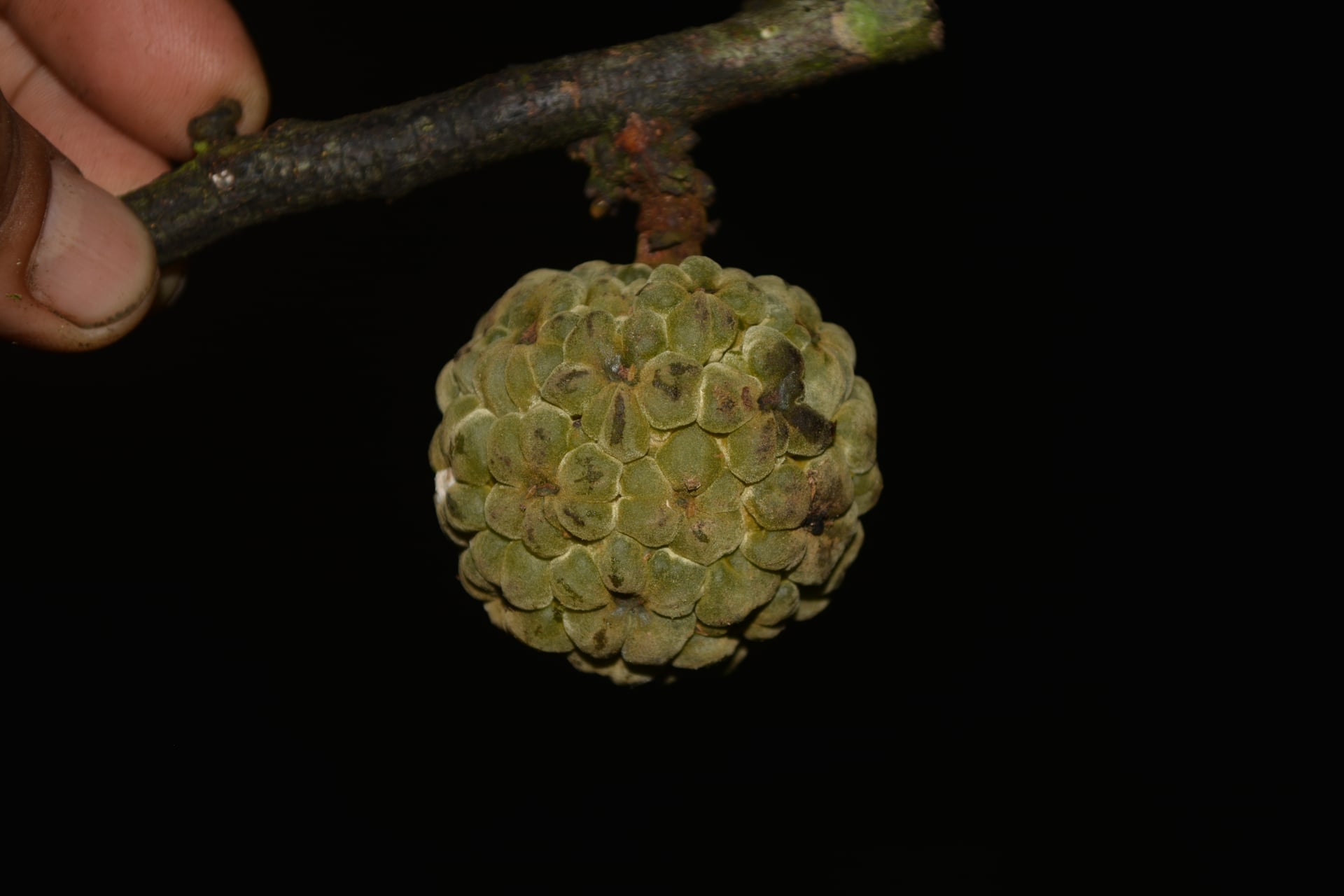
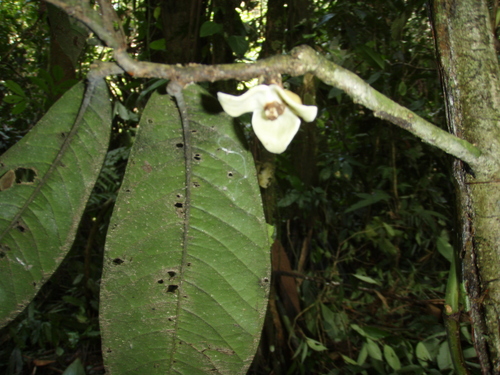
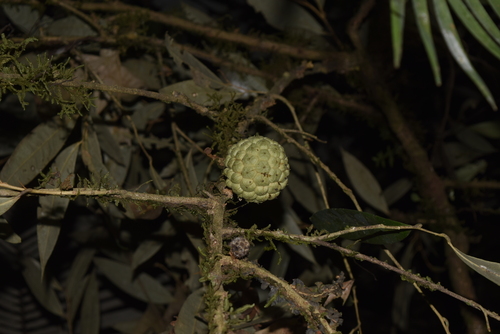
A medium sized evergreen tree. It grows 4-15 m high. The leaves are simple and rich green. They are oblong and 28 cm long. They are softly hairy underneath. The flowers are yellow-green and 2.5 cm across. They have 3 thick petals which have wings. The flowers occur singly. The fruit stalks are stout. The fruit are large and yellow with brown protuberances. The fruit is soft. The pulp is white, juicy and sweet. The fruit can be 15 cm across and up to 20 cm long. There is a brown oval seed in each section of the fruit. The seeds are flattened and 1.5-2 cm long by 1 cm wide. This name is still being reviewed. It may be Annona mucosa Jacq.
Edible Uses
The fruit is eaten fresh or made into juice, best harvested when it just begins to turn yellow and the fleshy spines start to turn black.
Traditional Uses
The fruit is eaten fresh. They are also made into juice.
This uses section is brief — help expand it
Known Hazards
The tree cannot tolerate frost, though mature plants can briefly withstand freezing temperatures.
Distribution
A tropical plant. It is native to tropical America. It grows in warm, wet regions of the tropics. It grows up to 1,500 m above sea level in the Amazon. It often grows on limestone. It needs full sun. It cannot tolerate frost. It will tolerate very wet soils. It will grow in regions that are flooded for part of the year. It grows in areas with 1500 mm of rain each year and temperatures of 24°-26°C. It suits hardiness zones 10-11. Once mature they can stand temperatures down to freezing for short periods. The soil needs to be free draining. Shelter from wind is important. It can grow in full sun of light shade.
Where It Grows
Amazon, Asia, Australia, Belize, Bolivia, Brazil, Caribbean, Central America, China, Colombia, Costa Rica, Cuba, Dominica, Dominican Republic, Ecuador, French Guiana, Guadeloupe, Guatemala, Guianas, Guyana, Haiti*, Hawaii, Honduras, Indonesia, Malaysia, Martinique, Mexico, Nicaragua, North America, Pacific, Panama, Peru, Philippines, Puerto Rico, SE Asia, Solomon Islands, South America, Suriname, Trinidad and Tobago, USA, Venezuela, West Indies,
Cultivation
Plants are grown from seed. They can also be grown by layering and by using grafts. To maintain the sweetest varieties, grafting is used. For seed, the ripe fruit are harvested and the seeds removed and washed. Fresh seed should be planted and as they have a hard seed coat they need to be scratched or treated with chemicals to help them germinate. A spacing of 4 m is suitable. Mulching is useful as long as it is kept away from the trunk. Thin hanging branches can be pruned back. The fruit is harvested when it just begins to turn yellow. When the fleshy spines start to turn black is the best time to eat the fruit. Fruit can be stored at 15-17°C.
Production
The tree is fast growing. The fruit matures in 90 days. Mature fruit can weigh 1.4 kg.
Other Information
It is a cultivated fruit tree.
Nutrition
| Part | Moisture | kJ | kcal | Protein | Vit A | Vit C | Iron | Zinc |
|---|---|---|---|---|---|---|---|---|
| Fruit | 77.2 | 335 | 80 | 2.8 | — | 33 | 1.2 | — |
Synonyms
Also Known As
Akxitkiwi, Amazon custard apple, Anona, Anon, Anonilla, Biriba, Cachiman-montagne, Chirimolia, Chiromoya, Countess fruit, Fruta de Condessa, Pohon biriba, Wild sweetsop
References (67)
- Adansonia 8:268. 1868
- Asprilla-Perea, J., & Diaz-Puente, J.M., 2018, Traditional use of wild edible food in rural territories within tropical forest zones: A case study from the northwestern Colombia. New Trends and Issues Proceedings on Humanities and Social Sciences [Online]. 5(1), 162–181.
- Barfod, A. S. & Kvist, L. P., 1996, Comparative Ethnobotanical Studies of the Amerindian Groups in Coastal Ecuador. The Danish Academy of Sciences and Letters. p 76
- Barwick, M., 2004, Tropical and Subtropical Trees. A Worldwide Encyclopedic Guide. Thames and Hudson p 357
- Burkill, I.H., 1966, A Dictionary of the Economic Products of the Malay Peninsula. Ministry of Agriculture and Cooperatives, Kuala Lumpur, Malaysia. Vol 2 (I-Z) p 1948 (As Rollinia deliciosa)
Show all 67 references Hide references
- Condit, R., et al, 2011, Trees of Panama and Costa Rica. PrincetonField Guides. p 54
- Coronel, R.E., 1982, Fruit Collections in the Philippines. IBPGR Newsletter p 8 (As Rollinia deliciosa)
- Daly, D. C., An Index of Common Names of Plants in Acre, Brazil. New York Botanical Garden Universidade Federal do Acre.
- Darley, J.J., 1993, Know and Enjoy Tropical Fruit. P & S Publishers. p 3
- Duchelle, A. E., 2007, Observations on Natural Resource use and Conservation by the Shuar In Ecuador's Cordillera del Condor. Ethnobotany Research & Applications 5:005-023
- Facciola, S., 1998, Cornucopia 2: a Source Book of Edible Plants. Kampong Publications, p 14 (As Rollinia deliciosa)
- Fouqué, A. 1972. Espèces fruitières d'Amérique tropicale. Institut français de recherches fruitierès outre-mer (ifac) (As Rollinia jimenezi) and (As Rollinia orthopetala)
- Garcia-Serrano, C. R., & Del Monte, J. P., 2004, The Use of Tropical Forest (Agroecosystems and wild Plant harvesting) as a Source of Food in the Bribri and Cabecar Cultures in the Caribbean Coast of Costa Rica. Economic Botany 58(1) pp 58-71
- Gonzalez-Espinosa, M. et al, 2011, The Red List of Mexican Cloud Forest Trees. Flora and Fauna International, Cambridge. p 86
- Grandtner, M. M., 2008, World Dictionary of Trees. Wood and Forest Science Department. Laval University, Quebec, Qc Canada. (Internet database http://www.wdt.qc.ca)
- Grandtner, M. M. & Chevrette, J., 2013, Dictionary of Trees, Volume 2: South America: Nomenclature, Taxonomy and Ecology. Academic Press p 37 (As Annona mucosa)
- GRIN (Annona mucosa Jacq.)
- Ibarra-Manriquez, G., et al, 1997, Useful Plants of the Los Tuxtlas Rain Forest (Veracruz, Mexico): Considerations of Their Market Potential. Economic Botany 51(4) pp 362-376
- Hedrick, U.P., 1919, (Ed.), Sturtevant's edible plants of the world. p 572
- Hermandez Bermejo, J.E., and Leon, J. (Eds.), 1994, Neglected Crops. 1492 from a different perspective. FAO Plant Production and Protection Series No 26. FAO, Rome. p14, 198 (Also as Rollinia jiminezii)
- Hibbert, M., 2002, The Aussie Plant Finder 2002, Florilegium. p 252 (Also as Rollinia deliciosa)
- Ibarra-Manriquez, G., et al, 1997, Useful Plants of the Los Tuxtlas Rain Forest (Veracruz, Mexico): Considerations of their Market Potential. Economic Botany, Vol. 51, No. 4, pp. 362-376
- Janick, J. & Paul, R. E. (Eds.), 2008, The Encyclopedia of Fruit & Nuts. CABI p 68
- Kermath, B. M., et al, 2014, Food Plants in the Americas: A survey of the domesticated, cultivated and wild plants used for Human food in North, Central and South America and the Caribbean. On line draft. p 752
- Kiple, K.F. & Ornelas, K.C., (eds), 2000, The Cambridge World History of Food. CUP p 1732 (As Rollinia deliciosa)
- Little, E. L., et al, 1974, Trees of Puerto Rico and the Virgin Islands. USDA Handbook 449. Forestry Service. p 180
- Llamas, K.A., 2003, Tropical Flowering Plants. Timber Press. p 62 (As Rollinia deliciosa)
- Lorenzi, H., 2002, Brazilian Trees. A Guide to the Identification and Cultivation of Brazilian Native Trees. Vol. 02 Nova Odessa, SP, Instituto Plantarum p 31
- Lorenzi, H., Bacher, L., Lacerda, M. & Sartori, S., 2006, Brazilian Fruits & Cultivated Exotics. Sao Paulo, Instituto Plantarum de Estuados da Flora Ltda. p 53
- Maas, P. J. M., et al, 1992, Rollinia, Flora Neotropica Vol. 57. p 126
- Martin, F. W., et al, 1987, Perennial Edible Fruits of the Tropics. USDA Handbook 642 p 18 (As Rollinia deliciosa) (Also as Rollinia jimenezii)
- Miguel, E., et al, 1989, A checklist of the cultivated plants of Cuba. Kulturpflanze 37. 1989, 211-357
- Milow, P., et al, 2013, Malaysian species of plants with edible fruits or seeds and their evaluation. International Journal of Fruit Science. 14:1, 1-27 (Also as Rollinia deliciosa)
- Morton, J. F., 1987, Fruits of Warm Climates. Wipf & Stock Publishers p 88
- Murillo-A, J., 2001, Annonaceae of Colombia. Biota Colombiana 2(1): 49-51
- Paz, F. S., et al, 2021, Edible Fruit Plant Species in the Amazon Forest Rely Mostly on Bees and Beetles as Pollinators. Journal of Economic Entomology, XX(XX), 2021, 1–13
- Piedra-Malagón, E. M. et al, 2022, Edible native plants of the Gulf of Mexico Province. Biodiversity Data Journal 10: e80565 p 9
- Plants of Haiti Smithsonian Institute http://botany.si.edu
- PROSEA handbook Volume 9 Plants yielding non-seed carbohydrates. p 189 and No. 2
- Recher, P, 2001, Fruit Spirit Botanical Gardens Plant Index. www.nrg.com.au/~recher/ seedlist.html p 3
- Rivero, J. A., y Brunner, B. R., 2007, Arborels frutales exoticas y poco conocidos en Puerto Rico. Universidad de Puerto Rico. p 33
- Segura, S. et al, 2018, The edible fruit species in Mexico. Genet Resour Crop Evol (2018) 65:1767–1793 (Also as Rollinia jimenezii)
- Smith, N., et al, 2007, Amazon River Fruits. Flavors for Conservation. Missouri Botanical Gardens Press. p 34
- Sukarya, D. G., (Ed.) 2013, 3,500 Plant Species of the Botanic Gardens of Indonesia. LIPI p 491 (As Rollinia sieberi - as a synonym of Rollina mucosa)
- Tankard, G., 1990, Tropical fruit. An Australian Guide to Growing and using exotic fruit. Viking p 94
- USDA, ARS, National Genetic Resources Program. Germplasm Resources Information Network - (GRIN). [Online Database] National Germplasm Resources Laboratory, Beltsville, Maryland. Available: www.ars-grin.gov/cgi-bin/npgs/html/econ.pl (10 April 2000)
- Van den Eynden, V., et al, 2003, Wild Foods from South Ecuador. Economic Botany 57(4): 576-603
- van Roosmalen, M.G.M., 1985, Fruits of the Guianan Flora. Utrecht Univ. & Wageningen Univ. p16
- Vasquez, R. and Gentry, A. H., 1989, Use and Misuse of Forest-harvested Fruits in the Iquitos Area. Conservation Biology 3(4): 350f
- Villachica, H., (Ed.), 1996, Frutales Y hortalizas promisorios de la Amazonia. FAO, Lima. p 20
- Rollinia deliciosa references as Rollinia emerginata - this is actually Rollinia mucosa
- Hoehne. 1946. Frutas indigenas. Inst. Bot. Sao Paulo.
- INFOODSUpdatedFGU-list.xls (As Rollinia pulchrinervia)
- Kunkel, G., Plants for human consumption.
- Little et al. 1964-1974. Trees of Puerto Rico and the Virgin Islands.
- Maas, P., et al. 1992. Fl. Neotrop. Monogr. 57:126-132.
- Martin, F. W., et al, 1987, Perennial Edible Fruits of the Tropics. USDA Handbook 642 p 81 (As Rollinia orthopetala and Rollinia pulchrinervia)
- Mem. Soc. Phys. Geneve 5:201. 1832 (As Rollinia pulchrinervia)
- Segura, S. et al, 2018, The edible fruit species in Mexico. Genet Resour Crop Evol (2018) 65:1767–1793 (As Rollinia jimenezii)
- Staples, G.W. and Herbst, D.R., 2005, A tropical Garden Flora. Bishop Museum Press, Honolulu, Hawaii. p 111
- Steyerm. & O. Huber. 1978. Flora del Avila. (F Avila)
- Tankard, G., 1987, Tropical fruit. Viking.
- Terrell et al. 1986. Agric. Handb. no. 505.
- van Roosmalen, M.G.M., 1985, Fruits of the Guianan Flora. Utrecht Univ. & Wageningen Univ. p18 (As Rollinia pulchrinervia)
- Wong, K. C., 1995, Collection and Evaluation of Under-Utilized Tropical and Subtropical Fruit Tree Genetic Resources in Malaysia. JIRCAS International Symposium Series No. 3: 27-38 (As Rollinia deliciosa)
- www.colecionandofrutas.org (As Annona mucosa)
- Zaldivar, M. E., et al, 2002, Species Diversity of Edible Plants Grown in Homegardens of Chibehan Amerindians from Costa Rica. Human Ecology, Vol. 30, No. 3, pp. 301-316