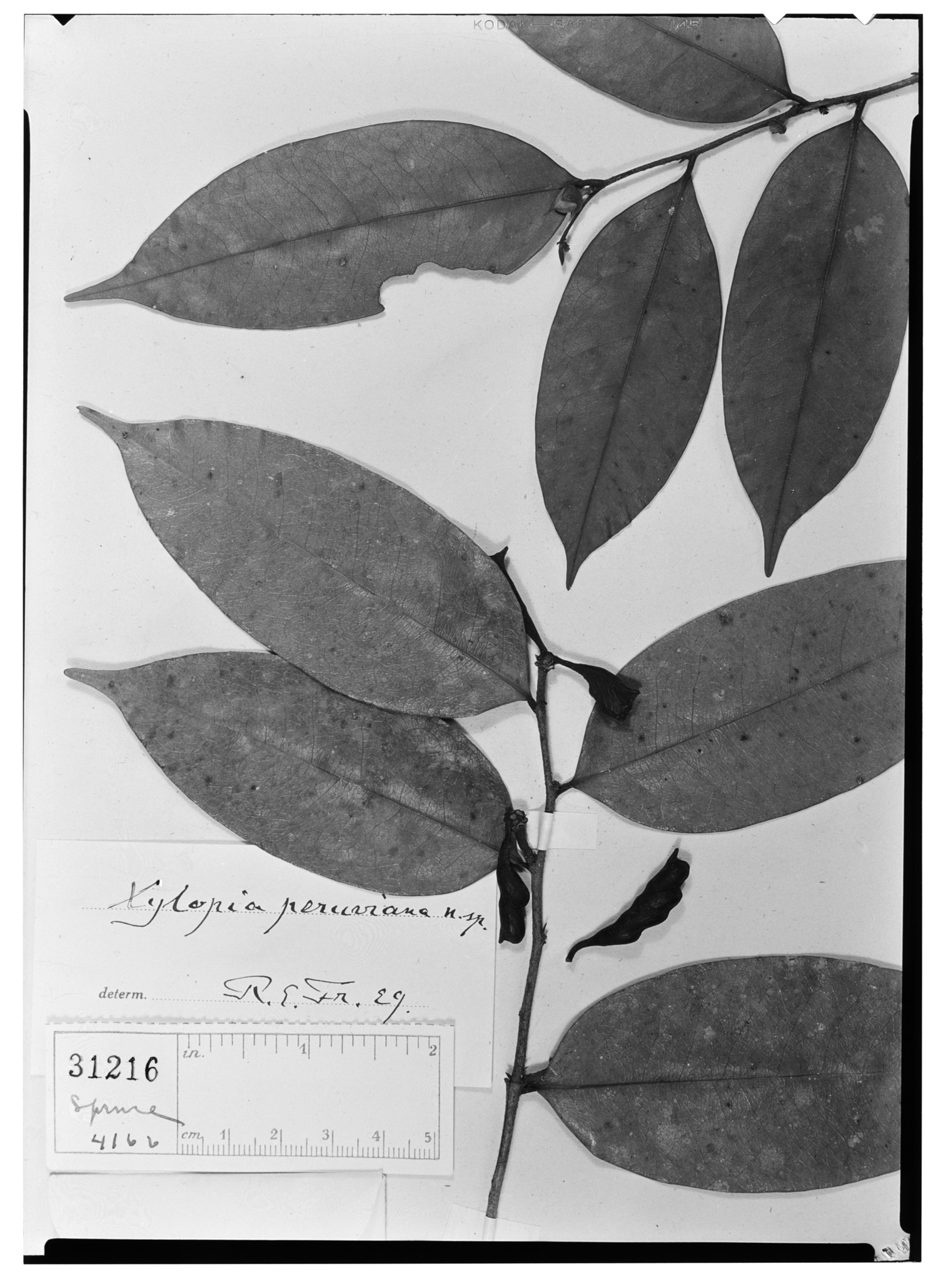
Xylopia frutescens
Aubl.
Malagueto chico
iNaturalist· cc-by-nc
(c) alexandre callou sampaio, some rights reserved (CC BY-NC), uploaded by alexandre callou sampaio
iNaturalist· cc-by-nc
(c) auffretmric, some rights reserved (CC BY-NC)
iNaturalist· cc-by-nc
(c) Marcondes Oliveira, some rights reserved (CC BY-NC)
Summary
Source: WikipediaXylopia frutescens is a tree species the genus Xylopia and family Annonaceae and its native range is S. Mexico to S. Tropical America.
Description
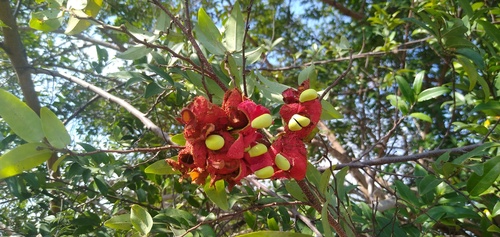
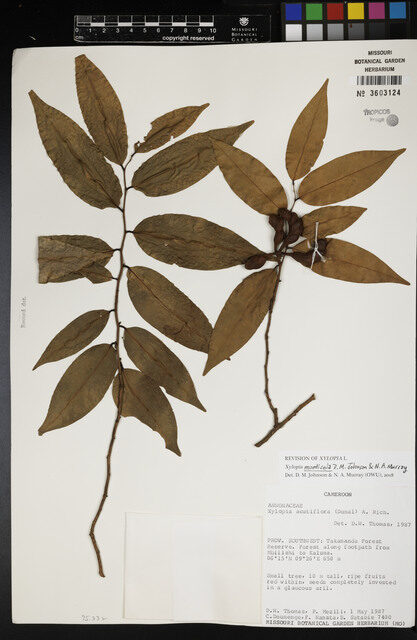
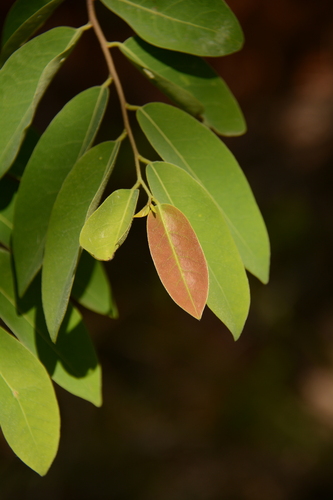
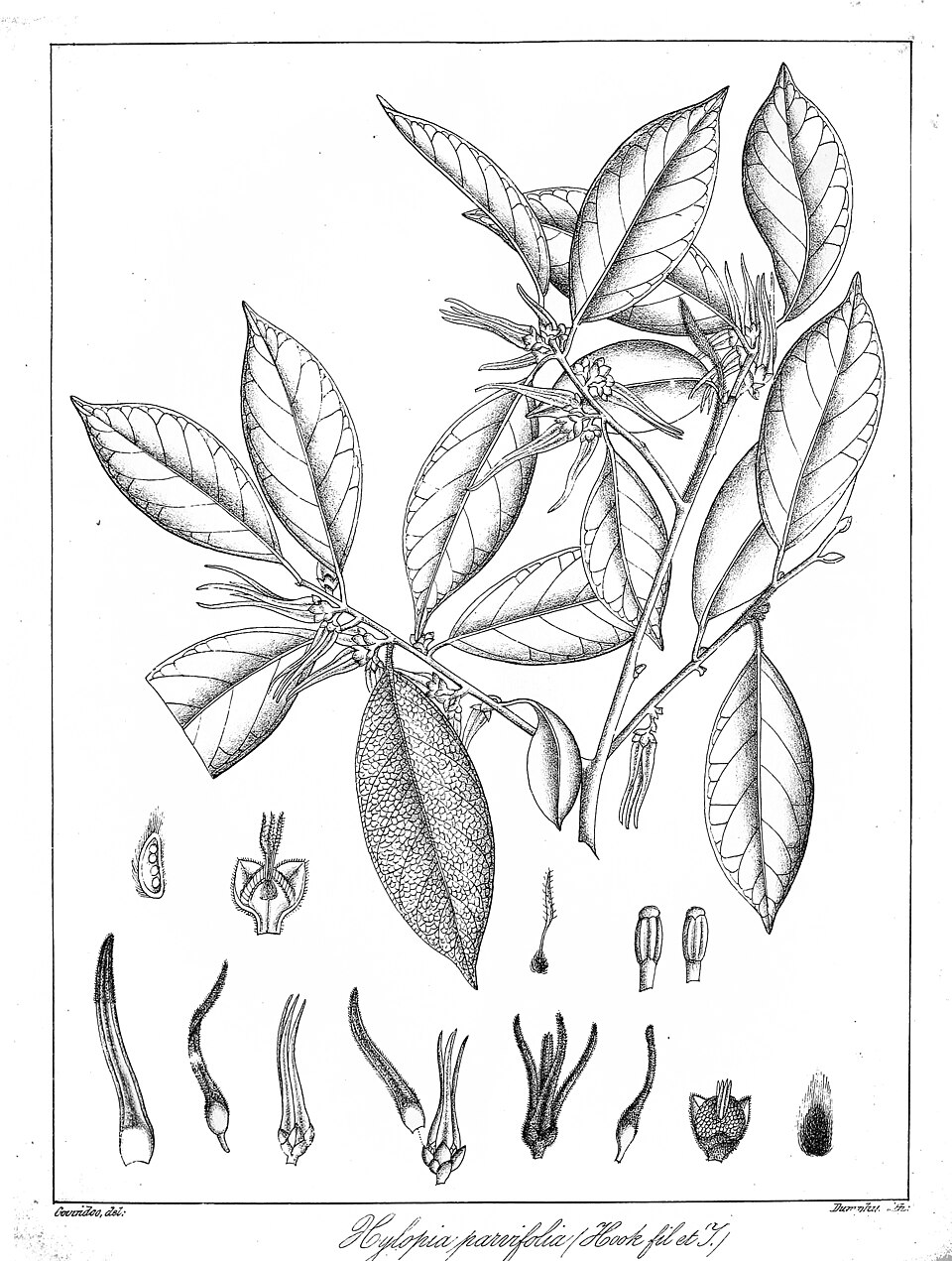
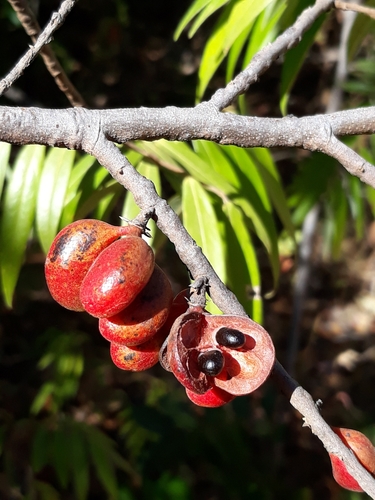
A small tree. It grows 4-8 m high. The branches grow horizontal. The trunk is 20-30 cm across. The bark is almost smooth and is smooth and has a smell. The leaves are simple and alternate. They have short leaf stalks. The leaves are narrow and pointed and are 5-12 cm long by 1-2 cm wide. The flowers are in small groups in the axils of leaves. The fruit is a round red berry. There are 2-6 seeds inside.
Edible Uses
The fruit are used as a substitute for pepper, and the seeds are ground and eaten as a spice.
Traditional Uses
The fruit are used as a substitute for pepper. The seeds are ground and eaten.
This uses section is brief — help expand it
Medicinal Uses
The branches are used in a preparation to treat catarrhal infections of the urinary mucous membranes The branches are an ingredient in a decoction with Alpinia galanga for treating dental cavities. The bark is aromatic. The spicy fruit is aphrodisiac. It is used in the treatment of dysentery and other stomach complaints. It is mixed with coffee and used as an asthma remedy. The seeds are antirheumatic, aphrodisiac, aromatic, carminative, diuretic, eupeptic and tonic. They are used in the treatment of consumption, weakness accompanied by lumbar aches etc. It is said to be effective against snake bites and is also used to treat dental caries as well as catarrhal afflictions of the mucous membranes and urinary tract. An infusion of the seeds is used in the treatment of colic and stomach cramps. The raw seed is infused in cold water.
Distribution
A tropical plant. It grows in Brazil in the drier regions of the Amazon. It grows along roadsides in Panama. In Colombia it grows between 70-1,000 m above sea level. It is often in seasonally flooded areas.
Where It Grows
Amazon, Belize, Bolivia*, Brazil, Central America, Colombia, Costa Rica, Guiana, Guianas, Guyana, Honduras, Mexico, Panama, Peru, South America, Suriname, Venezuela,
Cultivation
Plants are grown from seed. Ripe fruit are harvested and dried in the sun to remove the seeds. Fresh seed should be planted. Seeds germinate in 2-3 months.
Propagation
Seed - germination rates and time are improved if the seed is scarified by lightly abrading the seedcoat prior to sowing. Sow the seeds in a sunny position in a nursery seedbed, preferably as soon as they have been harvested. Germination rates are usually low, with sprouting taking place within 60 - 90 days. Transplant the seedlings into individual containers when they are 4 - 6cm tall. Seedlings are quite slow growing and it will take 9 - 11 months from germination until they are ready to plant into their permanent positions.
Other Uses
The fibre from the bark is used to make rough ropes and burlap. An oil from the seeds is rubbed into the hair - probably to give it lustre. The wood is moderately heavy; medium textured; not durable, but more of less resistant to mechanical stress; soft and easy to work with. It is used for internal work in general construction; as masts for small boats; tool handles; wooden shoes etc. Traditionally, it is often selected as the important ridge pole or cumbrador for native houses. The wood is suitable for fuel and for making into charcoal. Stakes of the green branches can be used to make hedges. It is assumed that the writer is talking about making living hedges. A fairly fast-growing, pioneer species with its native range, it might be suitable for use in re-establishing woodland conditions in other areas.
Production
Plants grow quickly.
Synonyms
Also Known As
Coagerucu, Embira, Envira, Envir-preta, Ibira, Jejerecau, Jejerucu, Koenge, Kuyama, Pau-de-embira, Pehrekoe, Pejerecum, Pijerecu, Pindaiba-branca, Pindauba, Pindauva
References (12)
- Condit, R., et al, 2011, Trees of Panama and Costa Rica. PrincetonField Guides. p 60
- Facciola, S., 1998, Cornucopia 2: a Source Book of Edible Plants. Kampong Publications, p 14
- Grandtner, M. M. & Chevrette, J., 2013, Dictionary of Trees, Volume 2: South America: Nomenclature, Taxonomy and Ecology. Academic Press p 707
- Hazlett, D. L., 1986, Ethnobotanical Observations from Cabecar and Guaymi Settlements in Central America. Economic Botany 40(3): 339-352
- Hedrick, U.P., 1919, (Ed.), Sturtevant's edible plants of the world. p 689
Show all 12 references Hide references
- Hist. pl. Guiane 1:602, t. 242. 1775
- Kermath, B. M., et al, 2014, Food Plants in the Americas: A survey of the domesticated, cultivated and wild plants used for Human food in North, Central and South America and the Caribbean. On line draft. p 930
- Lorenzi, H., 2002, Brazilian Trees. A Guide to the Identification and Cultivation of Brazilian Native Trees. Vol. 02 Nova Odessa, SP, Instituto Plantarum p 33
- Murillo-A, J., 2001, Annonaceae of Colombia. Biota Colombiana 2(1): 49-51
- Roa, J. A. G. & Boada, D. S. G., 2018, Fundación para el Fortalecimiento de la Fruticultura y Plantas Alimenticias no Convencionales en Colombia.
- Tanaka,
- World Checklist of Useful Plant Species 2020. Royal Botanic Gardens, Kew