Xylopia hypolampra
Mildbr.
iNaturalist· cc-by-nc
(c) Nick Helme, some rights reserved (CC BY-NC), uploaded by Nick Helme
iNaturalist· cc-by-nc
(c) joeymo, some rights reserved (CC BY-NC)
iNaturalist· cc-by-nc
(c) joeymo, some rights reserved (CC BY-NC)
Description
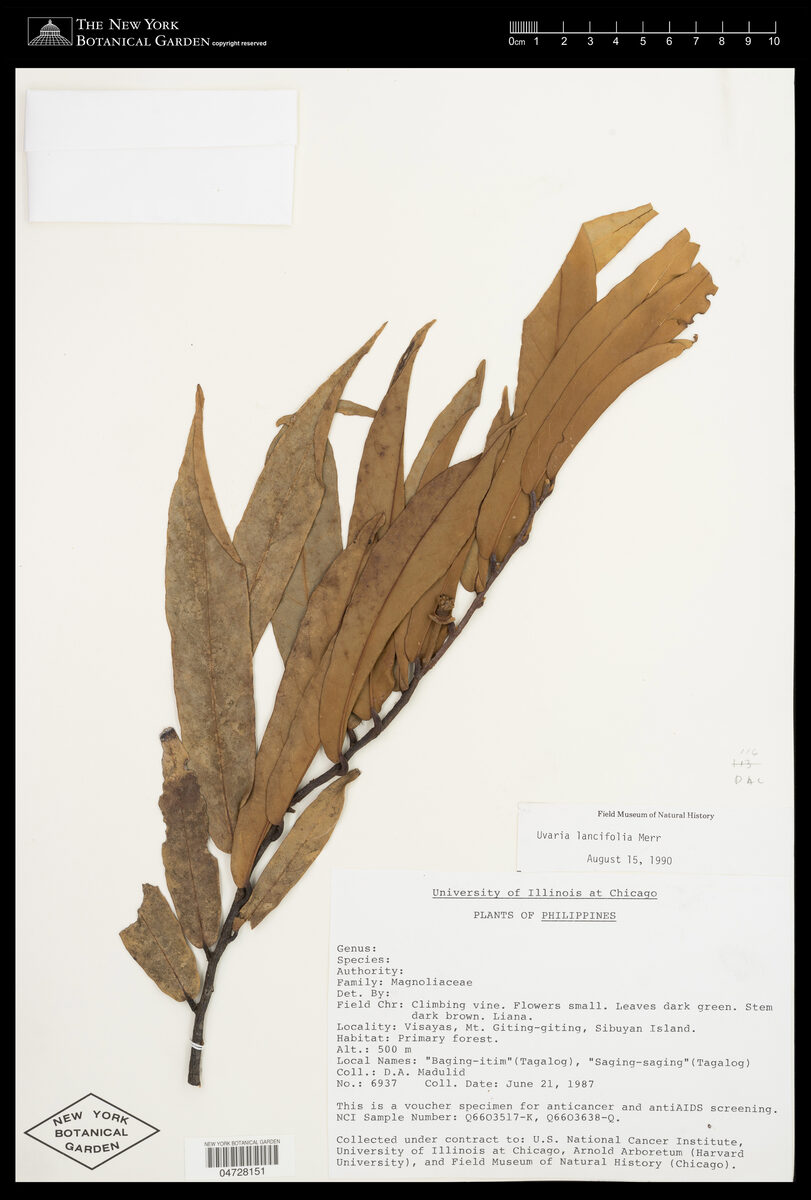
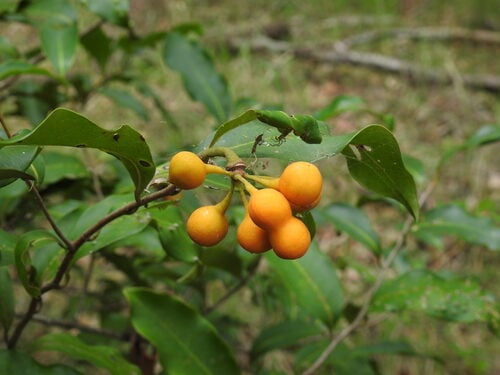
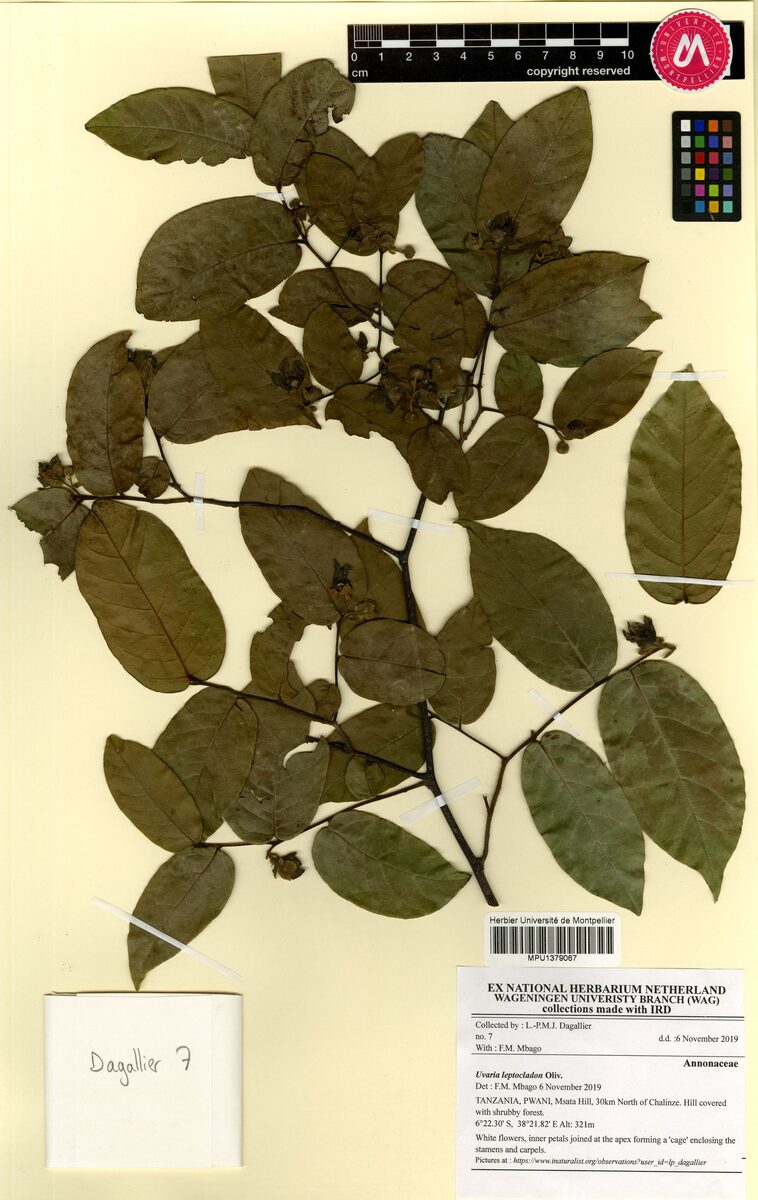
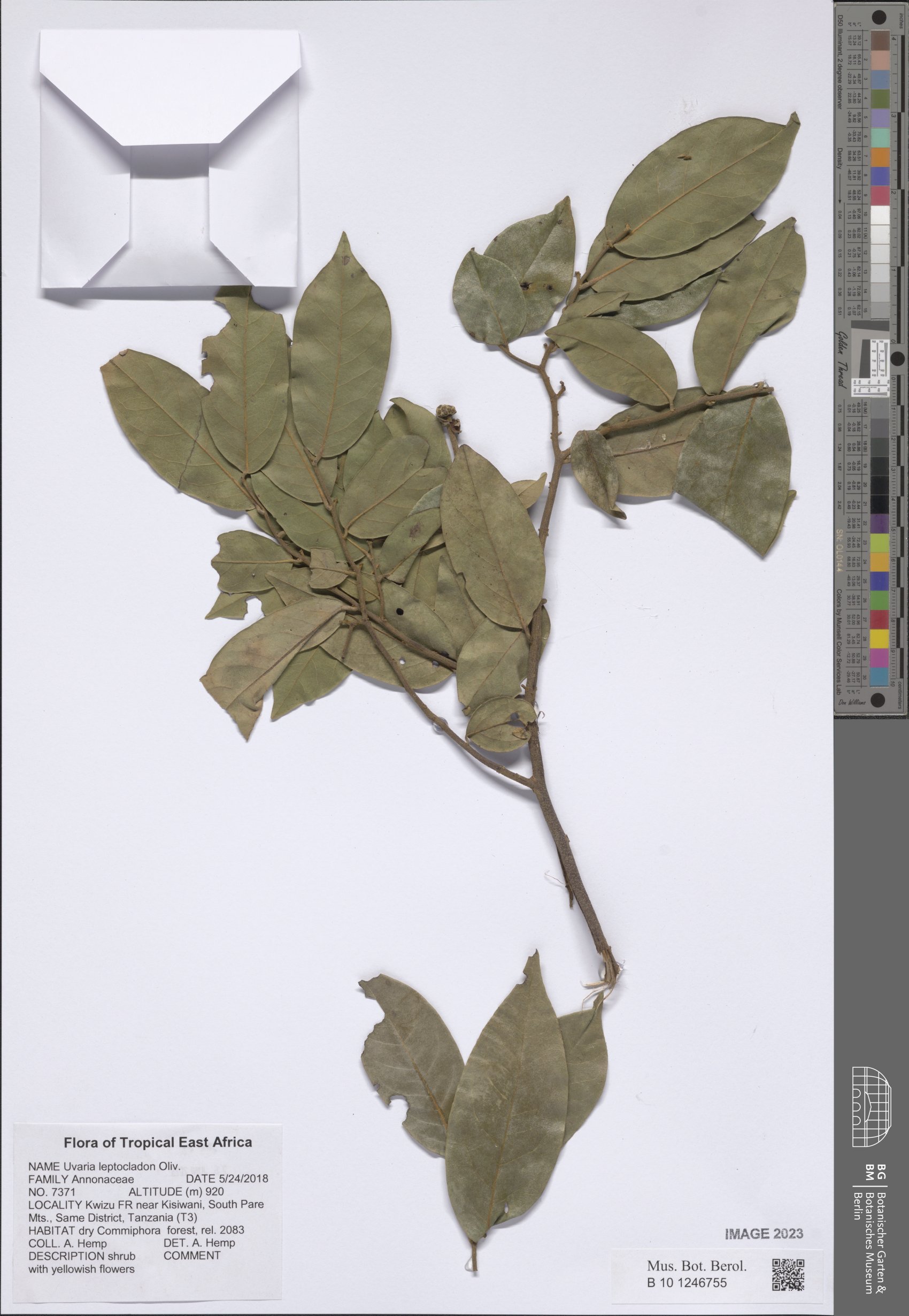
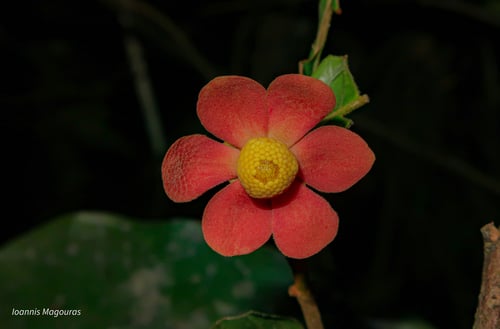
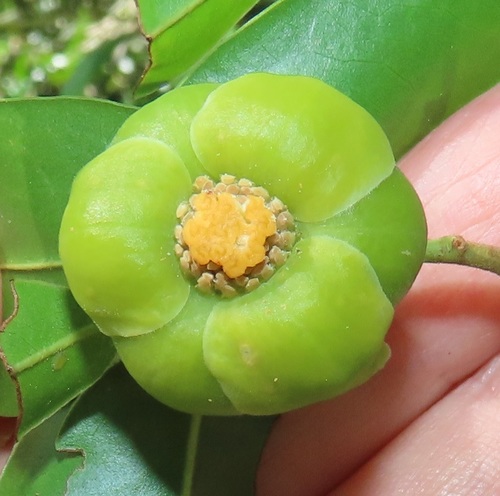
A tree. It grows 20 m tall. It can be 43 m tall. The trunk can be 80 cm across. The leaves are 4-9 cm long by 2 cm wide. The leaves are dark green above and whitish underneath. They have long silky hairs. The flowers occur singly in the axils of the leaves. The fruit are 4-5 cm long by 2-3 cm wide. The fruit split open revealing the seeds and aril. The fruit have a dull brown exterior and bright red interior.
Edible Uses
The seeds are used in soups and stews, and can also be used as a spice. The flowers and leaves are also edible.
Traditional Uses
The seeds are used in soups and stews.
This uses section is brief — help expand it
Distribution
It is a tropical plant. It grows in humid forest. It grows between 400-900 m above sea level.
Where It Grows
Africa, Angola, Cabinda, Cameroon, Central Africa, Central African Republic, CAR, Congo DR, Congo R, Gabon, West Africa,
Production
Plants fruit in February.
Synonyms
Also Known As
Canzi, Ekui, Lucanga, Molo-nzange, Moundiye, Ndong-eli, Nyanghogha, Odjobi, Otoh, Sangi
References (6)
- Billong Fils, P. E., et al, 2020, Ethnobotanical survey of wild edible plants used by Baka people in southeastern Cameroon. Journal or Ethnobiology and Ethnomedicine. 16:64 p 9
- Harris, D. J., 2002, The vascular plants of the Dzanga-Sangha Reserve, Central African Republic. National Botanic Garden of Belgium, 2002. – 274 pages p 47
- Johnson, D. M., 2018, A revision of Xylopia L. (Annonaceae): the species of Tropical Africa. PhytoKeys 97: 1–252
- Raponda-Walker, A & Sillans, R., 1961, Les Plantes Utiles du Gabon. Editions Paul Lechevalier, Paris. p 72 (As Xylopia brieyi)
- World Checklist of Useful Plant Species 2020. Royal Botanic Gardens, Kew
Show all 6 references Hide references
- Zapfack, L., et al, 2001, Ethnobotanical Survey of the Takamanda Forest Reserve. Consultancy Report PROFA, Cameroon. p 23