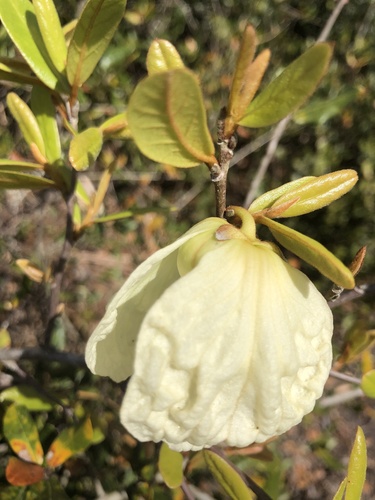
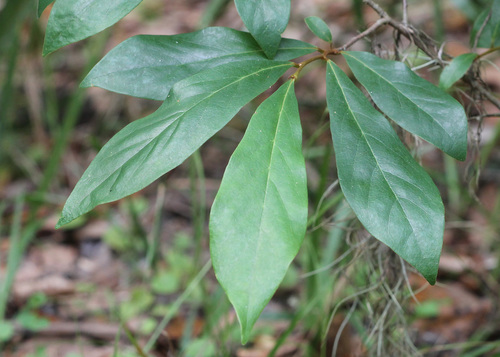
Annona emarginata
(Schltdl.) H. Rainer
Rollinia
iNaturalist· cc-by-nc
(c) Walter Medina, some rights reserved (CC BY-NC), uploaded by Walter Medina
iNaturalist· cc-by-nc
(c) Cesar Massi, some rights reserved (CC BY-NC), uploaded by Cesar Massi
iNaturalist· cc-by-nc
(c) Martin Arregui, some rights reserved (CC BY-NC), uploaded by Martin Arregui
Description
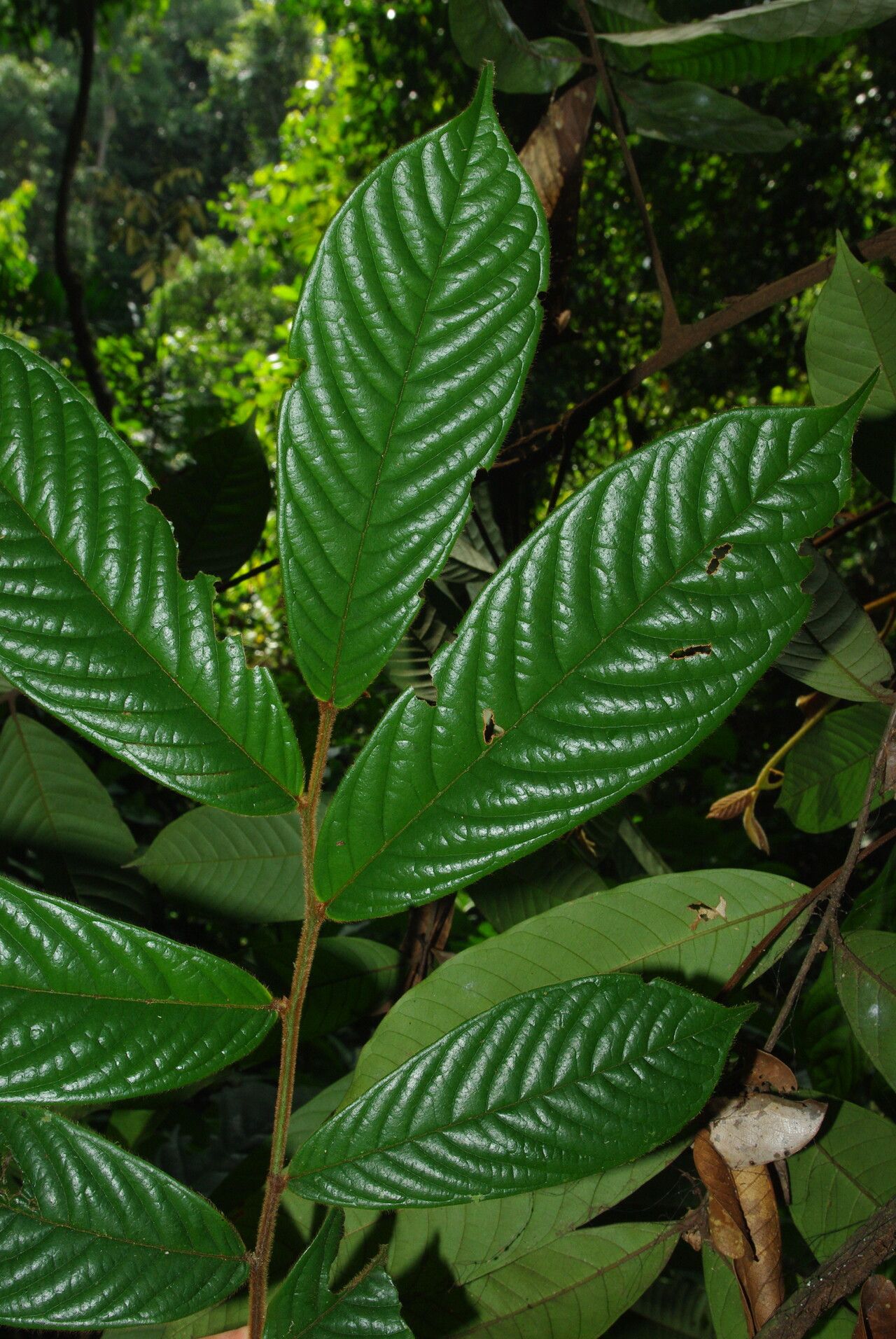
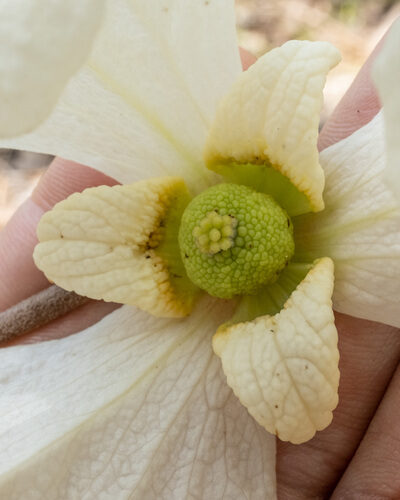
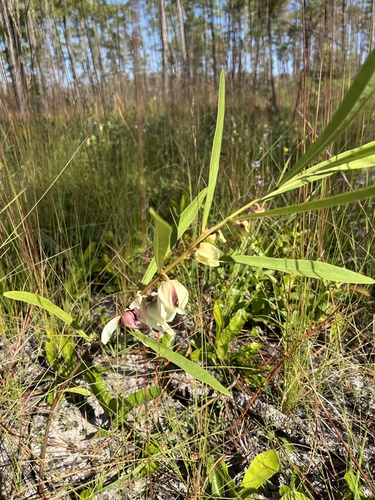
A small tree that loses its leaves. It grows 3 m tall. It can be 20 m tall. The trunk can be 50 cm across. The leaves are thin and simple. They are 3-5 cm long. The flowers occur singly and are yellow. They can be in groups of 2-3. They are near the axils of leaves. The fruit is a multiple, fleshy fruit. It is round or irregular shape. The surface is almost smooth and it turns yellow when ripe. There is a small amount of sweet flesh amongst a few seeds.
Edible Uses
Fruit - raw. A succulent, sweet pulp with a pleasant flavour. The pulp is used as a condiment. There is only a small amount of edible pulp in each fruit and it is difficult to separate from the seed. The fruit is up to 3cm in diameter. The fruit can vary considerably in size and amount of edible pulp, with some forms up to 6cm in diameter. The seed is used as a condiment.
Medicinal Uses
The bark is astringent. The leaves are used to treat sore throat. (As a gargle?)
Distribution
It is a tropical or subtropical tree. It grows from sea level to about 1,000 m altitude.
Where It Grows
Argentina, Asia, Bolivia*, Brazil*, Paraguay, Peru, Philippines, SE Asia, South America, Uruguay,
Cultivation
Plants are grown from seed.
Propagation
Seed - it has a very hard outer layer and germinates much more easily if scarified. This can usually be done by pouring a small amount of nearly boiling water on the seeds (being careful not to cook them!) and then soaking them for 12 - 24 hours in warm water. By this time they should have imbibed moisture and swollen - if they have not, then carefully make a nick in the seedcoat (being careful not to damage the embryo) and soak for a further 12 hours before sowing. Sow the seeds in a nursery seedbed or in individual containers in a lightly shaded position. Germination rates of scarified seeds are usually high, with the seeds sprouting within 40 - 50 days.
Other Uses
The fibrous bark can be used for making ropes. Heartwood and sapwood are not demarcated. The wood is light in weight, of low durability when exposed to the elements and susceptible to insect attack. Of low commercial value, it is only used for making boxes and for light carpentry.
Notes
There are 60 Rollinia species.
Synonyms
Also Known As
Arachichu, Araticu, Araticum-mirim, Corosol, Mirim
References (13)
- Bortolotto, I. M., et al, 2018, Lista preliminar das plantas alimenticias nativas de Mato Grosso do Sul, Brasil. Iheringia, Serie Botanica, Porto Alegre, 73 (supl.):101-116
- Brack, P., et al, 2020, Frutas nativas do Rio Grande do Sul, Brasil: riqueza e potencial alimentício. Native fruits of Rio Grande do Sul, Brazil: richness and potential as food. Rodriguésia 71: e03102018.
- Fern, K., 2012, Tropical Species Database http://theferns.info/tropical/
- French, B.R., 2010, Food Plants of Solomon Islands. A Compendium. Food Plants International Inc. p 380 (As Rollinia emarginata)
- Grandtner, M. M. & Chevrette, J., 2013, Dictionary of Trees, Volume 2: South America: Nomenclature, Taxonomy and Ecology. Academic Press p 36
Show all 13 references Hide references
- Kermath, B. M., et al, 2014, Food Plants in the Americas: A survey of the domesticated, cultivated and wild plants used for Human food in North, Central and South America and the Caribbean. On line draft. p 751 (As Rollinia emarginata)
- Linnaea 9:318. 1834 (As Rollinia emarginata)
- Lorenzi, H., Bacher, L., Lacerda, M. & Sartori, S., 2006, Brazilian Fruits & Cultivated Exotics. Sao Paulo, Instituto Plantarum de Estuados da Flora Ltda. p 52 (As Rollinia emarginata)
- Maas, P. J. M., et al, 1992, Rollinia, Flora Neotropica Vol. 57. p 94 (Drawing)
- Martin, F. W., et al, 1987, Perennial Edible Fruits of the Tropics. USDA Handbook 642 p 81 (As Rollinia emarginata)
- PROSEA No. 2 (As Rollinia emarginata)
- Scarpa, G. F., 2009, Wild food plants used by the indigenous peoples of South American Gran Chaco: A general synopsis and intercultural comparison. Journal of Applied Botany and Food Quality 83:90-101 (As Rollinia emarginata)
- www.colecionandofrutas.org