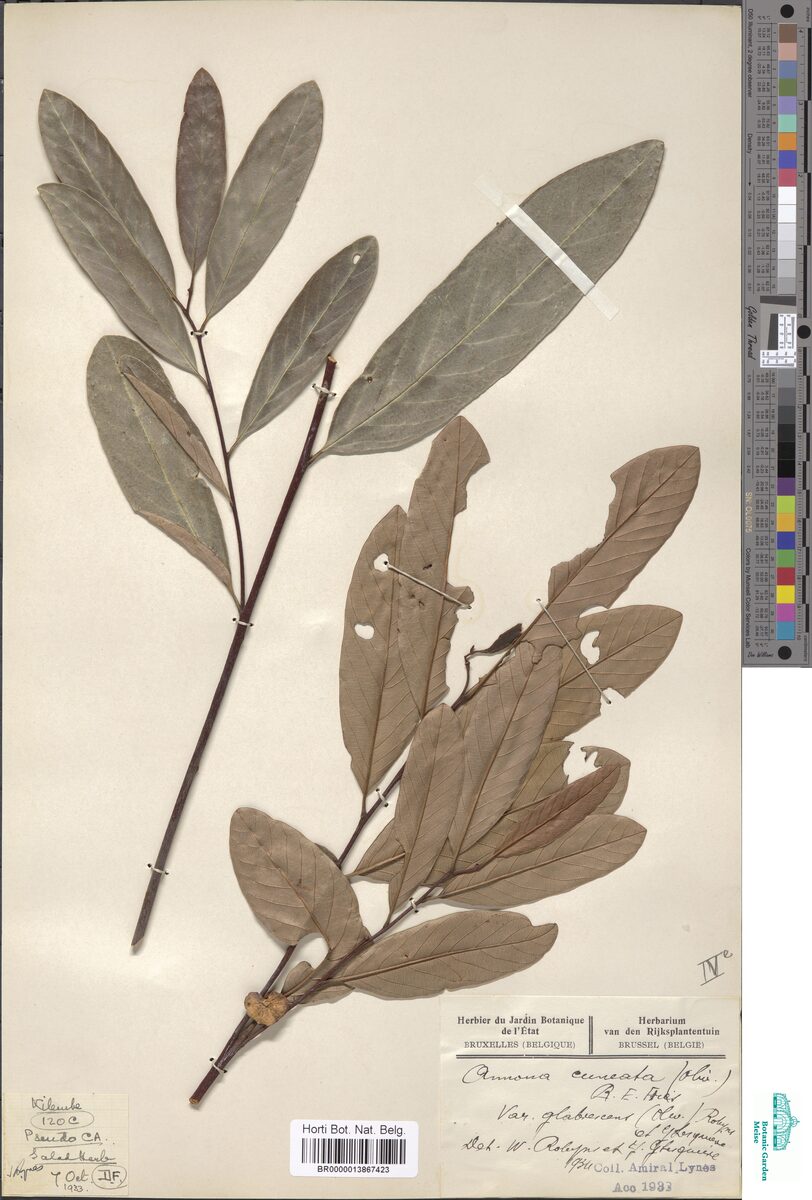
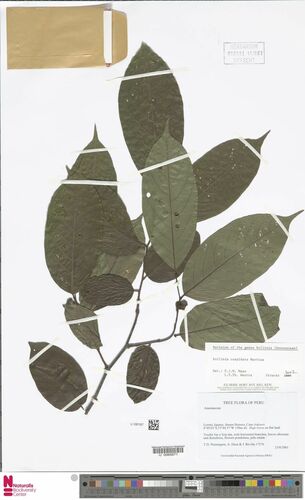
Annona mucosa
Macfad.
Slimy annona
iNaturalist· cc-by-nc
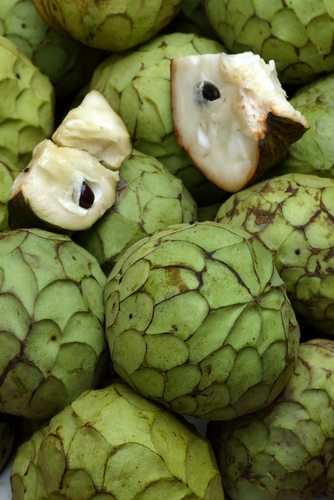
(c) Diego Amaya, some rights reserved (CC BY-NC), uploaded by Diego Amaya
iNaturalist· cc-by-nc
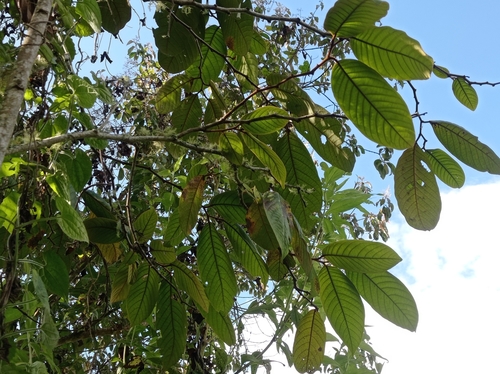
(c) Diego Amaya, some rights reserved (CC BY-NC), uploaded by Diego Amaya
iNaturalist· cc-by-nc
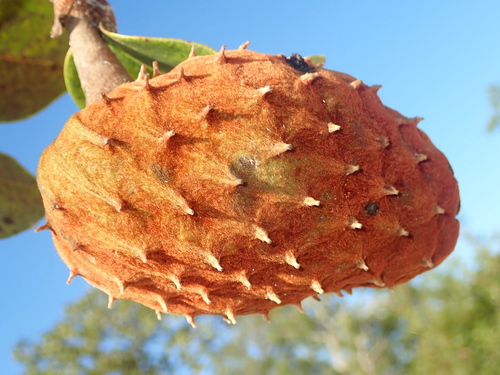
(c) blleininger, some rights reserved (CC BY-NC)
Summary
Source: WikipediaAnnona mucosa is a species of flowering plant in the custard-apple family, Annonaceae, that is native to tropical South America. It is cultivated for its edible fruits, commonly known as biribá, lemon meringue pie fruit, or wild sugar-apple, throughout the world's tropics and subtropics.
Description
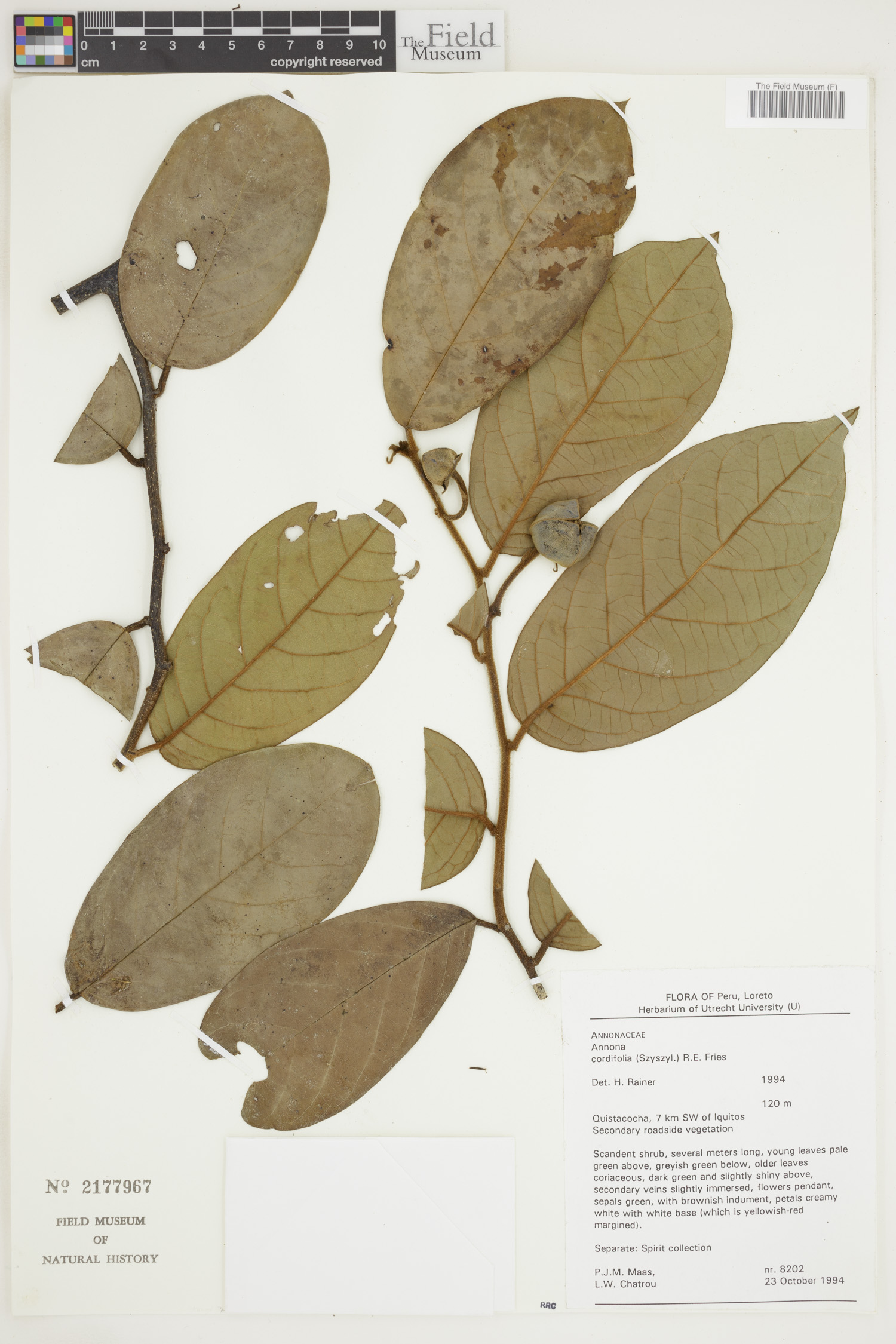
An evergreen tree growing quickly to 12m tall and wide. Hardy to UK zone 10, frost-tender. Self-fertile and attracts wildlife. Tolerates light sandy, medium loamy, and heavy clay soils with preference for good drainage. Adapts to mildly acidic through basic soils. Requires full sun and moist soil.
Edible Uses
Edible Parts: Fruit Edible Uses: Fruit - raw or cooked. Of excellent quality. The yellow fruits have a juicy, melting flesh of a very pleasant flavour, reminiscent of lemon meringue pie. Delicious. Usually eaten raw, they can also be used in ice cream, pies, cakes etc. The fruit can be up to 15cm wide.
Medicinal Uses
Antirheumatic The leaves are utilized in folk medicine as a treatment against rheumatism.
Distribution
It is a tropical plant.
Where It Grows
Amazon, Andes, Asia, Bahamas, Bolivia*, Brazil, Central America, China, Colombia, Dominican Republic, Ecuador, Guatemala, Guianas, Haiti, Honduras, Mexico, Nicaragua, Panama, Paraguay, Peru, Puerto Rico, South America, Taiwan, Trinidad and Tobago, Venezuela, West Indies,
Cultivation
A plant of the hot, humid, tropical lowlands. Plants are very susceptible to frost damage. Prefers a fertile, well-drained soil and a position in full sun. A fast-growing tree. Plants can commence bearing fruit when about 4 years old. Plants are becoming threatened in the wild due to deforestation. When is it harvested? Late Autumn to Early Winter. When does it flower? Late Spring to Early Summer. Are there any agroforestry uses? How fast does it grow? Cherimoya has a moderate growth rate and can take about 3 to 4 years to start producing fruit after planting.
Propagation
The seed of many species in this genus has a hard seedcoat and may benefit from scarification before sowing in order to speed up germination. This can usually be done by pouring a small amount of nearly boiling water on the seeds (being careful not to cook them!) and then soaking them for 12 - 24 hours in warm water. By this time they should have imbibed moisture and swollen - if they have not, then carefully make a nick in the seedcoat (being careful not to damage the embryo) and soak for a further 12 hours before sowing. Sow the seed in a partially shaded position in a nursery seedbed. A germination rate in excess of 50% can be expected from treated seeds. When the seedlings are 6 - 8cm tall, pot them up into individual containers. Layering. Grafting.
Other Uses
Beads Containers Insecticide Wood Other uses rating: Medium (3/5). Cherimoya can be used in agroforestry systems as a fruit tree. It provides shade and can be integrated into diverse cropping systems. Other Uses The seeds are very hard. They are used as beads in necklaces and bracelets. The seeds are used as an insecticide. The yellowish wood is medium-textured, straight grained, heavy in one report, but light in another, hard and strong. It has poor mechanical properties and is not durable. It is used for small constructions, making boxes and linings. 1. Nectary - Flowers rich in nectar and pollen: Yes – Many Annona species (such as cherimoya, soursop, and sugar apple) have flowers that attract pollinators, particularly beetles, because of their pollen. 2. Wildlife - Food (Fruit, Seeds, Leaf litter, Shelter, Nesting, Roosting): Yes – The fruits of Annona species are edible and can serve as food for wildlife, while their foliage may provide shelter and nesting spots for birds and other small animals. 3. Invertebrate Shelter (Overwintering sites, Leaf litter, Groundcover): Yes – The leaf litter from Annona trees can provide shelter for invertebrates, and their bark may offer overwintering sites for certain insects. 4. Pest Confuser (Smell): No – Annona species do not produce strong, aromatic smells known to confuse or repel pests. Special Uses Food Forest
Other Information
It is cultivated.
Synonyms
Also Known As
Abriba, Ananas panga, Anon amazonico, Biriba, Lumarisu muyu, Waututo
References (10)
- Bendezu, Y. F., 2018, Arboles nativos de lad Region Ucayali. Instituto Nacional de Innovacion Agraria. p 45
- Flores, Y., 2018, Arboles nativos de la Region Ucayili. Estacion Experimental Agragia Pucallpa. Pucallpa Peru, 375 p. p 45
- Grandtner, M. M. & Chevrette, J., 2013, Dictionary of Trees, Volume 2: South America: Nomenclature, Taxonomy and Ecology. Academic Press p 37
- Hunter, D., et al, 2019, The potential of neglected and underutilized species for improving diets and nutrition. Planta (2019) 250:709-729
- Lopez-Diago, D. & Garcia, N., 2021, Wild edible fruits of Colombia. Biota ColomBiana 22 (2) p 28
Show all 10 references Hide references
- Roa, J. A. G. & Boada, D. S. G., 2018, Fundación para el Fortalecimiento de la Fruticultura y Plantas Alimenticias no Convencionales en Colombia.
- Segura, S. et al, 2018, The edible fruit species in Mexico. Genet Resour Crop Evol (2018) 65:1767–1793
- Torre, de la L., et al, 2008, Enciclopedia de las Plantas Útiles del Ecuador. Herbario QCA. Pontificia Universidad Católica del Ecuador. p 167 (As Rollinia mucosa)
- Wiersema, J. H. & Leon, B., 2013, World Economic Plants. A Standard Reference CRC Press. 2nd Ed. p 56
- World Checklist of Useful Plant Species 2020. Royal Botanic Gardens, Kew