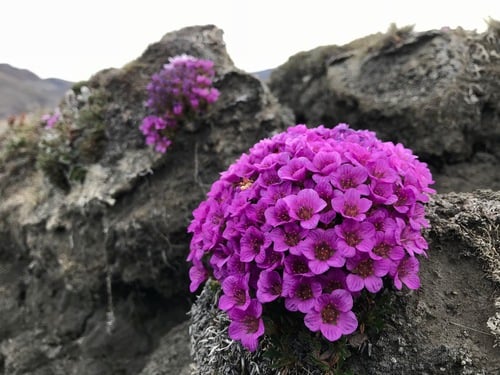
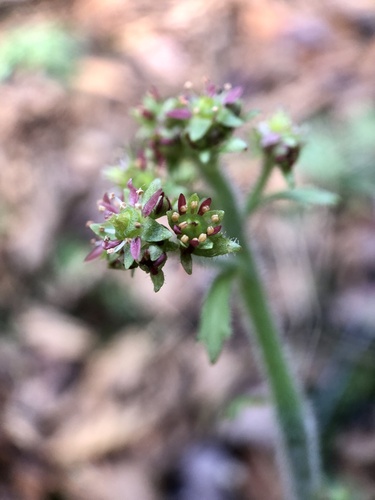
Chrysosplenium oppositifolium
L.
Opposite-leaved golden saxifrage
iNaturalist· cc-by
(c) Shawn O'Donnell, some rights reserved (CC BY), uploaded by Shawn O'Donnell
iNaturalist· cc-by-nc
(c) Michal Ducháček, some rights reserved (CC BY-NC)
iNaturalist· cc-by-nc
(c) Michal Ducháček, some rights reserved (CC BY-NC)
Summary
Source: WikipediaChrysosplenium oppositifolium, the opposite-leaved golden-saxifrage, is a species of flowering plant in the family Saxifragaceae.
Description
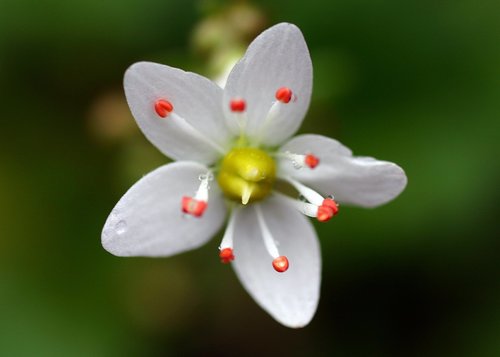
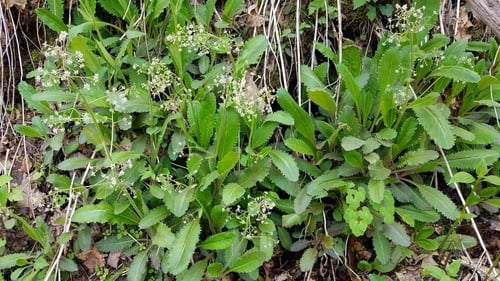
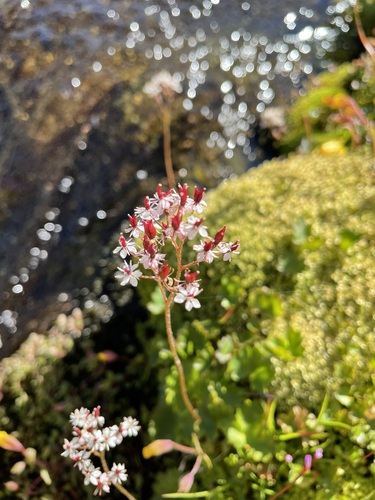
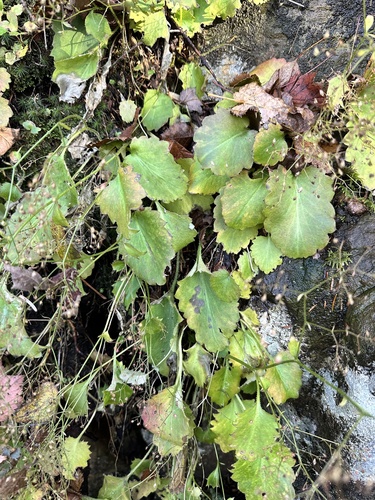
A herb. It keeps growing from year to year. It grows 15 cm tall. It is slightly hairy and the stems are square. It creeps along the ground putting down roots and forming mats. The leaves are opposite and round and taper to the base. There are rounded teeth. The flowers have yellow-green bracts. They form on top of a dense cluster of leaves.
Edible Uses
The leaves can be eaten raw or cooked, added to salads or soups. They are rather small and carry a distinct bitterness, which is especially noticeable in hot weather.
Traditional Uses
The leaves are used in salads and soups.
This uses section is brief — help expand it
Medicinal Uses
None known
Distribution
It is a temperate plant. It grows in shady places near the edges of streams. It if often in damp and acidic soil.
Where It Grows
Asia, Britain, Europe, India, Ireland, Luxembourg,
Cultivation
Succeeds in most soils if they are moist. Requires a constantly wet but well-drained soil. Prefers a shady position, succeeding in woodland.
Propagation
Sow seed in spring or autumn in a lightly shaded position in a cold frame, standing the pot in 2cm of water. Prick seedlings into individual pots when large enough to handle and grow them on in a tray of water in the cold frame through at least their first winter. Plant out into permanent positions in late spring or early summer, after the last expected frosts. Division in spring is very easy; larger clumps can go directly into permanent positions, though smaller clumps are better potted up and grown on in light shade in a cold frame until rooting well, then planted out in summer or the following spring.
Other Uses
The plant's creeping habit makes it a useful ground cover for the bog garden.
Notes
There are 50 Chrysosplenium species.
Also Known As
Cresson de roches
References (6)
- Crawford, M., 2012, How to grow Perennial Vegetables. Green Books. p 113
- Facciola, S., 1998, Cornucopia 2: a Source Book of Edible Plants. Kampong Publications, p 229
- Hedrick, U.P., 1919, (Ed.), Sturtevant's edible plants of the world. p 190
- Irving, M., 2009, The Forager Handbook, A Guide to the Edible Plants of Britain. Ebury Press p 288
- Mabey, R., 1973, Food for Free. A Guide to the edible wild plants of Britain, Collins. p 87
Show all 6 references Hide references
- Plants for a Future database, The Field, Penpol, Lostwithiel, Cornwall, PL22 0NG, UK. http://www.scs.leeds.ac.uk/pfaf/