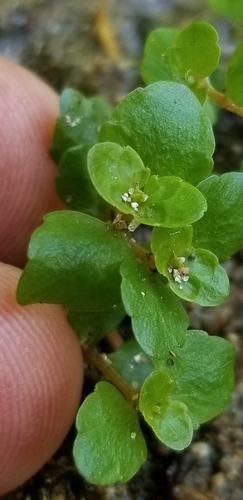
Heuchera glabra
Willd. ex Roem. & Schult.
Alpine heuchera, Alpine Alumroot
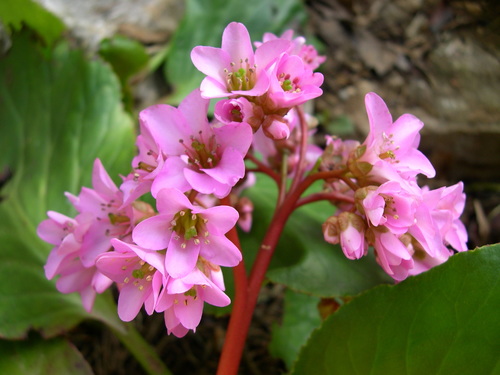
iNaturalist· cc-by-nc
(c) Scott O'Donnell, some rights reserved (CC BY-NC), uploaded by Scott O'Donnell
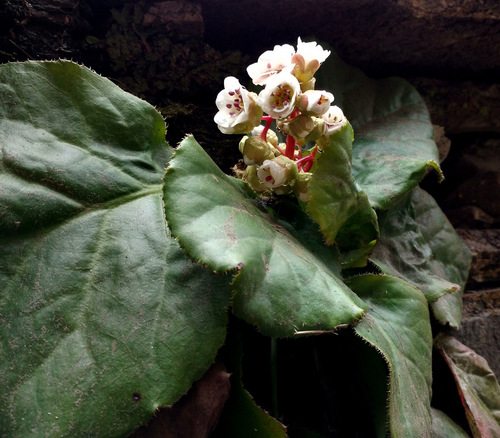
iNaturalist· cc-by-nc
(c) Scott O'Donnell, some rights reserved (CC BY-NC), uploaded by Scott O'Donnell
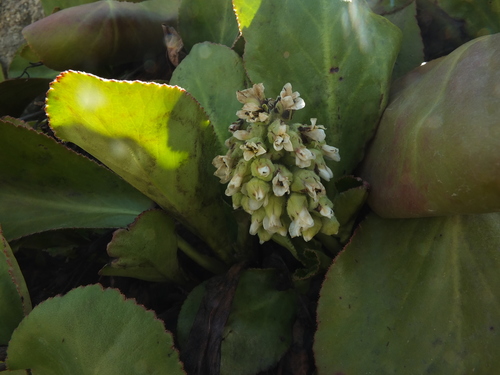
iNaturalist· cc-by
(c) Connie Taylor, some rights reserved (CC BY), uploaded by Connie Taylor
Summary
Source: WikipediaAn evergreen perennial reaching 0.6 m tall. Hardy to UK zone 4 and not frost tender. Foliage year-round; flowers July to August; seeds ripen August to September. Hermaphroditic and bee-pollinated. Prefers well-drained light sandy to medium loamy soil with mildly acid to basic pH. Grows in semi-shade to full sun and prefers moist soil.
Description
A herb that forms tufts. It grows 15-60 cm tall. The leaves at the base are widely heart shaped with 5 lobes and teeth long the edge. The leaves on the stem are smaller. The flowers are in wiry sprays on slender stalks.
Edible Uses
Leaves can be eaten raw or cooked, though they are not considered choice.
Traditional Uses
The roots are chopped and added to soups and pies.
This uses section is brief — help expand it
Medicinal Uses
The root is antiseptic, a salve, styptic, and tonic. It has been used specifically to treat inflammation of the testicles caused by syphilis.
Distribution
It is a temperate plant.
Where It Grows
North America, USA,
Cultivation
Succeeds in any good sweet garden soil that does not dry out in spring. Prefers full sun but tolerates partial shade. Prefers a well-drained fairly rich and not too heavy soil. Apt to hybridize with other members of this genus. A very ornamental plant.
Propagation
Sow seed in early spring in a warm greenhouse, barely covering it. Germination is usually fairly rapid. Prick seedlings into individual pots when large enough and plant out into permanent positions in late spring or early summer. Seed can also be sown in an outdoor seedbed in mid-spring for early summer planting, or in mid-summer for planting out the following spring. Divide plants in March or October, though August or early September is preferred. Plant the woody roots deeply, leaving only the foliage crown above ground.
Other Uses
The root can be used as an alum substitute mordant for fixing dyes. It is rich in tannin, containing approximately 9–20%, which is thought to be the active mordanting ingredient. The plant works well as ground cover in a woodland garden.
Notes
There are 55 Heucheria species.
Also Known As
Smooth alumroot
References (3)
- Lim, T. K., 2015, Edible Medicinal and Non Medicinal Plants. Volume 9, Modified Stems, Roots, Bulbs. Springer p 46
- Plants for a Future database, The Field, Penpol, Lostwithiel, Cornwall, PL22 0NG, UK. http://www.scs.leeds.ac.uk/pfaf/
- Syst. veg. 6:216. 1820