Semecarpus gigantifolius
Vid. ? F. Vill.
Manalu, Plaluai
iNaturalist· cc-by-nc
(c) Han-Ting Liu, some rights reserved (CC BY-NC)
iNaturalist· cc0
no rights reserved
iNaturalist· cc0
no rights reserved
Description
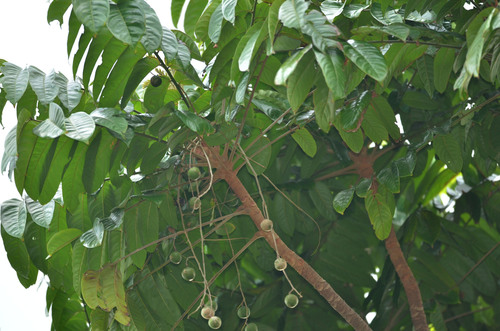
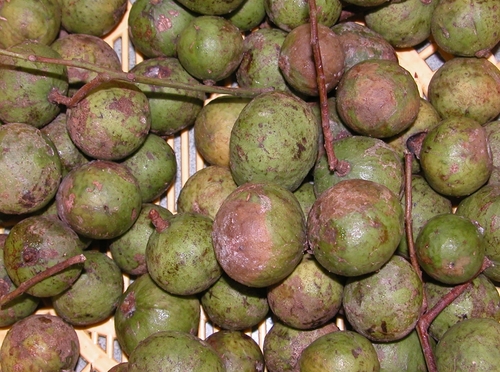
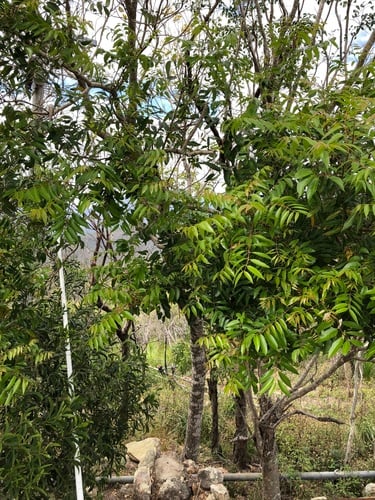
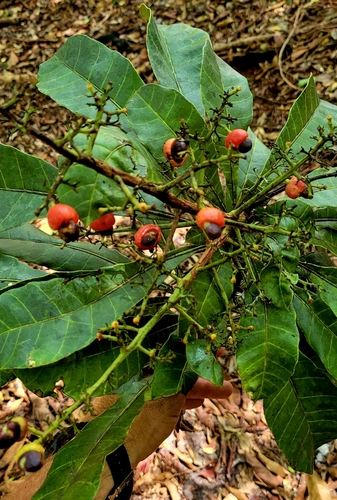
A small tree with very large leaves. The flowers are small and borne in large numbers in a compound flower. The flower clusters are 10 cm long and produced on the trunk. The fruit are 3 to 4 cm long and deep purple. They are fleshy and juicy.
Edible Uses
The fleshy part of the fruit is eaten.
Traditional Uses
The fleshy part of the fruit is eaten.
This uses section is brief — help expand it
Distribution
A tropical plant. They are commonly found in forests in the lowlands throughout the Philippines.
Where It Grows
Asia, Pacific, Papua New Guinea, PNG, Philippines, SE Asia, Taiwan,
References (4)
- Borrell, O.W., 1989, An Annotated Checklist of the Flora of Kairiru Island, New Guinea. Marcellin College, Victoria Australia. p 50
- Brown, W.H., 1920, Wild Food Plants of the Philippines. Bureau of Forestry Bulletin No. 21 Manila. p 98
- Kuo, W. H. J., (Ed.) Taiwan's Ethnobotanical Database (1900-2000), http://tk.agron.ntu.edu.tw/ethnobot/DB1.htm
- Monsalud, M.R., Tongacan, A.L., Lopez, F.R., & Lagrimas, M.Q., 1966, Edible Wild Plants in Philippine Forests. Philippine Journal of Science. p 440