Semecarpus cassuvium
Roxb.
Lewer
gbif· cc0
President and Fellows of Harvard College
gbif· cc0
President and Fellows of Harvard College
gbif· cc0
President and Fellows of Harvard College
Description
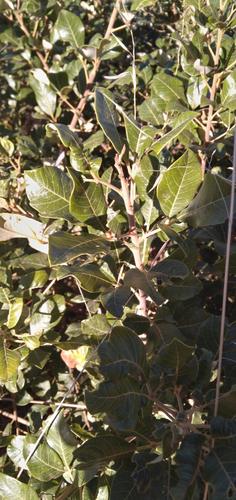
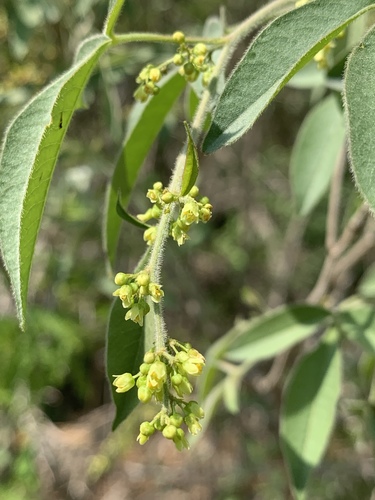
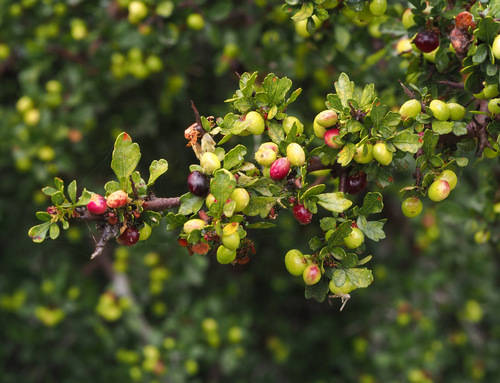
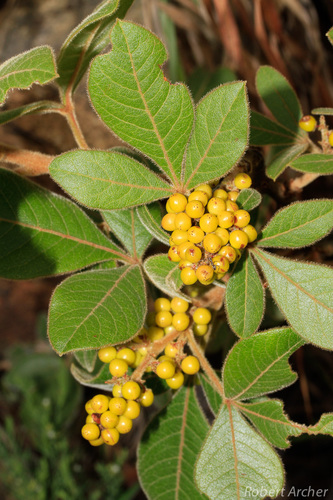
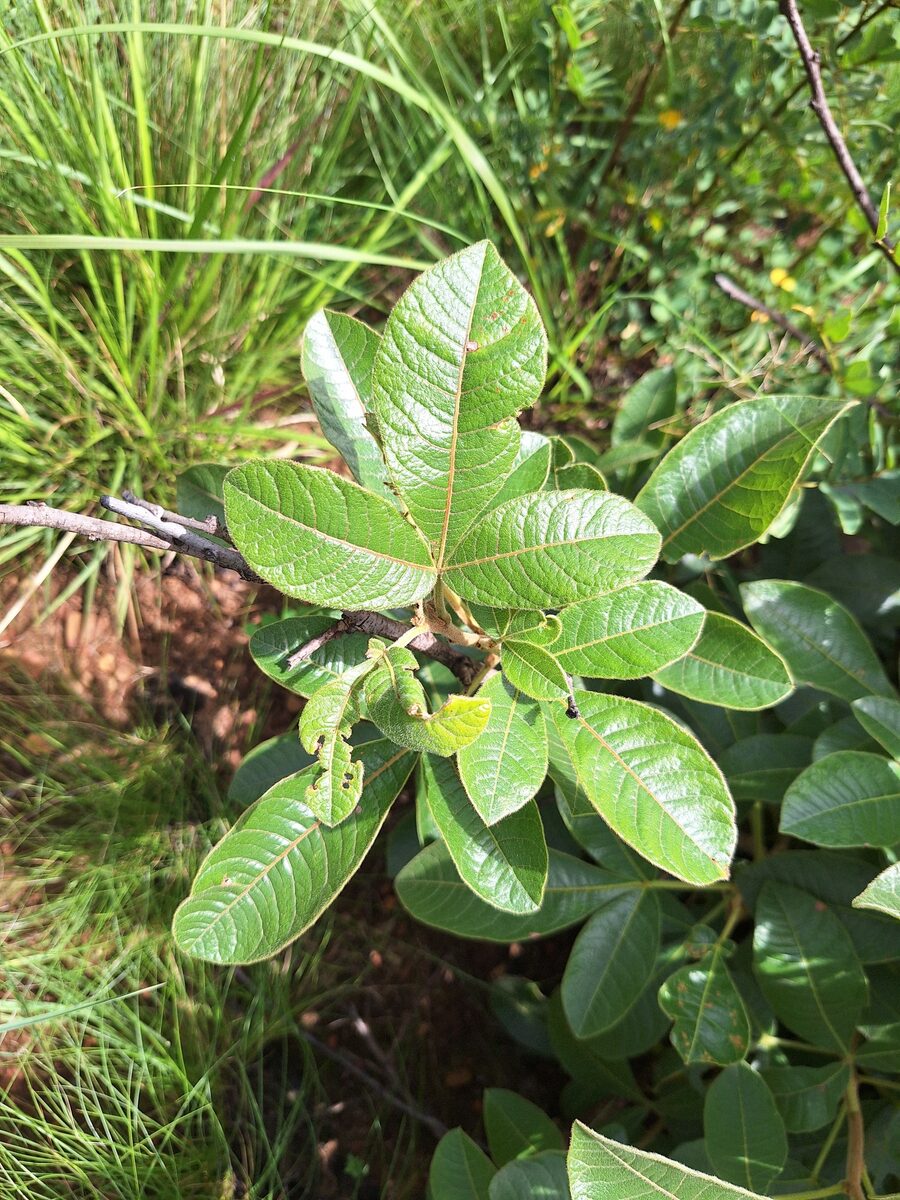
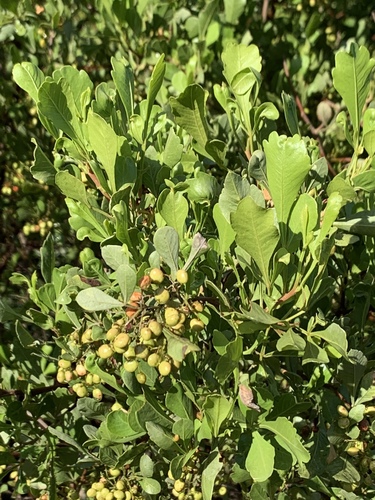
It grows to a reasonably large tree 30-40 m tall. It can sometimes be a small tree. The trunk can vary between 3 and 40 cm. The leaves are placed in a spiral around the branches. The leaves can be 22 cm long and 10 cm wide. The leaf tapers to the tip and the base is wedge shaped. There are 10-26 pairs of side veins. The leaf stalk can be 4 cm long. The flower clusters are produced at the ends of branches. These can be 10-30 cm long or longer. The side branches of the flower cluster hang downwards. The flowers are white. The fruit is 5-6 cm across, green when young and dark red when ripe. The inside flesh around the seed is purple.
Edible Uses
The kernel inside the nut is eaten after cooking. Very young leaves are eaten raw. The fruit stalk is eaten. Fruits are sold in markets.
Traditional Uses
The kernel inside the nut is eaten after cooking. The very young leaves are also recorded as being eaten raw. The fruit stalk is eaten. CAUTION Fumes from burning (cooking) nuts and probably from other parts of the plant can irritate the skin. The sap is poisonous.
Medicinal Uses
The sap is used in traditional medicine.
Known Hazards
Fumes from burning (cooking) nuts and probably from other parts of the plant can irritate the skin. The sap is poisonous.
Distribution
A tropical plant. It occurs in coastal areas. It occurs from sea level to 600 m altitude.
Where It Grows
Asia, India, Indonesia, Malaysia, Myanmar, Pacific, Papua New Guinea, PNG, SE Asia,
Cultivation
Trees are grown from nuts which germinate and establish fairly easily.
Other Uses
The sap is used as a black dye.
Production
Fruiting is seasonal.
Other Information
Fruit are sold in markets. A cultivated nut tree of some importance in the Morehead area of the Western Province of Papua New Guinea.
Also Known As
Rotta, Enga
References (12)
- Arora, R. K., 2014, Diversity in Underutilized Plant Species - An Asia-Pacific Perspective. Bioversity International. p 86
- Bourke, M., 1995, Edible Indigenous Nuts in Papua New Guinea. In South Pacific Indigenous Nuts. ACIAR Proceedings No 69, Canberra. p 46
- Burkill, I.H., 1966, A Dictionary of the Economic Products of the Malay Peninsula. Ministry of Agriculture and Cooperatives, Kuala Lumpur, Malaysia. Vol 2 (I-Z) p 2026
- Ding Hou, 1978, Anacardiaceae, in Flora Malesiana Ser 1 Vol 8(3) p 510
- French, B.R., 1986, Food Plants of Papua New Guinea, A Compendium. Asia Pacific Science Foundation p 197
Show all 12 references Hide references
- Hedrick, U.P., 1919, (Ed.), Sturtevant's edible plants of the world. p 603
- Hort. bengal. 22. 1814
- Martin, F.W. & Ruberte, R.M., 1979, Edible Leaves of the Tropics. Antillian College Press, Mayaguez, Puerto Rico. p 175
- Menninger, E.A., 1977, Edible Nuts of the World. Horticultural Books. Florida p 55
- PROSEA No. 2
- Walter, A. & Sam C., 2002, Fruits of Oceania. ACIAR Monograph No. 85. Canberra. p 282
- World Checklist of Useful Plant Species 2020. Royal Botanic Gardens, Kew