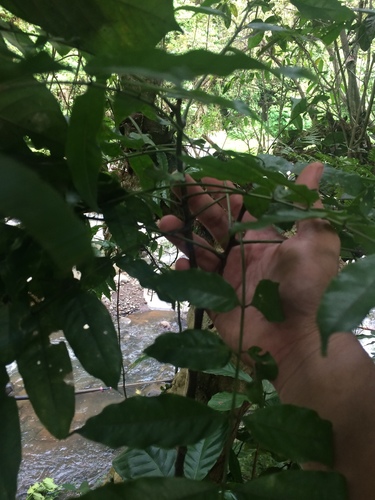
Searsia pyroides
(Burch.) Moffett
Fire-thorned rhus, Common taaibos, Firethorn
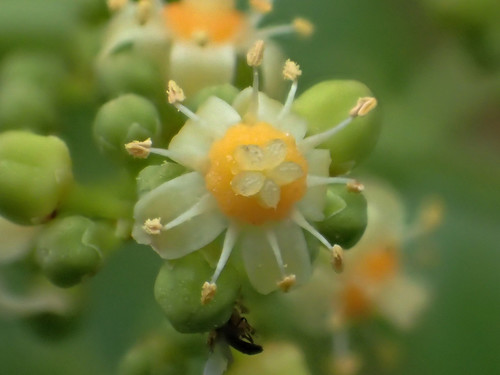
iNaturalist· cc-by-nd
(c) Kyle Campbell, some rights reserved (CC BY-ND), uploaded by Kyle Campbell
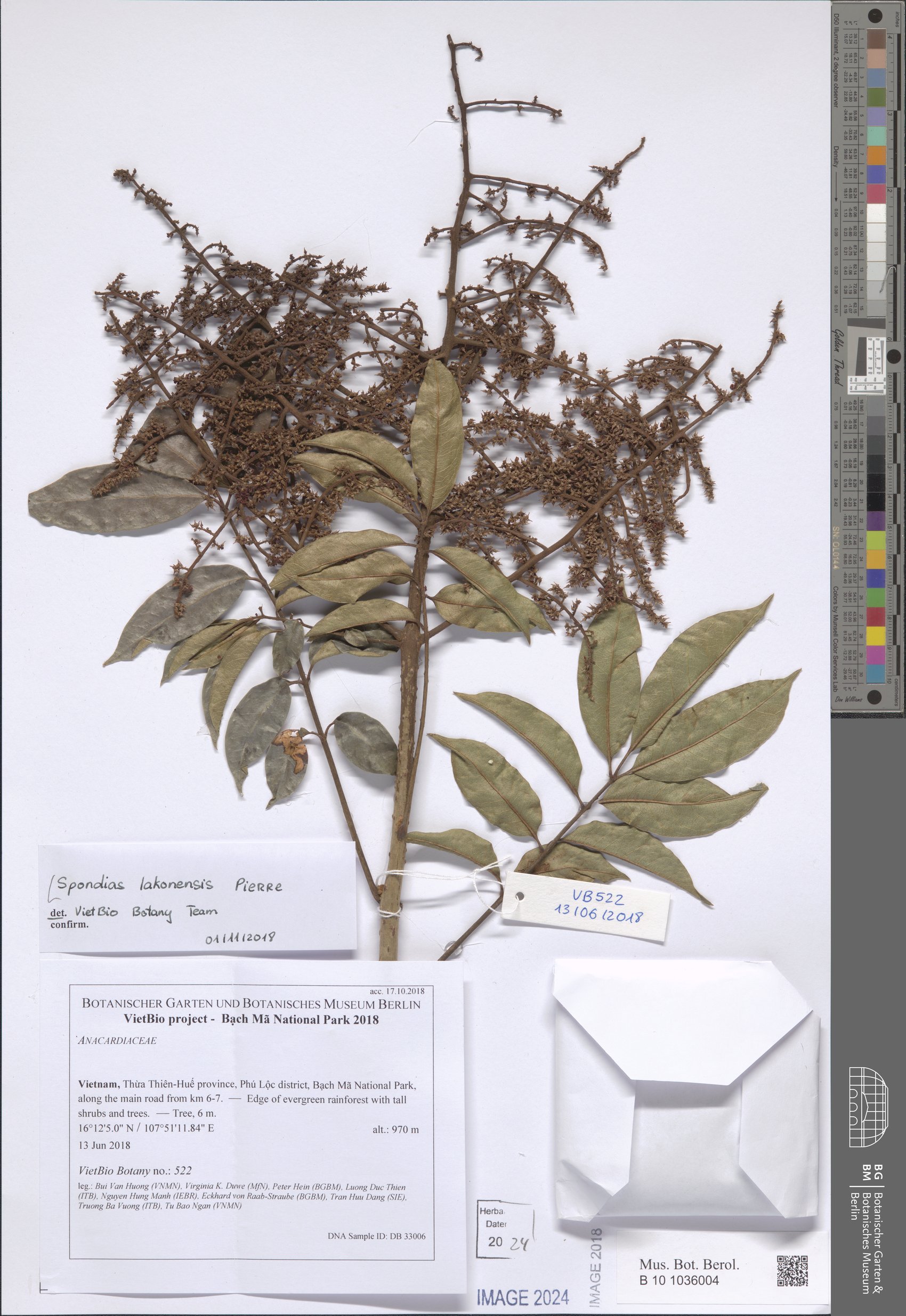
iNaturalist· cc-by-nc
(c) Athol Ferguson, some rights reserved (CC BY-NC), uploaded by Athol Ferguson
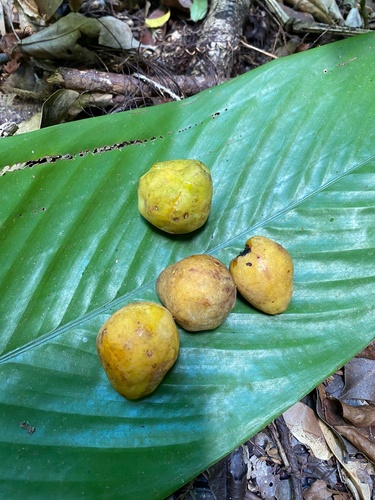
iNaturalist· cc-by-nd
(c) Kyle Campbell, some rights reserved (CC BY-ND), uploaded by Kyle Campbell
Summary
Source: WikipediaSearsia pyroides, previously known as Rhus pyroides, (common currant-rhus English, gewone taaibos Afrikaans, nhlokoshiyane isiZulu) is a species of Searsia, native to southern Africa. This tree occurs throughout the whole of South Africa, a part of Botswana, Zimbabwe and Tanzania and in some areas of Namibia near Windhoek. It is very variable in all respects, though it is usually bushy and often thorny. It is found in bushveld, dry thornveld, on rocky hillsides, termite mounds, water courses and even on the fringes of forests. It is very hardy, tough, drought resistant and deciduous. The leaves are attractive and trifoliolate and it sometimes has large, woody thorns. Flowers are very small, greenish and are borne in summer. The male and female flowers are borne on separate trees and the female trees bear small fruits 3–4 mm in diameter, which turn red when ripe. The tree attracts a multitude of birds and insects due to its nutritious fruit and is an attractive addition to a garden. It is a host plant for the moth Xylopteryx arcuata.
Description
A plant which varies a lot. It can be a shrub or a tree. It is spreading. It can be 5 m tall. It is frequently spiny. The bark is dark brown. The young stems are green. They often have rusty velvet hairs and stout spines. It can be evergreen or lose its leaves in the dry season. The leaves have 3 leaflets. The leaflets vary in shape. The end leaflet can be 3-8 cm long by 1-2.3 cm wide. The side leaflets are shorter. The leaves are dark green on both surfaces and have a white covering of hairs. Male and female flowers are on separate plants. The flowers are very small and yellow. The occur in heads at the ends of branches. These can be 20 cm long. The fruit is 4-5 mm across. They are red when mature. There are several varieties.
Edible Uses
Fruit - raw. The tiny fruits have a thin flesh and are occasionally eaten in handfuls as a snack. They can be eaten unripe or ripe, often both mixed together. The unripe fruit are green and have a refreshing but slightly acidic taste, whereas the ripe red-to-black fruits are sweet. The fruits are only 3 - 5mm in diameter, but are produced in clusters on the plant so are fairly easy to harvest.
Traditional Uses
The fruit are eaten raw as a snack. The fruit are dried and used to make a drink.
This uses section is brief — help expand it
Medicinal Uses
The fruit are traditionally dried and made into a drink.
Distribution
A tropical plant and subtropical plant. It is drought resistant. It grows in open woodland. It is also on rocky hillsides and along watercourses. It grows in the lowlands and the highlands. It grows in dry places and in rocky locations. It can grow in woodland or desert. In southern Africa it grows between 6-2,100 m above sea level. It can grow in arid places.
Where It Grows
Africa, Botswana, East Africa, Eswatini, Kenya, Lesotho, Mozambique, Namibia, South Africa, Southern Africa, Swaziland, Tanzania, Uganda, Zimbabwe,
Cultivation
Plants can be grown from seeds. The older seeds should be soaked in water overnight.
Propagation
Seed - best sown as soon as it is ripe. It germinates in three weeks.
Other Uses
The stems are used as toothbrushes. The wood is generall too small to be of much service, but is used to make hoe handles and the branches are used to construct animal enclosures. The wood is used for firewood and charcoal. The plant responds to trimming and can be grown as a hedge.
Production
It is moderately fast growing. The fruit are harvested by bending over the branches and plucking the fruit.
Notes
There are about 200 Rhus species.
Synonyms
Also Known As
Awaca, Awaya, Ewayo, Epwatet, Kitheu, Mutheu, Mutheu munene, Oyukwere, Qadhadhiya
References (18)
- Agea, J. G., et al 2011, Wild and Semi-wild Food Plants of Bunyoro-Kitara Kingdom of Uganda: etc. Environmental Research Journal 5(2) 74-86 (As Rhus pyroides)
- Ashagre, M., et al, 2016, Ethnobotanical study of wild edible plants in Burji District, Segan Area Zone of Southern Nations, Nationalities and Peoples Region (SNNPR), Ethiopia. Journal of Ethnobiology and Ethnomedicine (2016) 12:32 (As Rhus vulgaris)
- Fox, F. W. & Young, M. E. N., 1982, Food from the Veld. Delta Books. p 78 (As Rhus pyroides)
- Godfrey, J. et al, 2013, Harvesting, preparationand preservation of commonly consumed wild and semi-wild food plants in Bunyoro-Kitara Kingdom, Uganda. Int. J. Med. Arom. Plants. Vol.3 No.2 pp 262-282 (As Rhus pyroides)
- Grivetti, L. E., 1980, Agricultural development: present and potential role of edible wild plants. Part 2: Sub-Saharan Africa, Report to the Department of State Agency for International Development. p 80 (As Rhus pyroides)
Show all 18 references Hide references
- http://www.fao.org/forestry/25323-096344a3de335832e8f363c3ac5184a66.pdf (As Rhus pyroides)
- Magwede, K., van Wyk, B.-E., & van Wyk, A. E., 2019, An inventory of Vhavenḓa useful plants. South African Journal of Botany 122 (2019) 57–89
- Makonda, F. B. S., & Ruffo, C. K., 2011, Species List. NAFORMA, Tanzania (As Rhus pyroides)
- Maroyi, A., 2011, The Gathering and Consumption of Wild Edible Plants in Nhema Communal Area, Midlands Province, Zimbabwe. Ecology of Food and Nutrition 50:6, 506-525 (As Rhus pyroides)
- Masters, T., 2021, Traditional food plants of the upper Aswa River catchment of northern Uganda—a cultural crossroads. Journal of Ethnobiology and Ethnomedicine (2021) 17:24
- Moffett, R. O., 2007, Name changes in the Old World Rhus and recognition of Searsia (Anacardiaceae). Bothalia 37,2: 165-175 (2007)
- Mutie, F. G., 2020, Conservation of Wild Food Plants and Their Potential for Combatting Food Insecurity in Kenya as Exemplified by the Drylands of Kitui County. Plants 2020, 9, 1017
- Mutie, F. M., et al, 2023, Important Medicinal and Food Taxa (Orders and Families) in Kenya, Based on Three Quantitative Approaches. Plants 2023, 12, 1145
- Ojelel, S., et al, 2019, Wild edible plants used by communities in and around selected forest reserves of Teso-Karamoja region, Uganda. Journal of Ethnobiology and Ethnomedicine (2019) 15:3
- Royal Botanic Gardens, Kew (1999). Survey of Economic Plants for Arid and Semi-Arid Lands (SEPASAL) database. Published on the Internet; http://www.rbgkew.org.uk/ceb/sepasal/internet [Accessed 28th March 2011] (As Rhus pyroides)
- Ruiters-Welcome, A. K., 2019, Food plants of southern Africa. Ph.D. thesis. Univ. of Johannesburg p 16
- Welcome, A. K. & Van Wyk, B.-E., 2019, An inventory and analysis of the food plants of southern Africa. South African Journal of Botany 122 (2019) 136–179
- World Checklist of Useful Plant Species 2020. Royal Botanic Gardens, Kew