Spondias mombin
L.(1753) non L.(1759)
Mombin
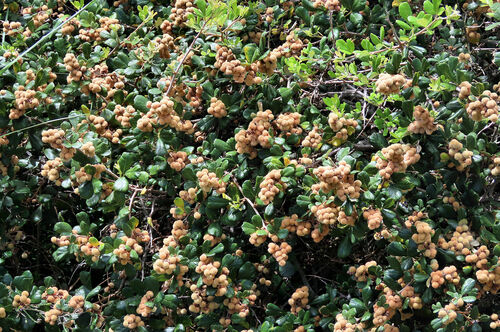
iNaturalist· cc-by-sa
(c) Marco Schmidt, some rights reserved (CC BY-SA)
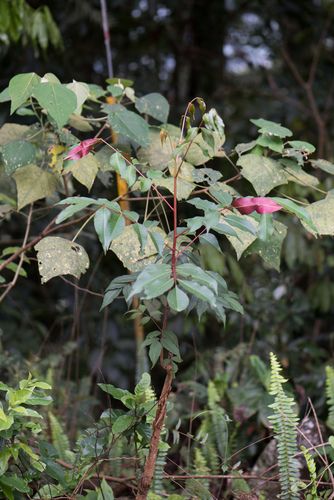
iNaturalist· cc-by-nc
(c) Aurelio Molina Hernández., some rights reserved (CC BY-NC), uploaded by Aurelio Molina Hernández.
iNaturalist· cc-by-nc
(c) James K. Wetterer, some rights reserved (CC BY-NC), uploaded by James K. Wetterer
Summary
Source: WikipediaSpondias mombin, also known as yellow mombin, hog plum, amra or cajazeira, is a species of tree and flowering plant in the family Anacardiaceae. It is native to the tropical Americas, including the West Indies. The tree was introduced by the Portuguese in South Asia in the beginning of the 17th century. It has been naturalized in parts of Africa, India, Nepal, Bangladesh, Sri Lanka, The Bahamas, Indonesia, and other Caribbean islands. It is rarely cultivated except in parts of the Brazilian Northeast. The mature fruit has a leathery skin and a thin layer of pulp. The seed has an oil content of 31.5%.
Description
A medium sized tree. It grows 20-30 m high. The trunk can be 0.5-2 m across. Branches start after 10-15 m. They are widespread and sparse. The leaves are compound. They have leaflets along the stalk. The leaflets are in pairs with a leaflet at the end. There are 5-9 pairs. The flowers occur on stalks near the ends of the branches. The fruit are small and yellow. They are 2.5-4 cm long. They have one large seed. The flesh is sub-acid.
Edible Uses
The fleshy fruit is pleasantly acid and can be eaten raw or cooked with sugar, and is also used for jams and ice cream. Juice improves with keeping overnight, as the mild astringency of fresh fruit fades. Unripe fruits are pickled and used like olives. The dull light orange to yellow or brown ovoid fruit is 30–40mm long and 20–25mm in diameter, with considerable variation in quality between regions — some fruit is sweet and pleasant, others quite disagreeable. Young leaves are cooked and used as a vegetable. Young shoots taste like cassava and can be eaten raw or boiled. The seeds are also edible. When fresh water is unavailable, water can be obtained by drinking sap from the roots.
Traditional Uses
The fruit are used fresh or cooked. They are acidic. They are also used for jams, jellies and ice cream. The fruit can be dried. Because it is sour it is often sweetened and used for drinks. The unripe fruit are pickled and eaten like olives. The young leaves are cooked and eaten.
Medicinal Uses
Both the bark and flowers are used in folk medicine to prepare cure-all teas for digestive tract ailments, lower back pain, rheumatism, angina, sore throat, malarial fever, congestion, diarrhoea, urethritis, metrorrhagia, and as a contraceptive. The bark is used to treat gonorrhoea, diarrhoea, coughs and colds, haemorrhages, stomach aches, and fatigue. Plant extracts exhibit antibacterial properties, and a decoction of the bark or root bark is considered antiseptic. The roots are regarded as febrifuge. An infusion is used to treat dysentery. Leaf decoctions treat diarrhoea, dysentery, colds, fevers, and gonorrhoea, and leaves also feature in an abortifacient preparation. A decoction of leaves and young stems is used as an eyewash for ophthalmia. The flowers are cardiac and stomachic; a floral decoction treats laryngitis, ophthalmia, and children's diarrhoea. The fruit is mildly laxative and is stewed and eaten to treat diarrhoea.
Known Hazards
None listed.
Distribution
It is tropical. It grows in the tropical lowlands. It will grow in wet or dry zones. It grows up to 1,000 m above sea level. In Bolivia it grows where rainfall is 1,000-1,500 mm per year. It cannot tolerate frost. In Cairns Botanical Gardens. It can tolerate a range of soils.
Where It Grows
Africa, Amazon, Angola, Argentina, Asia, Australia, Belize, Benin, Bolivia*, Brazil*, Burkina Faso, Cameroon, Cape Verde, Caribbean, Central Africa, Central African Republic, Central America, Chile, Colombia, Congo DR, Congo R, Cook Islands, Costa Rica, Côte d'Ivoire, Cuba*, Dominica, Dominican Republic*, Ecuador, El Salvador, French Guiana, French Polynesia, Gabon, Gambia, Ghana, Guatemala, Guiana, Guianas, Guinea, Guinée, Guinea-Bissau, Guyana, Haiti*, Hawaii, Honduras, India, Indonesia, Ivory Coast, Jamaica, Lesser Antilles, Liberia, Malaysia, Mali, Mauritius, Mexico, Nicaragua, Nigeria, North America, Pacific, Panama, Paraguay, Peru, Philippines, Puerto Rico, Sao Tome and Principe, SE Asia, Senegal, Sierra Leone, Singapore, South America, Sri Lanka, St. Kitts and Nevis, St Lucia, Suriname, Tahiti, Togo, Uruguay, USA, Venezuela, West Africa, West Indies*,
Cultivation
The plant grows best in the subhumid and frost-free tropics, where it can be found at elevations up to 1,000 metres. It grows best in areas where annual daytime temperatures are within the range 21 - 27°c, but can tolerate 13 - 35°c. The plant is severely damaged by frost. It prefers a mean annual rainfall in the range 1,000 - 2,000mm, but tolerates 600 - 2,800mm. It can succeed in areas with widely distributed rainfall, or with a marked dry season. Requires a sunny position. Prefers a medium to heavy, well-drained, fertile soil. Plants are not too fussy over soil, not needing very fertile conditions. However, very poor soil, or shallow land, is unsuitable. Prefers a pH in the range 5.5 - 6.5, tolerating 4.3 - 8. A fast-growing tree, easily reaching a height of 3.5 metres within 2 years from seed. Fruiting usually starts when seedling trees are about 5 years of age, although well-kept cuttings may start fruiting earlier. Some ripe fruit can be found on the tree during most of the year. Plants produce a deep taproot when young and also have a shallower root system near the surface when older. Flowering Time: Late Winter/Early Spring Mid Spring Late Spring/Early Summer. Bloom Color: White/Near White Cream/Tan.
Propagation
Fresh seeds germinate well, typically within 35–75 days. Seeds are best sown as soon as ripe in a semi-shaded position in individual containers, where germination can be expected within 20–40 days. Seedlings develop rapidly and are generally ready to plant out within 6 months. The plant can also be grown from quite large cuttings of wood from the previous season or older, often 50–100cm long and 5–10cm thick.
Other Uses
The tree is occasionally planted to shade coffee plants and is sometimes used for living fence posts. Root ashes have been used in making soap. The heartwood is cream to buff, not clearly demarcated from the sapwood; texture is medium to coarse, grain straight to slightly irregular, with medium lustre and no distinguishable odour or taste. The wood is light and soft, somewhat durable, with low resistance to decay fungi and insects and particular susceptibility to blue stain. It air dries rapidly with moderate warp and slight checking, is easy to work, and generally finishes smoothly, though fuzzy grain may occur. Trunks are occasionally used for dugouts; stems are used for posts, boxes, matches, general carpentry, tool handles, millwork, utility plywood, and furniture components. Logs should be processed promptly to limit insect damage. The wood's hardness, density, and light colour make it suitable for pulp; resulting paper has good resistance to tension and tearing but poor folding strength. The wood also serves as fuel.
Production
It is fast growing. Plants can be 3.5 m high in 2 years. Fruit weigh about 20 g.
Other Information
Fruit are sold in markets. It is a cultivated fruit tree. It is commonly used in West Africa. Fruit tend to be available in the drier more hungry season.
Notes
It has antioxidants.
Nutrition
| Part | Moisture | kJ | kcal | Protein | Vit A | Vit C | Iron | Zinc |
|---|---|---|---|---|---|---|---|---|
| Fruit | 82.7 | 193 | 46 | 1.3 | 70 | 28 | 2.8 | — |
Synonyms
Also Known As
Abal, Abala, Acaia, Acaiba, Acaja, Acajaiba, An-lep, Atoa, Axocotl, Bafosse, Berneyu, Bijendenden, Budjabual, Bu lelu, Caia, Caja-mirim, Caja, Cajarana, Cajazeiro-miudo, Cedrillo, Ciruella amarilla, Ciruela mexicana, Echikala, Eyeye, Gajaja, Gajajeira, Gboji, Hobo, Hog-plum, Hubu, Imbuzeiro, Iweiwe, Iyeye, Jamaica-plum, Java-pumb, Jobo, Jocote, Jogo, Jogo subrure, Kadongdon china, Kadongdong chuchuk, Kadongdong sabrang, Kpaki, Lewo, Maga, Manipo, Mandiple, Mandipul, Mgba, Minkon, Mope, Mungiengie, Mungyenge, N'pela, N'pilo, Negae, Ninom-o, Nsuka kara, Nyakabu, Obo, Ogae, Pahara, Pepa de morrocoy, P'sale, Pilme, Pohon kedongdong mombin, Prunes-mombin, Sale, Same, Tapereba, Tchale, Troma, Ubos, Ugai, Umpela, Umpilo, Uposse, Usi arau, Uvuru, Yellow mombin
References (130)
- Abbiw, D.K., 1990, Useful Plants of Ghana. West African uses of wild and cultivated plants. Intermediate Technology Publications and the Royal Botanic Gardens, Kew. p 42
- Agbahoungba, S., et al, 2016, Ecological diversity and conservation of wild edible fruit trees species in the Lama Forest Reserve in Benin. Bois et Forets des Tropiques 2016, No. 329(3)
- Altschul, S.V.R., 1973, Drugs and Foods from Little-known Plants. Notes in Harvard University Herbaria. Harvard Univ. Press. Massachusetts. no. 2494
- Ambasta, S.P. (Ed.), 2000, The Useful Plants of India. CSIR India. p 595
- Ambe, G., 2001, Les fruits sauvages comestibles des savanes guinéennes de Côte-d’Ivoire : état de la connaissance par une population locale, les Malinké. Biotechnol. Agron. Soc. Environ. 5(1), 43-48
Show all 130 references Hide references
- Aniama, S. O., et al, 2016, Ethnobotanical documentaton of some plants among Igala people of Kogi State (Nigeria). The International Journal Of Engineering And Science (IJES). 5(4) pp 33-42
- Arellanes, Y., et al, 2013, Influence of traditional markets on plant management in the Tehuacan Valley. Journal of Ethnobiology and Ethnomedicine 9:38
- Assogbadjo, A. E. et al, 2013, Specific Richness and Cultural Importance of Wild Edible Trees in Benin. Acta Hort. 979, ISHS 2013
- Atato, A., et al, 2010, Diversity of Edible Wild Fruit Tree Species of Togo. Global Science Books.
- Atato, A.,et al, 2011, Edible Wild Fruit Highly Consumed during Food Shortage Period in Togo: State of Knowledge and Conservation Status. Journal of Life Sciences 5 (2011) 1046-1057
- Bailao, E. F. L. C., et al, 2015, Bioactive Compounds Found in Brazilian Cerrado Fruits. International Journal of Molecular Sciences. 16:23760-23783
- Barfod, A. S. & Kvist, L. P., 1996, Comparative Ethnobotanical Studies of the Amerindian Groups in Coastal Ecuador. The Danish Academy of Sciences and Letters. p 76
- Barwick, M., 2004, Tropical and Subtropical Trees. A Worldwide Encyclopedic Guide. Thames and Hudson p 380
- Belem, M., et al, 2017, Strategy of Conservation and Protection of Wild Edible Plants Diversity in Burkina Faso. ANADOLU 27 (2) 2017, 82- 90
- Bioversity New World Fruits Database
- Bodkin, F., 1991, Encyclopedia Botanica. Cornstalk publishing, p 945
- Boateng, S. K., et al, 2007, Wet Season of Edible Wild Fruits in Three Regions of Ghana. Journal of Plant Sciences 2(3): 353-357
- Boedecker, J., et al, 2014, Dietary contribution of Wild Edible Plants to women’s diets in the buffer zone around the Lama forest, Benin – an underutilized potential. Food Sec. 6:833–849
- Bortolotto, I. M., et al, 2015, Knowledge and use of wild edible plants in rural communities along Paraguay River, Pantanal, Brazil. Journal of Ethnobiology and Ethnomedicine (2015) 11:46
- Bortolotto, I. M., et al, 2018, Lista preliminar das plantas alimenticias nativas de Mato Grosso do Sul, Brasil. Iheringia, Serie Botanica, Porto Alegre, 73 (supl.):101-116
- Brazil: Biodiversity for Food and Nutrition. http://www.b4fn.org/countries/brazil/
- Burkill, H. M., 1985, The useful plants of west tropical Africa, Vol. 1. Kew.
- Burkill, I.H., 1966, A Dictionary of the Economic Products of the Malay Peninsula. Ministry of Agriculture and Cooperatives, Kuala Lumpur, Malaysia. Vol 2 (I-Z) p 2104 (Also as Spondias lutea)
- Casas, A., et al, 1996, Plant Management Among the Nahua and the Mixtec in the Balsas River Basin, Mexico: An Ethnobotanical Approach to the Study of Plant Domestication. Human Ecology, Vol. 24, No. 4 pp. 455-478
- Casas, A., et al, 2016, Evolutionary Ethnobotanical Studies of Incipient Domestication of Plants in Mesoamerica. In Lira, R., et al, (eds.) Ethnobotany of Mexico, Ethnobiology. Springer p 258
- Castaneda, H. & Stepp, J. R., 2007, Ethnoecological Importance Value (EIV) Methodology: Assessing the Cultural Importance of Ecosystems as Sources of Useful Plants for the Guaymi People of Costa Rica. Ethnobotany Research & Applications 5:249-257
- Catarino, L., et al, 2016, Ecological data in support of an analysis of Guinea-Bissau's medicinal flora. Data in Brief 7 (2016):1078-1097
- Chizmar Fernandez, C., et al, 2009, Plantas comestibles de Centroamerica. Instituto de Biodiversidad, Costa Rica. p 26
- Codjia, J. T. C., et al, 2003, Diversity and local valorisation of vegetal edible products in Benin. Cahiers Agricultures 12:1-12
- Coe, F. G., and Anderson, G. J., 1996, Ethnobotany of the Garifuna of Eastern Nicaragua. Economic Botany 50(1) pp 71-107
- Coe, F. G. & Anderson, G. J., 1997, Ethnobotany of the Miskitu of Eastern Nicaragua. Journal of Ethnobiology 17(2): 171-214
- Coe, F. G. and Anderson, G. J., 1999, Ethnobotany of the Sumu (Ulwa) of Southeastern Nicaragua and Comparisons with Miskitu Plant Lore. Economic Botany Vol. 53. No. 4. pp. 363-386
- Condit, R., et al, 2011, Trees of Panama and Costa Rica. PrincetonField Guides. p 34
- Coronel, R.E., 1982, Fruit Collections in the Philippines. IBPGR Newsletter p 8
- Cruz, I. M., et al, 2015, Edible fruits and seeds in the State of Mexico. Revista Mexicana de Ciencias Agricolas. Vol. 6. Num. 2 pp 331-346
- D'Ambrosio, U., & Puri, R. K., 2016, Foodways in transition: food plants, diet and local perceptions of change in a Costa Rican Ngäbe community. Journal of Ethnobiology and Ethnomedicine (2016) 12:3 p 22
- Daly, D. C., An Index of Common Names of Plants in Acre, Brazil. New York Botanical Garden Universidade Federal do Acre.
- Darley, J.J., 1993, Know and Enjoy Tropical Fruit. P & S Publishers. p 121
- Diarra, N. et al, 2016, Etude ethnobotanique des plantes alimentaires utilisées en période de soudure dans les régions Sud du Mali. Int. J. Biol. Chem. Sci. 10(1): 184-197
- Diop, A. l., et al, 2021, Cultural importance of wild edible plants in three sympatric communities: Agni, Akyé and Gwa in the Department of Alépé (Southeast of Côte d’Ivoire). Ethnobotany Research and Applications 22:35. p
- Djihounouck, Y., et al, 2018, Diversité Et Importance Socio-Economique Des Espèces Fruitières Sauvages Comestibles En Zone Kasa (Sud-Ouest Du Sénégal). European Scientific Journal December 2018 edition Vol.14, No.36 ISSN: 1857 – 7881
- Djihounouck, Y., et al, 2021, Ethnobotanical Uses of Non-cultivated Edible Fruit Species in the Department of Oussouye (South Senegal). Journal of Food Research; Vol. 10, No. 4 p 20
- Duarte, M. C., et al, 2022, Diversity of Useful Plants in Cabo Verde Islands: A Biogeographic and Conservation Perspective. Plants 2022, 11, 1313 p 8
- Etkin, N. L. (Ed.), 1994, Eating on the Wild Side, Univ. of Arizona. p 141
- Facciola, S., 1998, Cornucopia 2: a Source Book of Edible Plants. Kampong Publications, p 11
- Grivetti, L. E., 1980, Agricultural development: present and potential role of edible wild plants. Part 2: Sub-Saharan Africa, Report to the Department of State Agency for International Development. p 32
- Grandtner, M. M., 2008, World Dictionary of Trees. Wood and Forest Science Department. Laval University, Quebec, Qc Canada. (Internet database http://www.wdt.qc.ca)
- Grandtner, M. M. & Chevrette, J., 2013, Dictionary of Trees, Volume 2: South America: Nomenclature, Taxonomy and Ecology. Academic Press p 626
- Gueye, M., et al, 2014, Wild Fruits Traditionally Gathered by the Malinke Ethnic Group in the Edge of Niokolo Koba Park (Senegal). American Journal of Plant Sciences 5, 1306-1317
- Hardwick, G., 2001, Economically Useful Plants for Northern Australia: Master Species List. Crusader eBooks.
- Hedrick, U.P., 1919, (Ed.), Sturtevant's edible plants of the world. p 631
- Hermandez Bermejo, J.E., and Leon, J. (Eds.), 1994, Neglected Crops. 1492 from a different perspective. FAO Plant Production and Protection Series No 26. FAO, Rome. p 14
- Herzog, F., Gautier-Beguin, D. & Muller, K., Uncultivated plants for human nutrition in Cote d'Ivoire. FAO Corporate Document repository. International Conference on Domestication nd Commercialisaton of Non Timber species.
- Heyne, K., 1927, p 975
- Hunter, D., et al, 2019, The potential of neglected and underutilized species for improving diets and nutrition. Planta (2019) 250:709-729
- INFOODSUpdatedFGU-list.xls
- INFOODS:FAO/INFOODS Databases (Also as Spondias lutea)
- Janick, J. & Paul, R. E. (Eds.), 2008, The Encyclopedia of Fruit & Nuts. CABI p 31
- Jardin, C., 1970, List of Foods Used In Africa, FAO Nutrition Information Document Series No 2.p 36, 163
- John, L., & Stevenson, V., 1979, The Complete Book of Fruit. Angus & Robertson p 154
- JSTOR Global Plants edible
- Keay, R.W.J., 1989, Trees of Nigeria. Clarendon Press, Oxford. p 367
- Kermath, B. M., et al, 2014, Food Plants in the Americas: A survey of the domesticated, cultivated and wild plants used for Human food in North, Central and South America and the Caribbean. On line draft. p 833
- Kiple, K.F. & Ornelas, K.C., (eds), 2000, The Cambridge World History of Food. CUP p 1785, 1866, 1885
- Langlois, H. C., 2004, Ethnobotanical analysis of different successional stages as sources of wild edible plants for the Guaymi people in Costa Rica. M. Sc. thesis University of Florida.
- Latham, P., 2004, Useful Plants of Bas-Congo province. Salvation Army & DFID p 262
- Lautenschläger, T., et al, 2018, First large-scale ethnobotanical survey in the province of Uíge, northern Angola. Journal of Ethnobiology and Ethnomedicine (2018) 14:51
- Leal, M. L. et al, 2018, Knowledge, use, and disuse of unconventional food plants. Journal of Ethnobiology and Ethnomedicine (2018) 14:6
- Lentz, D. L., 1986, Ethnobotany of the Jicaque of Honduras. Economic Botany 40(2):210-219
- liberianfaunaflora.org Plant Atlas
- Lopez-Diago, D. & Garcia, N., 2021, Wild edible fruits of Colombia. Biota ColomBiana 22 (2) p 28
- Lorenzi, H., 2002, Brazilian Trees. A Guide to the Identification and Cultivation of Brazilian Native Trees. Vol. 01 Nova Odessa, SP, Instituto Plantarum p 25
- Maas, P.J. M., Non-Timber Forest Products of the North-West District of Guyana Part 2. The 85 most important NTFP species. p 216
- Macmillan, H.F. (Revised Barlow, H.S., et al) 1991, Tropical Planting and Gardening. Sixth edition. Malayan Nature Society. Kuala Lumpur. p 308
- Manvell, A., 2011, Use of Non-Timber Forest Products around Sapo National Park, Liberia (Report B) p 51
- Mapes, C. & Basurto, F., 2016, Biodiversity and Edible Plants of Mexico. Chapter 5 in R. Lira, et al. (eds.), Ethnobotany of Mexico, Ethnobiology, Springer. p 97
- Martin, F. W., et al, 1987, Perennial Edible Fruits of the Tropics. USDA Handbook 642 p 15
- McLaughlin, J., Woody and Herbaceus Plants Native to Haiti. University of Florida. p 3
- Menninger, E.A., 1977, Edible Nuts of the World. Horticultural Books. Florida p 55
- Meregini, O. A., 2005, Some endangered plants producing edible fruits and seeds in Southeastern Nigeria. Fruits, Vol. 60 pp 211-220
- Miguel, E., et al, 1989, A checklist of the cultivated plants of Cuba. Kulturpflanze 37. 1989, 211-357
- Milow, P., et al, 2013, Malaysian species of plants with edible fruits or seeds and their evaluation. International Journal of Fruit Science. 14:1, 1-27
- Morton, J. F., 1987, Fruits of Warm Climates. Wipf & Stock Publishers p 245
- Mutchnick, P. A. and McCarthy, B. C., 1997, An Ethnobotanical Analysis of the Tree Species Common to the Subtropical Moist Forests of the Peten, Guatemala. Economic Botany, Vol. 51, No. 2, pp. 158-183
- Nascimento, V. T. D., et al, 2013, Knowledge and Use of Wild Food Plants in Areas of Dry Seasonal Forests in Brazil. Ecology of Food and Nutrition, 52:317–343
- N'Danikou, S. et al, 2010, Eliciting Local Values of Wild Edible Plants in Southern Bénin to Identify Priority Species for Conservation. Economic Botany, 20(10), 2011, pp. 1–15.
- Nkeoua, G. & Boundzanga, G. C., 1999, Donnees sur les produits forestieres non ligneux en Republique du Congo. FAO. p 37
- Nunes, E. N., et al, 2018, Local botanical knowledge of native food plants in the semiarid region of Brazil. Journal of Ethnobiology and Ethnomedicine (2018) 14:49
- NYBG herbarium "edible"
- Omawale, 1973, Guyana's edible plants. Guyana University, Georgetown p 36
- Paz, F. S., et al, 2021, Edible Fruit Plant Species in the Amazon Forest Rely Mostly on Bees and Beetles as Pollinators. Journal of Economic Entomology, XX(XX), 2021, 1–13
- Piedra-Malagón, E. M. et al, 2022, Edible native plants of the Gulf of Mexico Province. Biodiversity Data Journal 10: e80565 p 9
- Plants of Haiti Smithsonian Institute http://botany.si.edu
- PROSEA Vol.2
- Purseglove, J.W., 1968, Tropical Crops Dicotyledons, Longmans. p 18
- Raponda-Walker, A & Sillans, R., 1961, Les Plantes Utiles du Gabon. Editions Paul Lechevalier, Paris. p 61 (As Spondias monbin)
- Reis, S. V. and Lipp, F. L., 1982, New Plant Sources for Drugs and Foods from the New York Botanical Garden herbarium. Harvard. p 165
- Roa, J. A. G. & Boada, D. S. G., 2018, Fundación para el Fortalecimiento de la Fruticultura y Plantas Alimenticias no Convencionales en Colombia.
- Rufino, M. M. et al, 2010, Bioactive compounds and antioxidant capacities of 18 non-traditional tropical fruit from Brazil. Food Chemistry 121: 996-1002
- Savill, P. S. & Fox, J. E. D., Trees of Sierra Leone. p 45
- Segnon, A. C. & Achigan-Dako, E. G., 2014, Comparative analysis of diversity and utilization of edible plants in arid and semi-arid areas in Benin. Journal of Ethnobiology and Ethnomedicine 2014, 10:80
- Segura, S. et al, 2018, The edible fruit species in Mexico. Genet Resour Crop Evol (2018) 65:1767–1793
- Smith, N., et al, 2007, Amazon River Fruits. Flavors for Conservation. Missouri Botanical Gardens Press. p 24
- Sp. pl. 1:371. 1753
- Standley, P. C. & Record, S. J., 1936, The Forests and Flora of British Honduras. (Belize). p 228
- Staples, G.W. and Herbst, D.R., 2005, A tropical Garden Flora. Bishop Museum Press, Honolulu, Hawaii. p 107
- Sukarya, D. G., (Ed.) 2013, 3,500 Plant Species of the Botanic Gardens of Indonesia. LIPI p 518
- Timyan, J., 1996, Bwa Yo: Important Trees of Haiti. SE Consortium for International Development. Washington. p 220
- Torre, de la L., et al, 2008, Enciclopedia de las Plantas Útiles del Ecuador. Herbario QCA. Pontificia Universidad Católica del Ecuador. p 162
- Udo, E. S., et al, 2009, Life-form and Density of Valuable Non-timber Plants in Ukpom Community Forest, Akwa Ibom State, Nigeria. African Research Review 3(3) p 7
- Ulian, T., et al, 2020, Unlocking plant resources to support food security and promote sustainable agriculture. Plants, People, Planet. 2020;2:421–445.
- Unwin, A. H., 1920, West African Forests and Forestry. Fisher Unwin Ltd. pdf on Internet p 62 (As Spondias lutea)
- USDA, ARS, National Genetic Resources Program. Germplasm Resources Information Network - (GRIN). [Online Database] National Germplasm Resources Laboratory, Beltsville, Maryland. Available: www.ars-grin.gov/cgi-bin/npgs/html/econ.pl (10 April 2000)
- Vael, L., 2015, Ethnobotanical study of the plant use in the natural landscape of two mestizo communities in the Ucayali region of the Peruvian Amazon. Universiteit Gent.
- van Andel, T.R., 2000, Non-timber forest products of the North-West District of Guyana Part I Tropenbos-Guyana Series 8a
- Van den Eynden, V., et al, 2003, Wild Foods from South Ecuador. Economic Botany 57(4): 576-603
- van Roosmalen, M.G.M., 1985, Fruits of the Guianan Flora. Utrecht Univ. & Wageningen Univ. p 2
- van Wyk, B., 2005, Food Plants of the World. An illustrated guide. Timber press. p 355
- Vasquez, R. and Gentry, A. H., 1989, Use and Misuse of Forest-harvested Fruits in the Iquitos Area. Conservation Biology 3(4): 350f
- Vasquez, Roberto Ch. & Coimbra, German S., 1996, Frutas Silvestres Comestibles de Santa Cruz. p 38
- Villachica, H., (Ed.), 1996, Frutales Y hortalizas promisorios de la Amazonia. FAO, Lima. p 271
- Vivien, J., & Faure, J.J., 1996, Fruitiers Sauvages d'Afrique. Especes du Cameroun. CTA p 38
- Walter, A. & Sam C., 2002, Fruits of Oceania. ACIAR Monograph No. 85. Canberra. p 245
- Wickens, G.E., 1995, Edible Nuts. FAO Non-wood forest products. FAO, Rome. p 108
- Wiersema, J. H. & Leon, B., 2013, World Economic Plants. A Standard Reference CRC Press. 2nd Ed. p 656
- Wilson, M. R., Ethnobotanical List. PhD thesis: A Highland Maya People and Their Habitat. quantamike.ca
- World Checklist of Useful Plant Species 2020. Royal Botanic Gardens, Kew
- www.colecionandofrutas.org
- www.worldagroforestrycentre.org/treedb/
- Zuchowski W., 2007, Tropical Plants of Costa Rica. A Zona Tropical Publication, Comstock Publishing. p 213