Spondias lakonensis
Pierre
False soap-berry
gbif· cc-by-sa
GBIF
gbif· cc-by-sa
GBIF
gbif· cc-by-sa
GBIF
Description
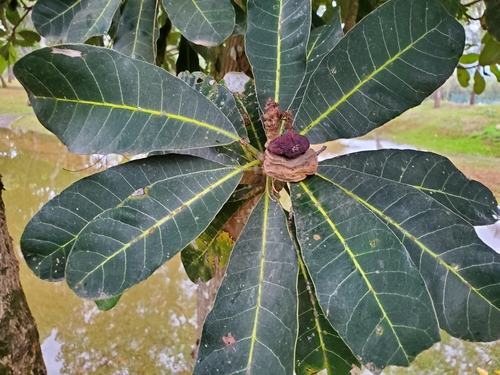
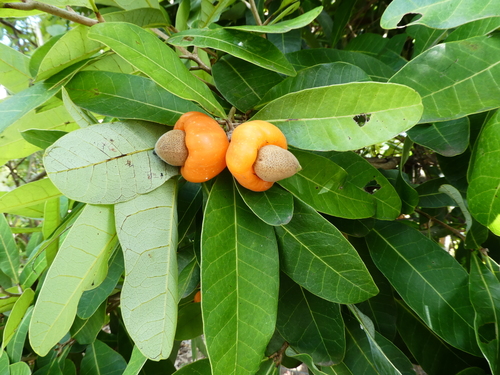
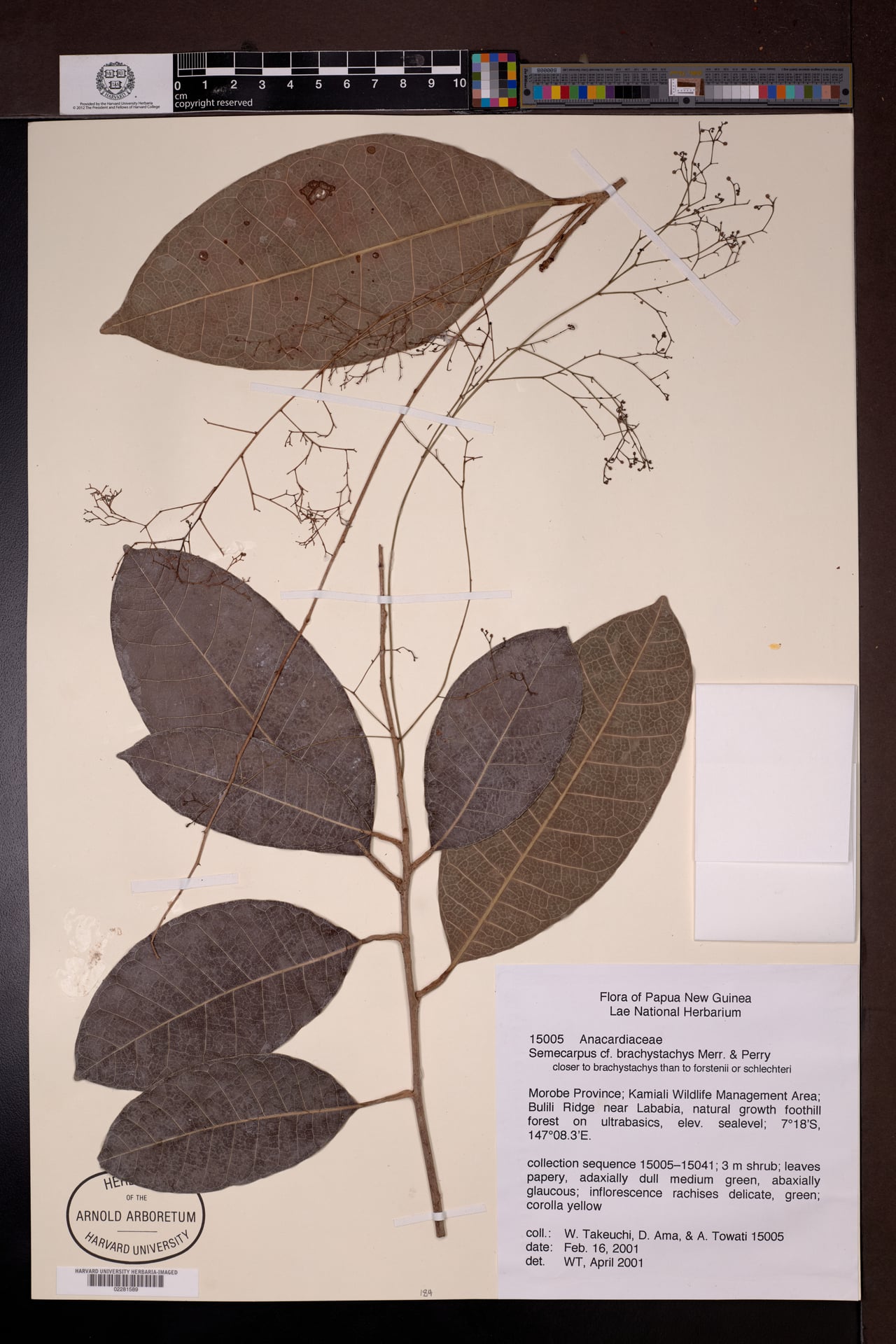
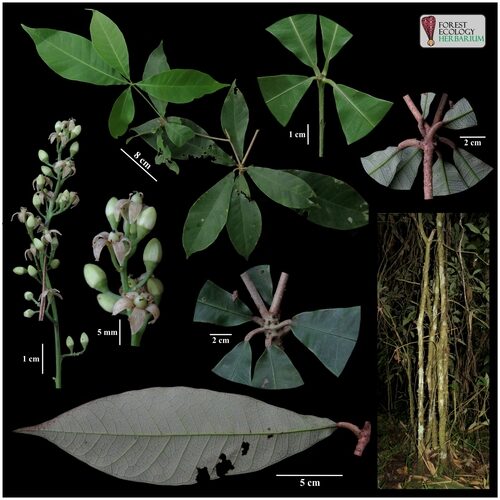
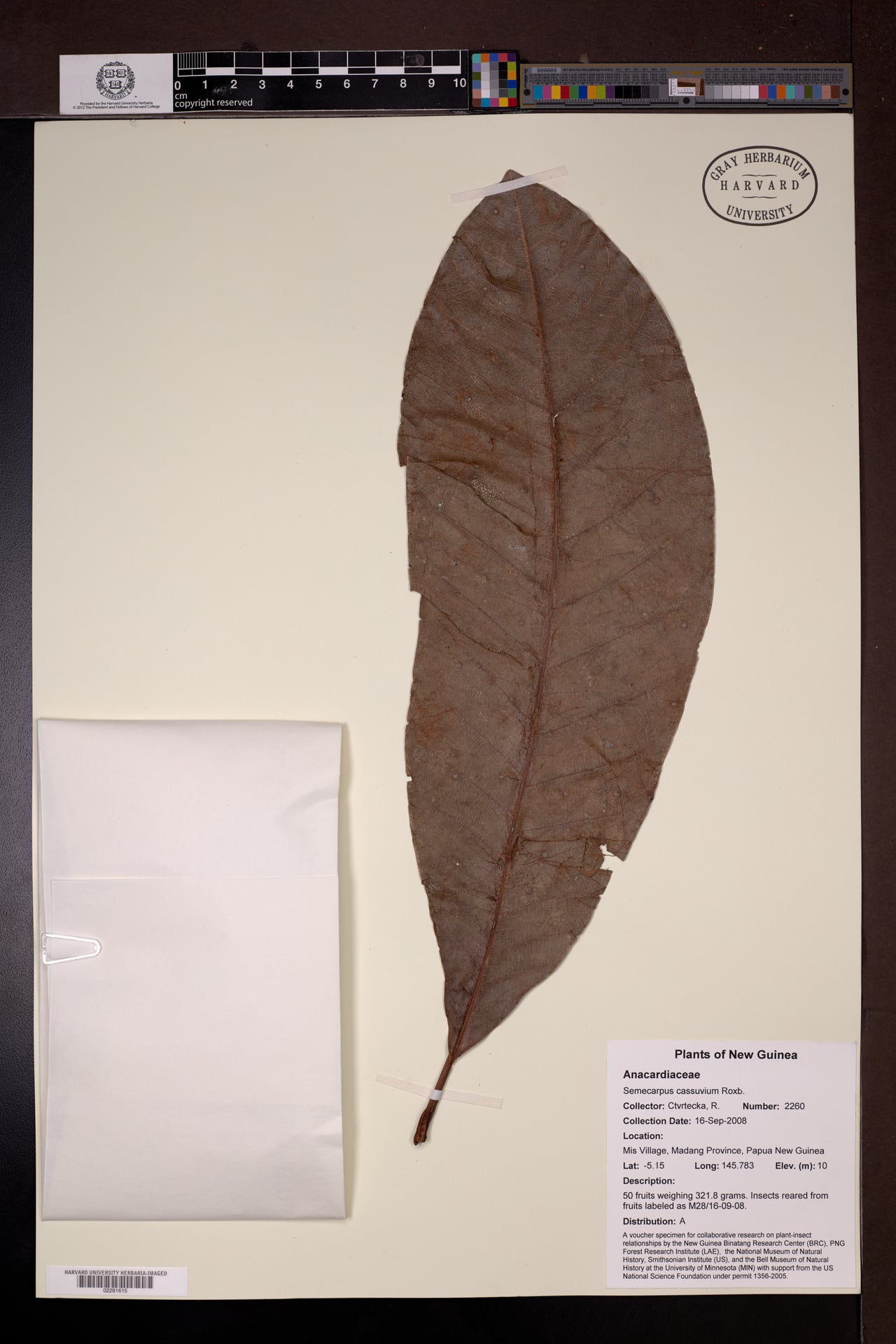
A medium sized tree. It grows 15-20 m tall. The trunk is 80-100 cm across. It loses its leaves during the year. The leaves are compound and 20-45 cm long with leaflets that are opposite and with one at the end. The leaves have 31-51 leaflets. They are 6-10 cm long by 2-3 cm wide. They taper to the tip and are obliquely rounded at the base. The flowers are creamy white and small and in groups in the axils of leaves and in groups 15-30 cm long at the ends of branches. The fruit is oval and fleshy. They are 8-12 mm long by 8-9 mm wide. The fruit are in clusters and red and have 4 cavities near the end.
Edible Uses
About 10 species of Spondias bear edible fruits and have been domesticated for fruit production. These fruits are also consumed by herbivorous mammals such as deer. In the Western Ghats of Karnataka flower buds and tender fruits are used in pickle preparation. In Thai cuisine both the fruits and the tender leaves are eaten. In Odisha its called ambada, the fruit is used as a souring agent in curries.
Traditional Uses
The fruit is eaten raw. The fruit are acidic and sweet.
This uses section is brief — help expand it
Distribution
It is a tropical plant. It grows near dry forest and often along streams. It grows in deep, well-drained soils. It grows up to 800 m above sea level. In Yunnan and Hainan.
Where It Grows
Asia, China, Indochina, Laos, SE Asia, Thailand, Vietnam,
Cultivation
It can be grown from seeds or cuttings.
Production
It is fast growing.
Other Information
It is a cultivated plant. Fruit are sold in markets.
Synonyms
Also Known As
Ching Tau Shue, Dau da xoan, Ma ho
References (10)
- Altschul, S.V.R., 1973, Drugs and Foods from Little-known Plants. Notes in Harvard University Herbaria. Harvard Univ. Press. Massachusetts. no. 2497 (Allospondias lakonensis) and no. 2498 (As Allospondias chinensis)
- Arora, R. K., 2014, Diversity in Underutilized Plant Species - An Asia-Pacific Perspective. Bioversity International. p 87 (As laosensis)
- Fern, K., 2012, Tropical Species Database http://theferns.info/tropical/
- Forest Inventory and Planning Institute, 1996, Vietnam Forest Trees. Agriculture Publishing House p 32 (Allospondias lakonensis)
- Hill, M. & Hallam, D., (eds), 1997, Na Hang Nature Reserve, Tat Ke Sector. Site description and conservation evaluation. Hanoi. p 72 (Allospondias lakonensis)
Show all 10 references Hide references
- Hu, Shiu-ying, 2005, Food Plants of China. The Chinese University Press. p 513 (As Allospondias chinensis)
- PROSEA Vol. 2
- Reis, S. V. and Lipp, F. L., 1982, New Plant Sources for Drugs and Foods from the New York Botanical Garden herbarium. Harvard. p 163 (As Allospondias chinensis)
- Van Sam, H. et al, 2008, Uses and Conservation of Plant Species in a National Park. A case study of Ben En, Vietnam. Economic Botany 62:574-593
- Zeven, A. C. & de West, J. M. J., 1982, Dictionary of cultivated plants and their regions of diversity. Wageningen. p 49 (As Spondias laosensis)