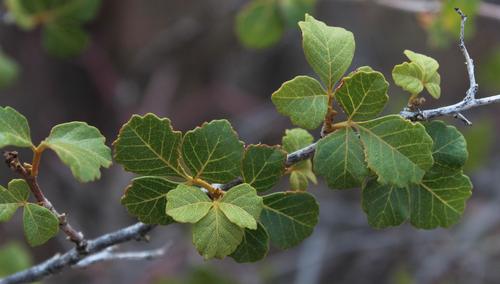
Rhus punjabensis
J. L. Stewart ex Brandis
Punjab sumac
gbif· cc0
President and Fellows of Harvard College
gbif· cc0
President and Fellows of Harvard College
gbif· cc0
President and Fellows of Harvard College
Summary
Source: WikipediaRhus punjabensis is a deciduous tree growing to 12m tall. Hardy to UK zone 6, it flowers in June. Dioecious and bee-pollinated, it requires both sexes for seed production. Grows in light, medium, or heavy well-drained soils with mildly acid to basic pH. Requires full sun and moist soil.
Description
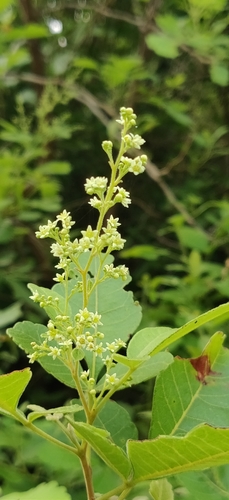
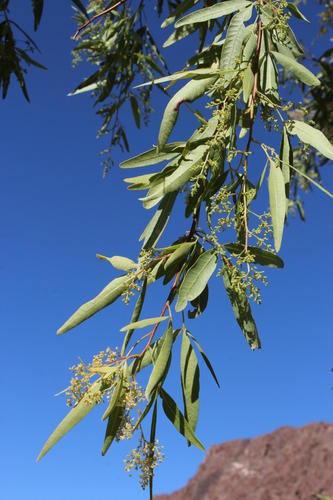
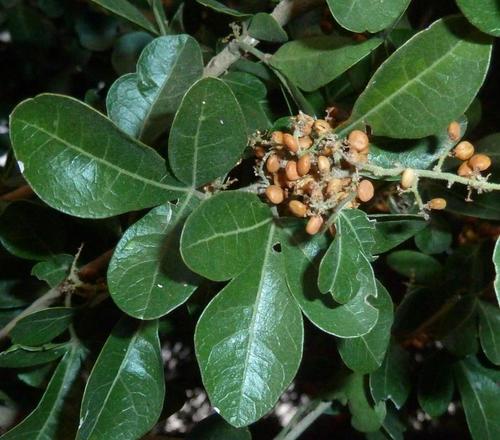
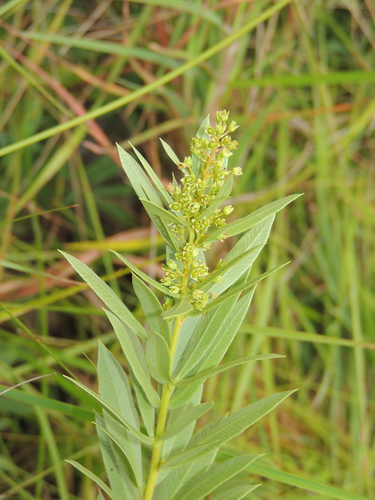
A small tree. It grows 12 m tall. The young shoots are hairy with a rusty covering. The leaves have an irregular number of leaflets with a leaflet at the end. There are 9-13 leaflets that are opposite. They are 4-12 cm long by 2-5 cm wide. They are narrowly oval and can have fine teeth around the edge. The groups of flowers are at the ends of branches. The fruit is fleshy and 3-4 mm across.
Edible Uses
The fruit can be eaten raw or cooked. It is small with very little flesh, but is borne in fairly large panicles that make harvesting straightforward. Soaking the fruit for 10–30 minutes in hot or cold water produces a very refreshing lemonade-like drink. The mixture should not be boiled, as this releases tannic acids and makes the drink astringent.
Traditional Uses
The fruit are eaten. They are also used for drinks.
This uses section is brief — help expand it
Medicinal Uses
An excrescence produced on the leaves by the insects Melaphis chinensis or M. paitan is antiseptic, astringent, and haemostatic. Internally, it is used to treat persistent cough with blood, chronic diarrhoea, spontaneous sweating, night sweats, bloody stool, urorrhoea, and bloody sputum. Applied externally, it is used on burns, bleeding from traumatic injuries, haemorrhoids, and mouth ulcers.
Known Hazards
Some species formerly recognized in Rhus, such as poison ivy (Toxicodendron radicans, syn. Rhus toxicodendron), poison oak (Toxicodendron diversilobum, syn. Rhus diversiloba), and poison sumac (Toxicodendron vernix, syn. Rhus vernix), produce the allergen urushiol and can cause severe delayed hypersensitivity reactions. Poison sumac may be identified by its white drupes, which are quite different from the red drupes of true Rhus species. Mowing of sumac is not a good control measure, since the wood is springy, resulting in jagged, sharp-pointed stumps when mown. The plant will quickly recover with new growth after mowing. Goats have long been considered an efficient and quick removal method, as they eat the bark, which helps prevent new shoots. Sumac propagates by rhizome. Small shoots will be found growing near a more mature sumac tree via a shallow running root quite some distance from the primary tree. Thus, root pruning is a means of control without eliminating the plants altogether.
Distribution
It is a warm temperate plant. In Pakistan it grows between 1,200-2,400 m above sea level. In China it grows on hills and mountain forests between 400-3,500 m above sea level. In Sichuan and Yunnan.
Where It Grows
Asia, China, Himalayas, India, Myanmar, Pakistan, SE Asia, Tibet,
Cultivation
Succeeds in a well-drained fertile soil in full sun. The young growth in spring can be damaged by late frosts. Plants have brittle branches and these can be broken off in strong winds. Plants are also susceptible to coral spot fungus. Plants in this genus are notably resistant to honey fungus. This species is closely related to R. potaninii. R. punjabensis sinica is the form of this plant that is most usually grown in Britain. Many of the species in this genus are highly toxic and can also cause severe irritation to the skin of some people, whilst other species are not poisonous. It is relatively simple to distinguish which is which, the poisonous species have axillary panicles and smooth fruits whilst non-poisonous species have compound terminal panicles and fruits covered with acid crimson hairs. The toxic species are sometimes separated into their own genus, Toxicodendron, by some botanists. Dioecious. Male and female plants must be grown if seed is required.
Propagation
Seed is best sown in a cold frame as soon as it is ripe. Pre-soak for 24 hours in hot water (starting at 80–90°C and allowing it to cool) to leach out germination inhibitors — this soak water is drinkable and has a delicious lemon flavour. Stored seed also needs hot water treatment and can be sown in early spring in a cold frame. Prick seedlings into individual pots when large enough to handle and grow on in a greenhouse for their first winter, then plant out in late spring or early summer after the last expected frosts. Cuttings of half-ripe wood, 10cm with a heel, can be taken in July/August in a frame. Root cuttings 4cm long taken in December should be potted up vertically in a greenhouse — a good percentage will take. Suckers can be taken in late autumn to winter.
Other Uses
An oil extracted from the seeds attains a tallow-like consistency on standing and is used to make candles, which burn brilliantly but emit a pungent smoke. The leaves are rich in tannin and can be collected as they fall in autumn for use as a brown dye or as a mordant.
Notes
There are about 200 Rhus species. Caution: The juice of the leaves can irritate the skin.
Also Known As
Amlara, Dasmila, Dhuri, Dor, Kangar, Palai, Rashtu
References (6)
- Ambasta S.P. (Ed.), 2000, The Useful Plants of India. CSIR India. p 523
- Dutt, B., et al, 2011, Ethnobotanical Survey of Plants used by Gaddi Tribe of Bharmour Area in Himachal Pradesh. ENVIS Bulletin: Himalayan Ecology 19, 2011
- Flora of Pakistan.
- Forest fl. N. W. India 120. 1874
- Hedrick, U.P., 1919, (Ed.), Sturtevant's edible plants of the world. p 560
Show all 6 references Hide references
- Plants for a Future database, The Field, Penpol, Lostwithiel, Cornwall, PL22 0NG, UK. http://www.scs.leeds.ac.uk/pfaf/