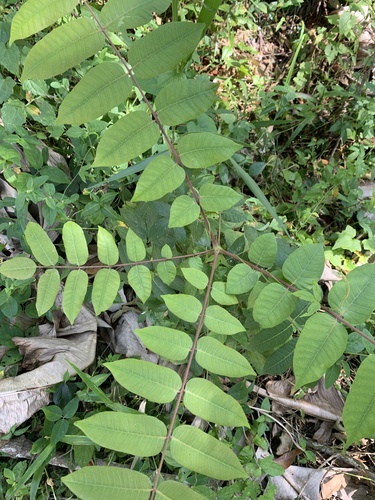
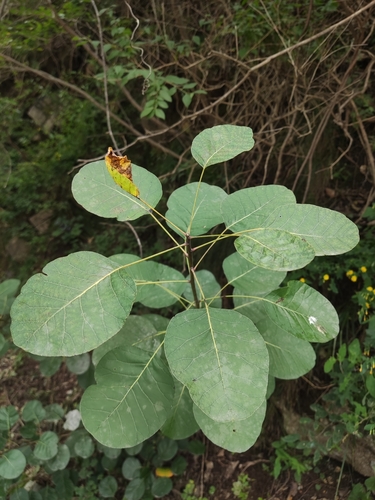
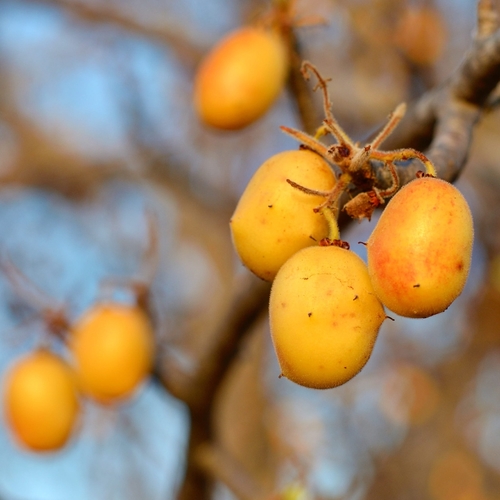
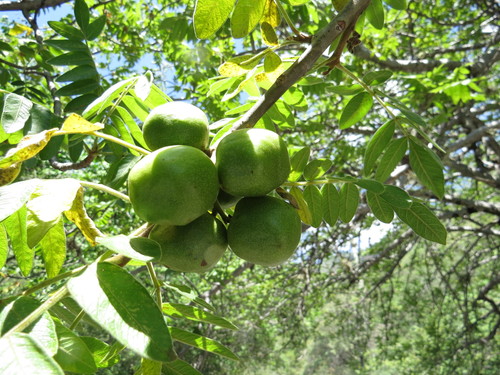
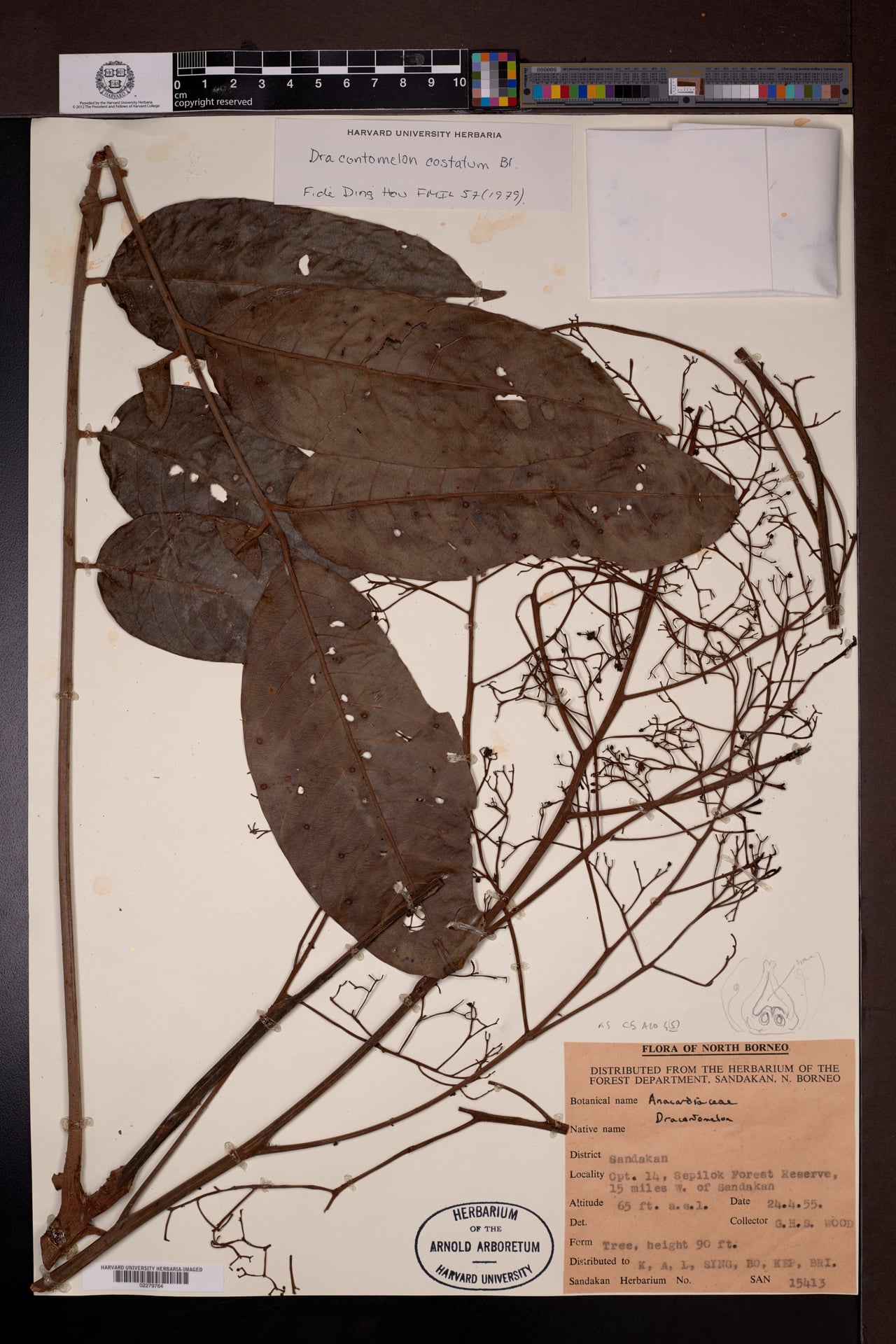
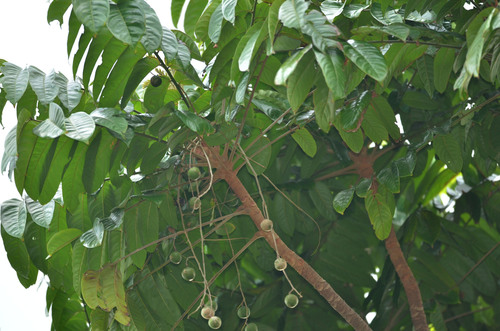
Searsia albida
(Schousb.) Moffett
Hawthorn
wikimedia· cc-by-sa
Wikimedia Commons - Krzysztof Ziarnek, Kenraiz
wikimedia· cc-by-sa
Wikimedia Commons - Krzysztof Ziarnek, Kenraiz
Description
A small shrub in the cashew family found in Mediterranean climates and the Sahara region. It produces sour fruit that are edible.
This description is brief — help expand it
Edible Uses
The berries and fruit are edible and can be used as a spice.
Traditional Uses
The fruit are sour.
This uses section is brief — help expand it
Distribution
It is a Mediterranean climate plant. It grows in the Sahara.
Where It Grows
Africa, Algeria, Arabia, Canary Islands, Mediterranean, Middle East, Morocco, North Africa, Syria, Western Sahara,
Notes
There are about 200 Rhus species. Many have now been changed to Searsia. The fruit are most are edible.
Synonyms
Rhus albida Schousb.Rhus oxyacantha var. albida (Schousb.) Ball
Also Known As
Anafiss, Zuwaya
References (4)
- Hedrick, U.P., 1919, (Ed.), Sturtevant's edible plants of the world. p 559 (As Rhus albida)
- Jardin, C., 1970, List of Foods Used In Africa, FAO Nutrition Information Document Series No 2.p 158 (As Rhus albida)
- Moffett, R. O., 2007, Name changes in the Old World Rhus and recognition of Searsia (Anacardiaceae) Bothalia 37,2: 165-175 (2007)
- Nassif, F., & Tanji, A., 2013, Gathered food plants in Morocco: The long forgotten species in Ethnobotanical Research. Life Science Leaflets 3:17-54 (As Rhus albida)