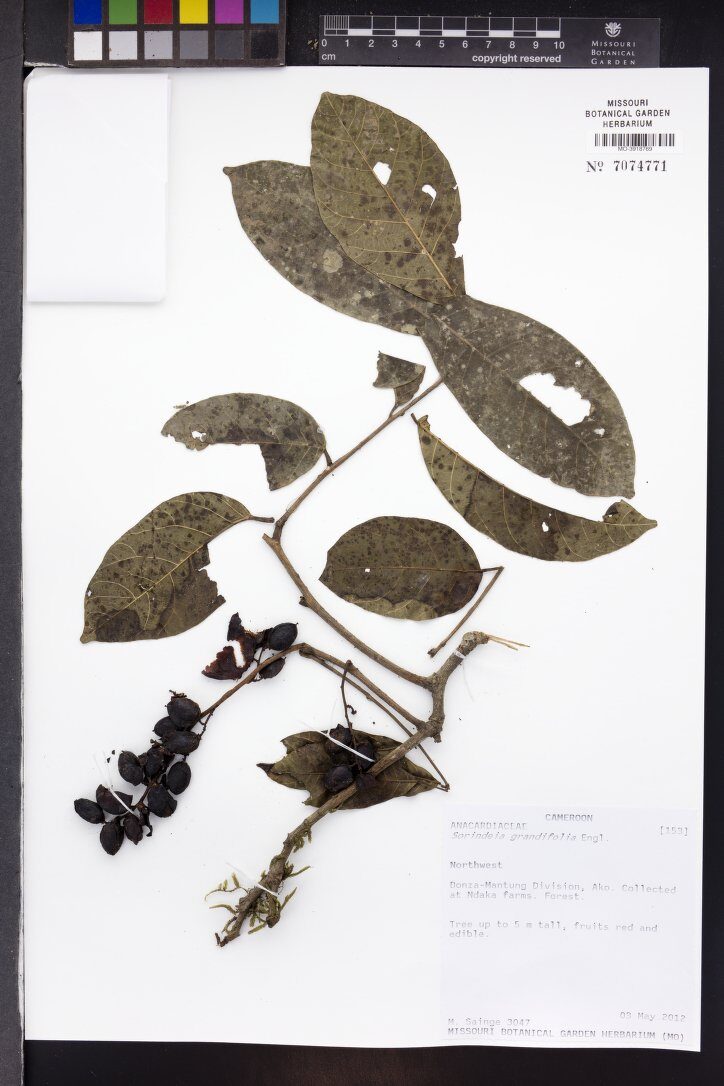
Dracontomelon costatum
Bl.
gbif· cc0
President and Fellows of Harvard College
gbif· cc0
President and Fellows of Harvard College
gbif· cc0
President and Fellows of Harvard College
Summary
Source: WikipediaDracontomelon costatum is a tree in the family Anacardiaceae. The specific epithet costatum means 'ribbed', referring to the leaf veins.
Description
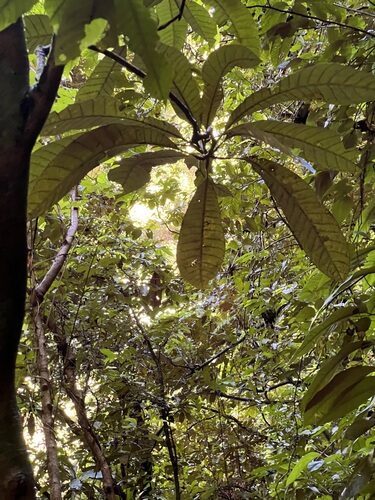
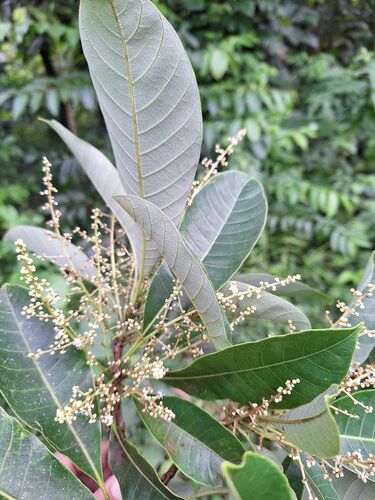
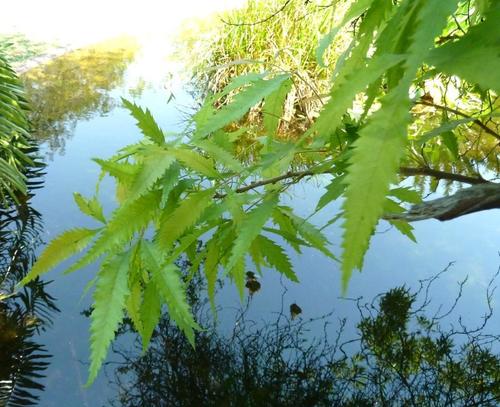
A tree. It grows 44 m tall. The leaves are alternate and compound. The flowers are 5 mm across. They are white to yellow. They are in groups. The fruit are about 2.5 cm long. They are reddish-purple. They are fleshy.
Edible Uses
The fruit is eaten.
Distribution
It is a tropical plant. It grows in forests up to 700 m above sea level. They are often along rivers and sometimes in swamps. They can be on sandy soils or limestone.
Where It Grows
Asia, Brunei, Indonesia, Malaysia, SE Asia,
Other Uses
We do not have any specific information on the wood of this species. However, the following is a general description of the wood from plants in this genus:- The heartwood varies from light brown, grayish, greenish-yellow to reddish-brown, often with irregular dark brown to nearly black banding; the wide band of sapwood is pinkish, or grayish. The texture is moderately fine to coarse; the grain straight to interlocked and irregular, with a decorative figure if quarter cut; the wood is lustrous; there is no distinctive odour or taste. The heartwood is not durable and is not resistant to termite attack. The wood is easy to work; glues satisfactorily; takes a good finish and polish; veneers well. It is used for purposes such as furniture and cabinetwork, paneling, decorative veneers (walnut-like in appearance), gunstocks, flooring, joinery.
Also Known As
Besengkiang, Katep, Landur, Lengkugang, Petanang, Pistanak, Rengau, Sankuang, Tekosoi
References (1)
- Slik, F., www.asianplant.net