Cotinus coggygria
Scop.
Smoke tree, Venetian sumach
iNaturalist· cc-by-nc
(c) wresy, some rights reserved (CC BY-NC)
iNaturalist· cc-by-nc
(c) juber36, some rights reserved (CC BY-NC)
iNaturalist· cc0
no rights reserved, uploaded by Murielle Desrois
Summary
Source: WikipediaCotinus coggygria, syn. Rhus cotinus, the European smoketree, Eurasian smoketree, smoke tree, smoke bush, Venetian sumach, or dyer's sumach, is a Eurasian species of flowering plant in the family Anacardiaceae.
Description
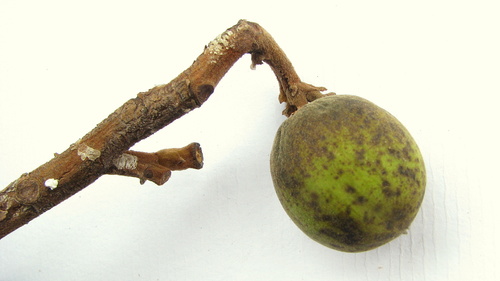
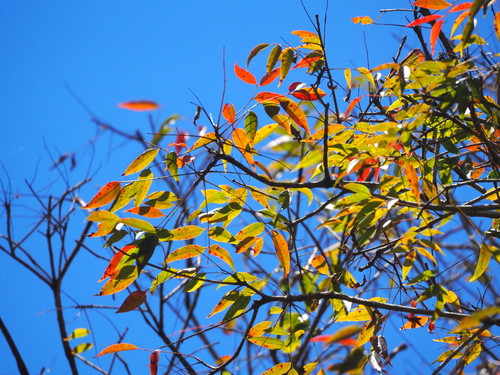
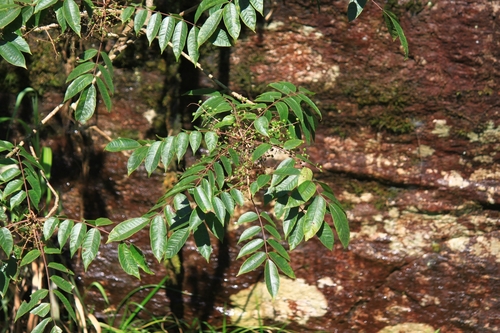
A rounded shrub. It grows 3-4.5 m tall. It loses its leaves during the year. They turn rich red before falling. The leaves are oval and green. They are about 7 cm long. They do not have teeth. They have long stalks. The flowers have smoky plumes with a pink tint which turns grey. These are in lax panicles 15-20 cm long. This is due to the fine thread like dull purple branches. The flowers and fruit are very small. The fruit are dry and flattened. They are kidney shaped and 3-4 mm long.
Edible Uses
The leaves are possibly edible, though some caution is advised. A volatile oil in the leaves contains pinene and camphene, and one report suggests the essential oil from the flowers and leaves has a mango-like odour. These leaves have been tasted and are not recommended.
Traditional Uses
The young leaves are eaten as a potherb. They are boiled or stir fried. The fruit are edible.
This uses section is brief — help expand it
Medicinal Uses
The yellow wood is used as a cholagogue, febrifuge, and for eye ailments.
Known Hazards
Volatile oils in leaves warrant caution with consumption.
Distribution
It is a temperate plant. It is frost hardy. They suit places with warm dry summers. In the Himalayas it grows between 760-1,520 m above sea level. In China (var. glaucophylla) grows between 1,300-2,400 m altitude in southern China. It can tolerate drought. It grows well in sunny places. It suits hardiness zones 5-10. At Anvers Chocolate factory. Arboretum Tasmania. In Sichuan and Yunnan.
Where It Grows
Asia, Australia, Balkans, Bulgaria, Canada, Central Asia, China, Europe, France, Georgia, Greece, Himalayas, India, Italy, Korea, Macedonia, Mediterranean, Nepal, North America, Pakistan, Slovenia, Tajikistan, Tasmania, Tibet, Turkey, Türkiye, USA,
Cultivation
Tolerates most soils. Prefers a well-drained dry or moist soil in a sunny position, doing better in a soil that is not very rich. Prefers a fertile but not over-rich soil. Tolerates light shade. Established plants are drought tolerant. Plants are hardy to about -20°c, though die-back often occurs at the tips of shoots during the winter. Plants are slow to establish but are then quite fast growing when young though they slow down with age. Hybridizes with C. obovatus. A number of cultivars have been developed for their ornamental value. The purple-leafed cultivars are susceptible to mildew. Plants flower on wood that is at least 3 years old. Any pruning is best done in the spring. Branches sometimes wilt, especially after hard pruning, and these should be removed. This species is notably resistant to honey fungus. Dioecious. Male and female plants must be grown if seed is required.
Propagation
Seed is best sown as soon as it is ripe in a cold frame, where it should germinate in spring. Slightly immature green seed — fully developed but harvested before drying on the plant — gives the best results. Stored seed should be warm stratified for 2–3 months at 15°C, then cold stratified for 2–3 months. Germination can be very slow, often taking 12 months or more at 15°C. Once large enough to handle, prick seedlings into individual pots and grow on in the cold frame for at least the first winter before planting out in late spring or early summer after the last frosts. Seed has long viability and should store for several years. Cuttings of half-ripe wood can be taken in July or August in a frame. Trench layering can be done in spring.
Other Uses
An essential oil obtained from the leaves and flowers has a mango-like smell. A yellow to orange dye is obtained from the root and stem, though it is somewhat fugitive. The leaves and bark are a good source of tannins. The wood is ornamental and used for cabinet making and picture frames. The twigs are used in basketry.
Production
It is quick growing.
Other Information
It is a famine food. Leaves are sold in local markets.
Notes
There are 3 Cotinus species. Volatile oils in the leaves contain pinene and camphene.
Synonyms
Also Known As
Boyaci sumagi, Cloud tree, Common smoke tree, Darengri, Dashmil, Gadtung, Huanglu, Hungarian fustic, Manu, Navadni ruj, Paan, Smoke bush, Tung, Tunga, Wig tree, Yellow Lu
References (26)
- Ambasta, S.P. (Ed.), 2000, The Useful Plants of India. CSIR India. p 143
- Blamey, M and Grey-Wilson, C., 2005, Wild flowers of the Mediterranean. A & C Black London. p 128
- Bodkin, F., 1991, Encyclopedia Botanica. Cornstalk publishing, p 289
- Cundall, P., (ed.), 2004, Gardening Australia: flora: the gardener's bible. ABC Books. p 426
- Dogan, Y., & Nedelcheva, A., 2015, Wild plants from open markets on both sides of the Bulgarian-Turkish border. Indian Journal of Traditional Knowledge. Vol. 14(3): 351-358
Show all 26 references Hide references
- Ertug, F, Yenen Bitkiler. Resimli Türkiye Florası -I- Flora of Turkey - Ethnobotany supplement
- Etherington, K., & Imwold, D., (Eds), 2001, Botanica's Trees & Shrubs. The illustrated A-Z of over 8500 trees and shrubs. Random House, Australia. p 234
- Farrar, J.L., 1995, Trees of the Northern United States and Canada. Iowa State University press/Ames p 408
- Fl. carniol. ed. 2, 1:220. 1771
- GUPTA (As Rhus cotinus)
- Hedrick, U.P., 1919, (Ed.), Sturtevant's edible plants of the world. p 560 (As Rhus cotinus)
- Hibbert, M., 2002, The Aussie Plant Finder 2002, Florilegium. p 75
- Hu, Shiu-ying, 2005, Food Plants of China. The Chinese University Press. p 516 (var. glaucophylla)
- Joyce, D., 1998, The Garden Plant Selector. Ryland, Peters and Small. p 134
- Ju, Y., et al, 2013, Eating from the wild: diversity of wild edible plants used by Tibetans in Shangri-la region, Yunnan, China, Journal of Ethnobiology and Ethno medicine 9:28
- Kremer, B.P., 1995, Shrubs in the Wild and in Gardens. Barrons. p 119.
- Lord, E.E., & Willis, J.H., 1999, Shrubs and Trees for Australian gardens. Lothian. p 219
- Plants for a Future database, The Field, Penpol, Lostwithiel, Cornwall, PL22 0NG, UK. http://www.scs.leeds.ac.uk/pfaf/
- Radha, B., et al, 2013, Wild Edible Plant Resources of the Lohba Range of Kedarnath Forest Division (KFD), Garhwal Himalaya, India. Int. Res J. Biological Sci. Vol. 2 (11), 65-73
- READ (As Rhus cotinus)
- Ryan, S., 2008, Dicksonia. Rare Plants Manual. Hyland House. p 19
- Schuler, S., (Ed.), 1977, Simon & Schuster's Guide to Trees. Simon & Schuster. No. 96
- Sfikas, G., 1984, Trees and shrubs of Greece. Efstathiadis Group. Athens. p 122(As Rhus cotinus)
- UPHOF (As Rhus cotinus)
- Valder, P., 1999, The Garden Plants of China. Florilegium. p 277
- Young, J., (Ed.), 2001, Botanica's Pocket Trees and Shrubs. Random House. p 284