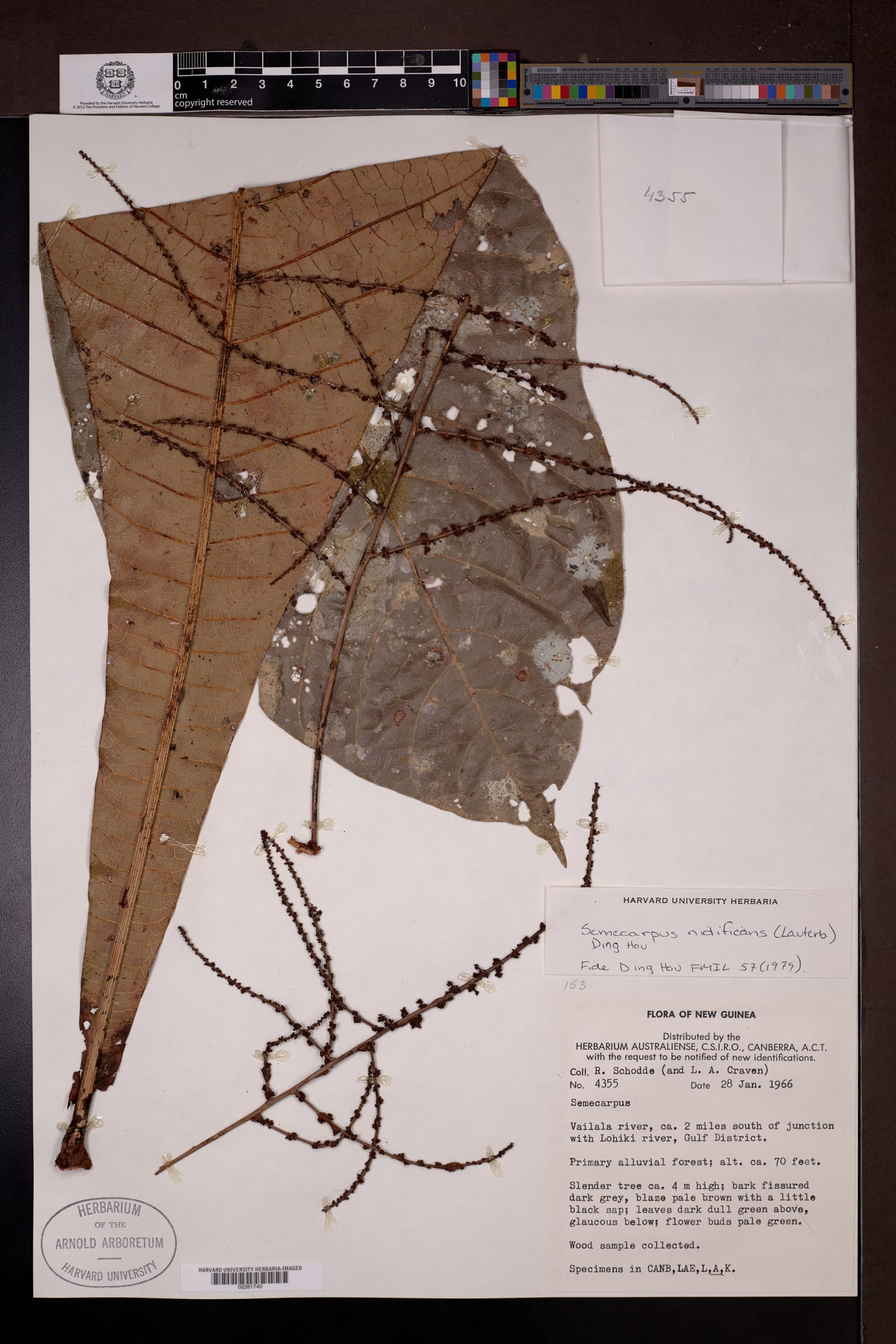
Dracontomelon dao
(Blanco) Merr. & Rolfe
Mon, Dao
iNaturalist· cc-by-nc-nd
(c) Cerlin Ng, some rights reserved (CC BY-NC-ND)
iNaturalist· cc-by-nc
(c) Naufal Urfi Dhiya'ulhaq, some rights reserved (CC BY-NC)
iNaturalist· cc-by-nc
(c) Naufal Urfi Dhiya'ulhaq, some rights reserved (CC BY-NC)
Summary
Source: WikipediaDracontomelon dao, the Argus pheasant-tree, Pacific walnut, Papuan walnut, New Guinea walnut, paldao or simply dao, is a tree in the family Anacardiaceae, native to tropical Asia.
Description
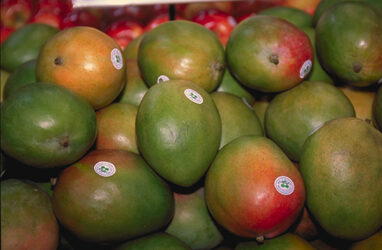
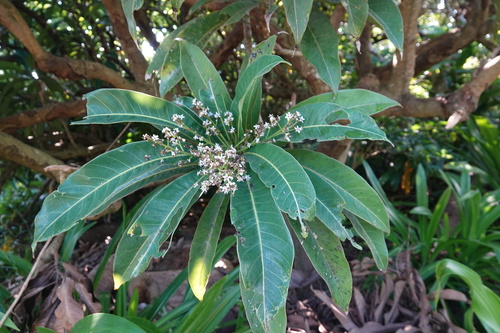
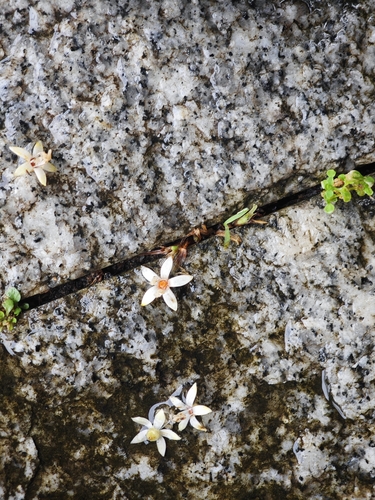
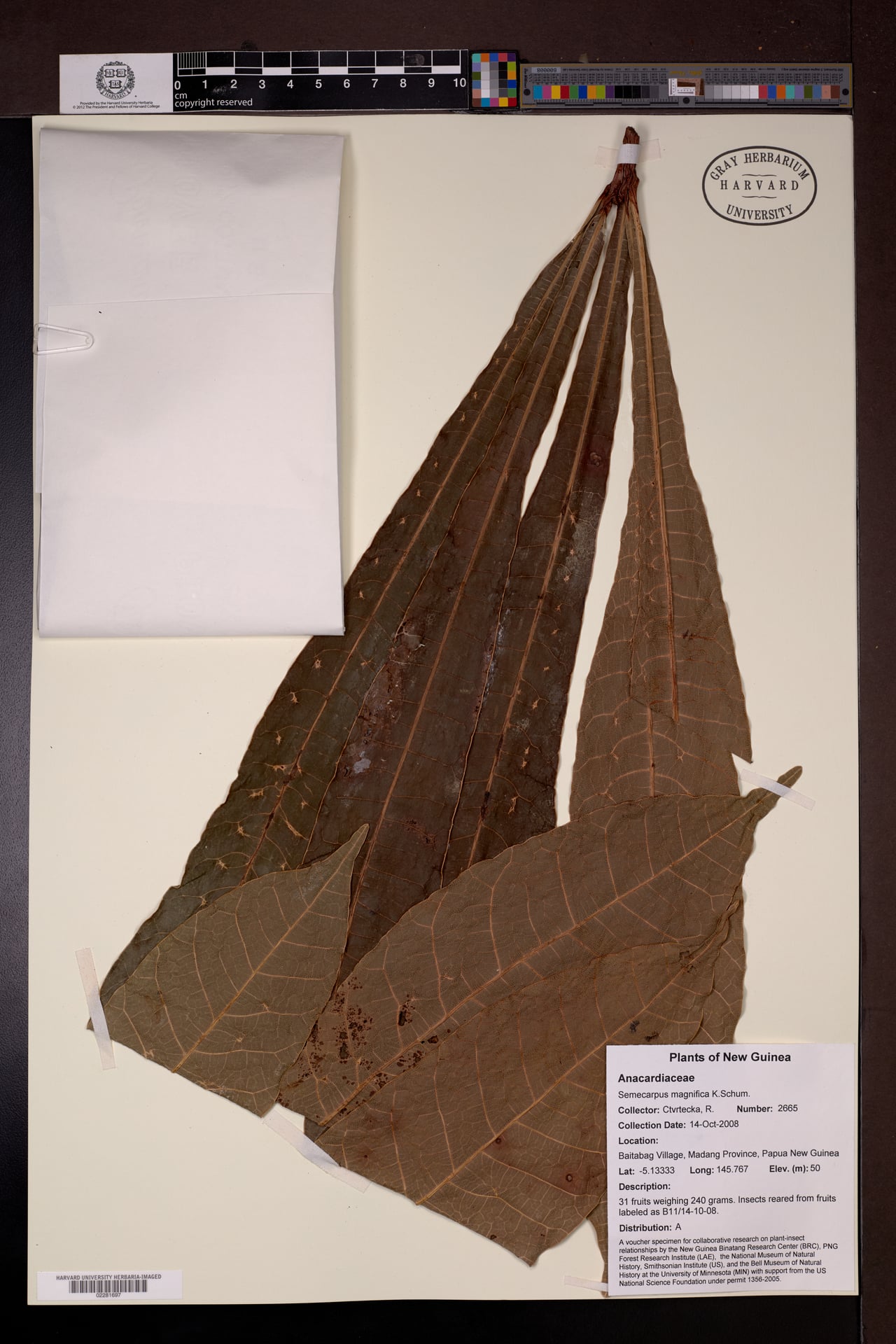
A large tree up to 50 m tall and with an umbrella shaped crown of leaves. It often has buttresses at the base. The leaves are hairy and compound with both the leaflets and leaves carried alternately. The leaves come one after the other on opposite sides and have 5 to 7 pairs of leaflets. The leaves are pointed at the end and bluntly pointed at the base. The leaflets have a smooth edge. Young leaves are reddish colour. The flowers are small white, with no smell and carried as several on a stalk. The fruit are yellow and round. The fruit is 2-3 cm across and has 5 flecks around it. There is little edible flesh around a flattened seed.
Edible Uses
The fruit is an ingredient in some popular Vietnamese dishes, made into a syrup for mixing into cold drinks, and can be dried and preserved as a snack.
Traditional Uses
The fleshy part of the fruit is eaten raw. It is sour. They are used as a sour relish. They are used to flavour curries. The fruit can be cooked with soy sauce and eaten with rice. The flowers and leaves can be cooked and eaten as a vegetable. The kernel inside the seed is edible. CAUTION The sap of the tree may be irritating and /or poisonous.
Medicinal Uses
A decoction from the stem of the Lamyo is drunk by the Ayta people of Bataan as a treatment for wound infections. The bark is used in the treatment of dysentery and in traditional medicine to provoke an abortion The fruit is depurative. It is used in the treatment of dermatitis. The mature fruits are used in dentistry
Known Hazards
The sap of the tree may be irritating and /or poisonous.
Distribution
A tropical plant. It grows in lowland rainforest and in valleys up to about 800 m. It occurs in high rainfall areas. It grows in areas with an annual rainfall between 1,800-2,900 mm. It is common throughout the Philippines at low altitudes. The tree also occurs in other SE Asian countries. They are common from northern Luzon to southern Mindanao in the Philippines.
Where It Grows
Andaman Islands, Asia, Bougainville, Brunei, Cambodia, China, East Timor, Fiji, India, Indochina, Indonesia, Laos, Malaysia, Myanmar, Pacific, Papua New Guinea*, PNG, Philippines*, SE Asia, Solomon Islands, Sri Lanka, Thailand, Timor-Leste, Vietnam,
Cultivation
Trees are grown from seed. Seeds germinate in 28-67 days. Many trees grow wild. The fruit are crushed and the seed removed.
Propagation
Seed - Propagation is usually by seed. Trees can also be established by direct sowing and wildings as it regenerates easily Seed should be extracted immediately after the fleshy fruits have been collected. Pulp and seed can be separated by maceration. There are 520-620 seeds/kg. Seeds are recalcitrant and there is a 33 % germination when sown fresh and no germination at all after 6 months under ambient conditions in Java. In Malaysia, 85-95 % of fresh seeds germinate after 28-67 days
Other Uses
The heartwood is greyish, greenish-yellow to walnut brown, often with irregular dark brown to nearly black bands or fine streaks; it is more or less clearly differentiated from the up to 10cm wide band of pale yellow with pinkish or greyish tinge s sapwood. The grain is straight or interlocked, texture moderately coarse to coarse and even, lustrous, wavy grain sometimes producing a coarse fiddle-back figure. The wood is soft, moderately heavy, not very durable. It is used for veneers, furniture, plywood, boxes, matches interior trim and light frames. The tree is used for firewood.
Production
It flowers and fruits throughout most of the year. Leaf fall and a fruit flush follows a dry spell. Trees can produce after 3-4 years. An average fruit weighs 17 g. The season normally coincides with the breadfruit and mango season. The fruit turn slightly yellow when ripe and the seed inside turns brown. If the seed inside is white, then the fruit is not ripe.
Other Information
The fruit are sold in markets. The tree is common in coastal areas of Papua New Guinea, but the popularity of the fruit varies. In Madang it is a most popular fruit.
Notes
Mon Dracontomelon dao What is Mon? Mon is the Tok Pisin name of a common coastal tree which has edible fruit. Scientists have given it the Latin name Dracontomelon dao. This name was first given to the tree in 1908. Other scientific names were originally given. Two other names still sometimes used are Dracontomelon mangiferum and Dracontomelon puberulum. They all refer to the same plant. What is Mon like? It is a large forest tree with large buttresses at the base. The tree is in the mango family and has leaves made up of about 6 to 10 pairs of leaflets along a stalk. The flowers are small and grow as a group of small flowers at the ends of branches. They are pale yellow and about 1 cm wide. The fruit are round, 3 or 4 centimetres across and have a small amount of edible flesh around a large seed. The fruit turn yellow when ripe. The fruit have 5 small scale like flakes around the middle. The wood of the Mon tree is pale brown with black stripes and is sold as a timber called New Guinea walnut. Where do Mon grow? Mon trees are tropical trees and grow in several Asian countries including Papua New Guinea. Countries which have Mon include Thailand, India, China, Cambodia, Malaysia, Indonesia, Philippines, Papua New Guinea and the Solomon Islands. The tree only grows properly in high rainfall areas and are mostly in coastal areas but sometimes up to 500 or 1000 metres altitude. Trees are more common along rivers and are also planted in villages. In Papua New Guinea, mon trees are particularly popular as fruits in the Madang Province. Trees in the bush inland often have smaller fruit which are more sour. Fruit near the coast are larger and sweeter. How do you grow Mon fruit? Mon trees often grow naturally in the lowland bush. But in areas where mon are popular, and where sweeter kinds of mon occur, trees are planted. They are grown by using the seed our of the centre of a fruit. If the tree is well looked after and well grown, it can start producing fruit after 3-4 years. Using Mon fruit. Mon fruit are produced seasonally. The season normally coincides with the breadfruit and mango season. The fruit turn slightly yellow when ripe and the seed inside turns brown. If the seed inside is white, then the fruit is not ripe.
Synonyms
Also Known As
Alauihau, Argus pheasant tree, Basuong, Belgian walnut, Bengkuang, Challigan, Chengkuang, Dahu, Dar, Dau, Djakan, Halowihaw, Jan-mien-tzu, Ka-kho, Kamarag, Ko, Lamio, Ngar-bauk, Ngkung, Paldao, Paya-ngar-su, Peldao, Pohon dahu, Prachao haa, Ra, Rau, Saentaalom, Sakal, Sa-kuan, Sang-kuan, Sarunsab, Sau, Sekuang, Sengkuang, Singkuang, Sorosob, Surgan, Suronsub, Tako, Takuu, Talantjap, Tarosoup, Taw-thit-kya, Tehrengzeb, Ungkawang, Urui, Yun meen
References (48)
- Alegado, A. M. & De Guzman, R. B., 2014, Indigenous food crops of the Aetas tribe in the Philippines and their traditional methods of food preparation. in Promotion of Underutilized Indigenous Food Resources for Food Security and Nutrition in Asia and Pacific. FAO. Bangkok p 160 (As Dracontomelon edule)
- Ambasta, S.P. (Ed.), 2000, The Useful Plants of India. CSIR India. p 183 (As Dracontomelon mangiferum)
- Arora, R. K., 2014, Diversity in Underutilized Plant Species - An Asia-Pacific Perspective. Bioversity International. p 68
- Blench, R., 2004, Fruits and Arboriculture in the Indo-Pacific Region. Indo-Pacific Prehistory Association Bulletin 24. (Taipei Papers Volume 2) p 37
- Borrell, O.W., 1989, An Annotated Checklist of the Flora of Kairiru Island, New Guinea. Marcellin College, Victoria Australia. p 49
Show all 48 references Hide references
- Brown, W.H., 1920, Wild Food Plants of the Philippines. Bureau of Forestry Bulletin No. 21 Manila. p 90
- Brown, W.H., 1920, Wild Food Plants of the Philippines. Bureau of Forestry Bulletin No. 21 Manila. p 94 (As Dracontomelon edule)
- Burkill, I.H., 1966, A Dictionary of the Economic Products of the Malay Peninsula. Ministry of Agriculture and Cooperatives, Kuala Lumpur, Malaysia. Vol 1 (A-H) p 873 (As Dracontomelum mangiferum)
- Carig, Elizabeth T., 2020, Guidebook on Native Trees within the Quirino Forest Landscape. Plaridel, Bulacan, St. Andrew Publishing House. p 48
- Chayamarit, K., 1994, Preliminary Checklist of the Family Anacardiaceae in Thailand. Thai For. Bull. 22:1-25
- Coronel, R.E., 1982, Fruit Collections in the Philippines. IBPGR Newsletter p 9 (Also as Dracontomelon puberulum)
- Ding Hou, 1978, Anacardiaceae, in Flora Malesiana Ser 1 Vol 8(3) p 469
- Dobriyal, M. J. R. & Dobriyal, R., 2014, Non Wood Forest Produce an Option for Ethnic Food and Nutritional Security in India. Int. J. of Usuf. Mngt. 15(1):17-37 (As Dracontomelum mangiferum)
- Facciola, S., 1998, Cornucopia 2: a Source Book of Edible Plants. Kampong Publications, p 9
- French, B.R., 1986, Food Plants of Papua New Guinea, A Compendium. Asia Pacific Science Foundation p 238
- French, B.R., 2010, Food Plants of Solomon Islands. A Compendium. Food Plants International Inc. p 233
- Forest Inventory and Planning Institute, 1996, Vietnam Forest Trees. Agriculture Publishing House p 32 (As Dracontomelon mangiferum Bl.)
- Gardner, S., et al, 2000, A Field Guide to Forest Trees of Northern Thailand, Kobfai Publishing Project. p 154
- Havel, J. J., 1975, Forest Botany, Volume 3 Part 2 Botanical taxonomy. Papua New Guinea Department of Forests, p 154
- Hedrick, U.P., 1919, (Ed.), Sturtevant's edible plants of the world. p 282 (As Dracontomelon sylvestre)
- Kebler, P. J. A., & Kidiyasa, 1994, Trees of the Balikpapan-Samarinda area of East Kalimantan, Indonesia. The Tropenbos Foundation, Wageningen, The Netherlands. p 39
- Lacuna-Richman, C., 2006, The use of non-wood forest products by migrants in a new settlement: experiences of a Visayan community in Palawan, Philippines. Journal of Ethnobiology and Ethnomedicine. 2:36 (As Dracontomelon edule) Lepofsky, D., 1992, Arboriculture in the Mussau Islands, Bismarck Archipelago. Economic Botany, Vol 46, No. 2, pp. 192-211
- Macmillan, H.F. (Revised Barlow, H.S., et al) 1991, Tropical Planting and Gardening. Sixth edition. Malayan Nature Society. Kuala Lumpur. p 299
- Martin, F.W. & Ruberte, R.M., 1979, Edible Leaves of the Tropics. Antillian College Press, Mayaguez, Puerto Rico. p 174
- Martin, F. W., et al, 1987, Perennial Edible Fruits of the Tropics. USDA Handbook 642 p 13 (As Dracontomelon mangiferum)
- Menninger, E.A., 1977, Edible Nuts of the World. Horticultural Books. Florida p 50 (As Dracontomelon mangiferum)
- Milow, P., et al, 2013, Malaysian species of plants with edible fruits or seeds and their evaluation. International Journal of Fruit Science. 14:1, 1-27
- Monsalud, M.R., Tongacan, A.L., Lopez, F.R., & Lagrimas, M.Q., 1966, Edible Wild Plants in Philippine Forests. Philippine Journal of Science. p 439 (Also as Dracontomelon edule)
- Moon, H. K., et al, 2010, Tropical Tree of Indonesia. Korea Forest Research Institute. p 7
- Nurfadilah, S., et al, 2017, Species richness, conservation status, and potential uses of plants in Segara Anakan Area of Sempu Island, East Java, Indonesia. BIODIVERSITAS. Volume 18, Number 4
- Peekel, P.G., 1984, (Translation E.E.Henty), Flora of the Bismarck Archipelago for Naturalists, Division of Botany, Lae, PNG. p 323, 321
- Philipp. J. Sci., C 3:108. 1908
- Sam, H. V. et al, 2004, Trees of Laos and Vietnam: A Field Guide to 100 Economically or Ecologically Important Species. BLUMEA 49: 201-349
- Saw, L.G., LaFrankie, J. V. Kochummen, K. M., Yap S. K., 1991, Fruit Trees in a Malaysian Rain Forest. Economic Botany, Vol. 45, No. 1, pp. 120-136
- Seidemann J., 2005, World Spice Plants. Economic Usage, Botany, Taxonomy. Springer. p 140
- Singh, H.B., Arora R.K.,1978, Wild edible Plants of India. Indian Council of Agricultural Research, New Delhi. p 56
- Siong, K. H., 2003, Indigenous Fruits of Sarawak. ITTO & Sarawak Forest Department. p 4
- Slik, F., www.asianplant.net
- Soepadmo, E. and Wong, K. M. and Saw, L. G., 1996, Tree Flora of Sabah and Sarawak. Forestry Malaysia. Volume Two. p 18
- Sukarya, D. G., (Ed.) 2013, 3,500 Plant Species of the Botanic Gardens of Indonesia. LIPI p 248
- Unsure Philippines - Description of Trees and Shrubs at PATOM Watershed, Barangay Colongulo, Surallah, South Cotabato
- Van Sam, H. et al, 2004, Trees of Laos and Vietnam: A Field Guide to 100 Economically or Ecologically Important Species. Blumea 29 (2004) 201-349
- Verheij, E. W. M. and Coronel, R.E., (Eds.), 1991, Plant Resources of South-East Asia. PROSEA No 2. Edible fruits and nuts. Pudoc Wageningen. p 329
- Walter, A. & Sam C., 2002, Fruits of Oceania. ACIAR Monograph No. 85. Canberra. p 158, 279
- World Checklist of Useful Plant Species 2020. Royal Botanic Gardens, Kew
- www.frim.gov.my
- www.worldagroforestrycentre.org/sea/products/afdbases/af/asp/SpeciesInfo.asp?SpID=1792
- Zawiah, N. & Othaman, H., 2012, 99 Spesies Buah di FRIM. Institut Penyelidikan Perhutanan Malaysia. p 100