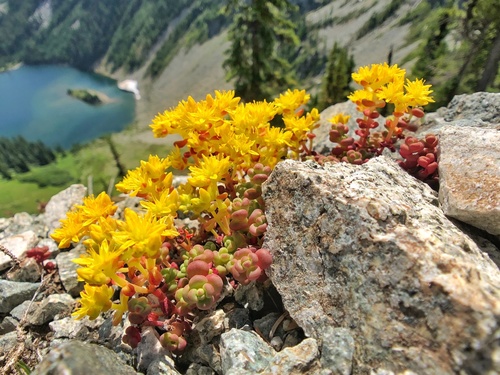
Cotyledon umbilicata
Linn.
Navelwort, Kidneywort
iNaturalist· cc-by-nc
(c) MiKL_Nicolas, some rights reserved (CC BY-NC)
iNaturalist· cc0
no rights reserved
iNaturalist· cc0
no rights reserved
Description
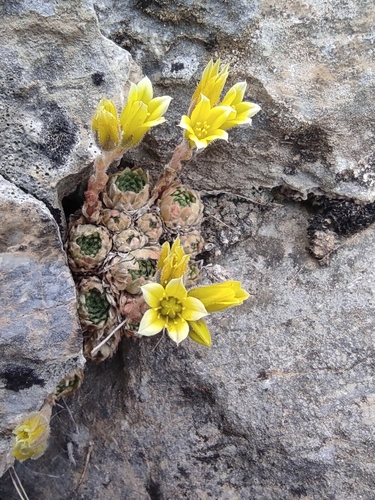
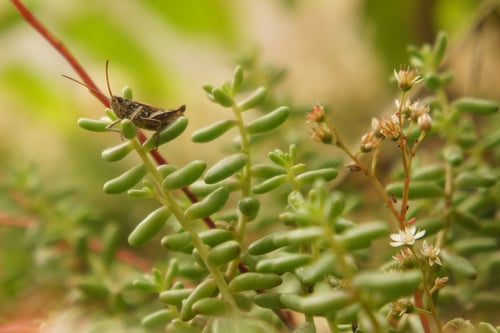
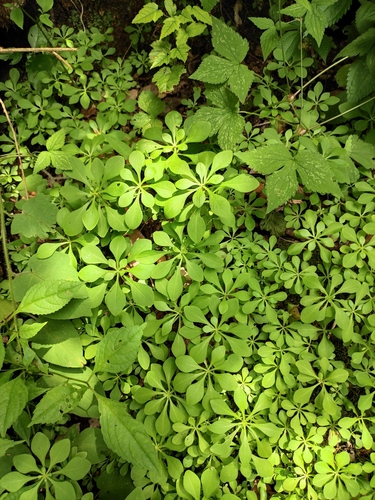
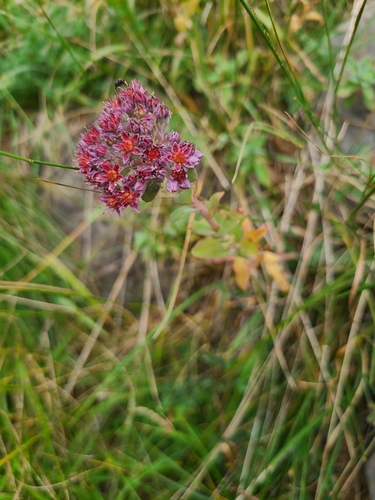
A plant that keeps growing from year to year. It grows 50 cm high and spreads 50 cm wide. The stem lies along the ground. The leaves come directly from the rootstock. They are round and succulent. They are 7.5 cm across and slightly curved like a bowl. The flowers are bell shaped and yellowish-green. They hang down.
Edible Uses
The leaves are eaten.
Medicinal Uses
Umbilicus rupestris is not the same "Pennywort" as the one used in Asian medicine, which is the unrelated Asiatic Pennywort, Centella asiatica. Navelwort is also assumed to be the "Kidneywort" referred to by Nicholas Culpeper in The English Physician, although it may actually refer to the unrelated Anemone hepatica. Culpeper used astrology, rather than science, to classify herbs, and as such is not a reliable source. He claimed: The juice or the distilled water being drank, is very effectual for all inflammations and unnatural heats, to cool a fainting hot stomach, a hot liver, or the bowels: the herb, juice, or distilled water thereof, outwardly applied, heals pimples, St. Anthony's fire, and other outward heats. The said juice or water helps to heal sore kidneys, torn or fretted by the stone, or exulcerated within; it also provokes urine, is available for the dropsy, and helps to break the stone. Being used as a bath, or made into an ointment, it cools the painful piles or hæmorrhoidal veins. It is no less effectual to give ease to the pains of the gout, the sciatica, and helps the kernels or knots in the neck or throat, called the king's evil: healing kibes and chilblains if they be bathed with the juice, or anointed with ointment made thereof, and some of the skin of the leaf upon them: it is also used in green wounds to stay the blood, and to heal them quickly.
Distribution
It grows in moist rocky areas. It needs a protected, sunny position. It is damaged by drought and frost.
Where It Grows
Asia, Australia, Britain*, Europe,
Cultivation
Plants can be grown from seed or by tip cuttings.
References (2)
- Bodkin, F., 1991, Encyclopedia Botanica. Cornstalk publishing, p 290
- Hedrick, U.P., 1919, (Ed.), Sturtevant's edible plants of the world. p 222